A ceramic fan heater is a practical choice for quick warmth near your seat during attended use, provided it has clear airflow, a stable position and a suitable electrical connection. If cold walls, glazing or draughts keep the conservatory chilly, look for adjustable heat control and address heat loss rather than expecting a portable heater to warm the whole room on its own.
Who this suits
Occasional conservatory users
If you read, work or dine there for short periods, you may want warmth near the occupied area without heating it continuously. Electrical Safety First describes portable fan heaters as providing instant heat, though they can be noisy.
Regular users of a persistently cold room
If the conservatory cools quickly between visits, temperature control matters alongside the room itself. Energy Saving Trust advises that insulation and sealing gaps reduce heat loss.
Households with tight floor space
Children, pets, passing feet and nearby furnishings make placement particularly important. Look for documented tip-over and overheat protection, while keeping the heater stable, attended and clear of obstructions.
What to check when buying
Start with how quickly the conservatory loses heat; then decide what warmth you need while using it and where a heater can stand safely.
| Concern | Buying checks | Who this matters to |
|---|
| Persistent heat loss |
Check cold surfaces and draughts, then compare adjustable heat settings and thermostats. Wattage alone cannot establish whole-room suitability. |
If I use the room regularly, I need to know whether warmth will escape through its walls, glazing or gaps. Around 42% of consumers put managing that heat loss first. |
| Warmth while seated |
Check the exact model’s heat settings and controls, and whether its stated use fits your occupied area. |
For shorter visits, I want warmth near my seat that I can adjust while I am there; around 33% of consumers make controllable local warmth their main concern. |
| Safe placement |
Check documented safety features, plug and socket suitability, and whether vents can remain clear of furnishings. |
Where people or pets could brush past the heater, I need a stable position and a safe connection. Around 25% of consumers put placement and electrical safety first. |
Buying pitfalls
-
Assuming a higher wattage will warm the whole conservatory
A heater can feel warm nearby while cold surfaces and draughts continue to draw heat from the room.
Assess the room’s dimensions, glazing and obvious gaps before choosing output. Energy Saving Trust advises that insulation and sealing gaps reduce heat loss; consider those measures if the room repeatedly cools down.
-
Relying on safety features instead of safe placement
Tip-over and overheat protection do not make it safe to block the airflow, place a heater beside furnishings or leave it running overnight.
Follow the exact model’s placement instructions, keep vents and surrounding space clear, do not dry clothes on the heater and switch it off when it cannot be attended.
-
Overloading an extension connection
A heater’s electrical load can overheat an unsuitable or overloaded extension lead, adaptor or wound cable reel.
Check the marked rating against the total connected load, never daisy-chain extension devices and fully unwind a cable reel. If a fixed outlet is routinely needed, ask a registered electrician about installing one.
Brands to consider
Dimplex
Dimplex’s DXUC2BS is a compact upright ceramic fan heater positioned for smaller spaces.
- Dimplex lists three power settings, an adjustable thermostat, fan-only mode, tip-over protection and overheat safety for this model.
- Those features do not establish whether it can warm an entire cold-walled conservatory.
De'Longhi
The HFX65V20 is a tower ceramic heater for shoppers considering remote control and selectable heat settings.
- De'Longhi lists 1,200 W and 2,000 W settings, remote control, a safety thermostat and automatic tip-over shut-off for this model.
- Its controls do not remove heat loss through a conservatory’s walls, glazing or gaps.
Devola
Devola’s heating range includes ceramic fan heaters alongside panel heaters, oil-filled radiators and convectors.
- The range includes a 1,500 W portable ceramic fan-heater format with fan-only mode and 60° oscillation.
- Compare the features of the exact model and the conservatory’s heat loss rather than assuming every heater in the range suits the room.
Ceramic heaters for occupied spaces
These Joybuy ceramic fan heaters are choices to consider for warmth in the occupied part of a conservatory. Check each model’s controls, the room’s heat loss and the available electrical connection before deciding.
 No image available
Russell Hobbs RHFH1006B portable ceramic heater, 1.5 kW, black
Consider this portable model for shorter, attended periods near a seat or desk. Its stated output is 1.5 kW; check the plug and instructions, as well as the room’s heat loss, before relying on it for the conservatory.
View on Joybuy
 No image available
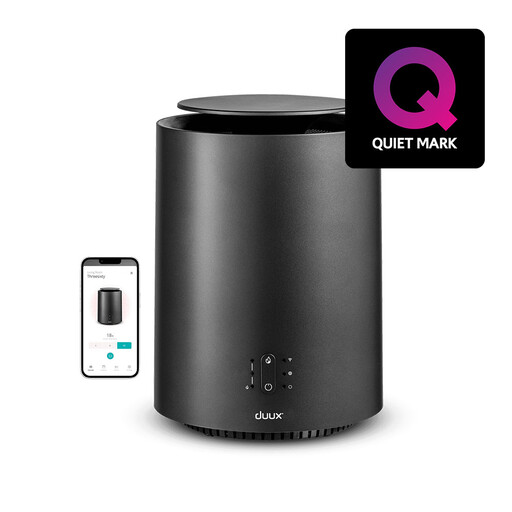
Duux ThreeSixty 2 DXCH09UK smart ceramic fan heater, 1,800 W, black
Consider this model if distributing warm airflow around an occupied area matters to you. The stated features include 360° oscillation and 1,800 W output; confirm its controls, plug and suitability for your room’s heat loss.
View on Joybuy
 No image available
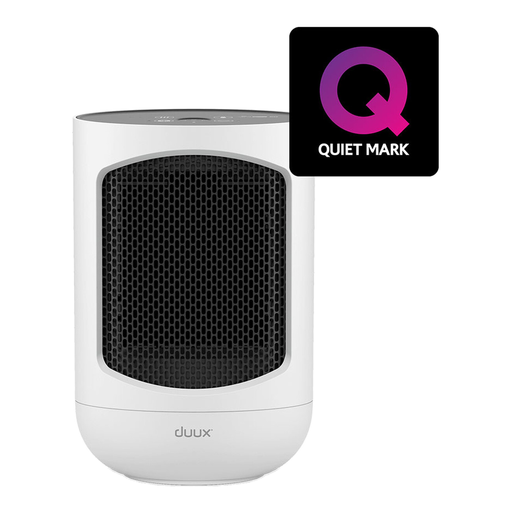
Duux Zone DXCH43UK portable ceramic fan heater, 1,500 W, white
Consider this portable model for attended warmth in a smaller occupied area. It lists three heat settings and 60° oscillation; check its temperature controls and plug if those details affect your choice.
View on Joybuy
Common questions
Will a ceramic heater solve a conservatory’s cold walls?
No: it can provide quick local warmth, but it cannot insulate walls or seal draughts. If the room repeatedly cools down, investigate the gaps and insulation as well as choosing a heater for the periods you use it.
Which heater safety features should I check?
Look for documented overheat protection and tip-over shut-off on the exact model. Those features do not replace stable placement, clear vents, space from furnishings and attended use.
Can I use an extension lead with a conservatory heater?
Use one only if the extension equipment is suitable and the combined appliance load stays within its marked rating. Electrical Safety First warns against overloaded or daisy-chained extensions and wound cable reels; ask a registered electrician about a fixed socket if you regularly need one.
How do I keep a ceramic fan heater’s airflow clear?
Keep its grilles unobstructed and follow the manufacturer’s cleaning instructions. Switch off and unplug the heater before cleaning it, and do not use it if the cable or plug is damaged.


