Desk-side warmth seekers
If you work at one desk and have limited floor space, a compact fan heater may provide the local top-up warmth you want. Electrical Safety First notes that fan heaters provide quick heat but can be noisy.


For warmth at one workstation, consider a compact ceramic fan heater; if you need heat to reach more of the room, compare oscillating models and their controls. Whichever format you choose, make sure it can stand clear of furnishings and plug directly into a wall socket. A thermostat or timer can make an occupied work session easier to manage, but neither makes unattended use safe.
If you work at one desk and have limited floor space, a compact fan heater may provide the local top-up warmth you want. Electrical Safety First notes that fan heaters provide quick heat but can be noisy.
If you spend extended periods in the office, compare heat settings, thermostats and controls you can use from your seat. Manufacturer specifications for the models discussed here show that oscillation, timers and remote controls vary by model.
If furniture, cables, children or pets constrain placement, start with a stable location and a reachable wall socket. Check the heater’s tip-over and overheat safeguards as additional precautions, not substitutes for clear space.
Decide where the heater can stand safely before choosing between local desk-side warmth and wider airflow. Then compare the controls you would use during an occupied work session.
| Concern | What to check | Who this matters to |
|---|---|---|
| Safe placement and power | Check the base, cord reach, clearances, tip-over shut-off and overheat protection. Plan for a direct wall socket, not an extension lead. | In a crowded office, I need a spot where the heater and its cable stay clear of furniture and walkways. Roughly 31% of consumers put safe placement and power first. |
| Warmth at the desk | Compare the heater’s size, heat settings and airflow direction for your seated position. | When I sit at one workstation, I want nearby warmth without giving a heater too much space. Around 25% of consumers prioritise desk-side warmth. |
| Temperature and electricity use | Compare selectable power settings and a thermostat; consider a timer or remote if you will use those controls. Higher wattage means greater electricity use while that setting is drawing power. | During a longer session, I want to adjust the heat as the room changes rather than leave the highest setting on. Approximately 25% of consumers put control of comfort and electricity use first. |
| Noise and heat spread | Look for model-specific noise information and decide whether oscillation would help reach more than one seating position. | For calls or focused work, I need to weigh fan noise against warming more of the room. Roughly 19% of consumers make that balance their primary concern. |
A maximum power rating does not tell you how warm a particular room will feel; insulation, heat loss and heater position matter too.
Compare adjustable heat settings and a thermostat, then choose the setting that maintains comfort while you are in the room.
An inconvenient socket can tempt you to run a cable across the office. Dimplex’s heater instructions warn that extension leads can overheat.
Before buying, check that the intended position can reach a wall socket directly without leaving a cable across a walkway.
Tip-over and overheat shut-off address particular hazards; they do not keep vents clear or stop nearby furnishings from being exposed to heat.
Use a flat, stable surface, keep the heater away from flammable items and leave its vents unobstructed.
Electrical Safety First advises against buying second-hand portable heaters because their safety cannot be assumed from their appearance.
Buy through a reputable retailer, keep the purchase record and check recall information for the model you choose.
The DXUC2BS is a compact ceramic fan heater to consider for local warmth near a workstation.
The HFX65V20 offers a tower format for someone who wants remote operation and additional controls.
Its cited ceramic models offer a choice between straightforward oscillating controls and a digital display with more settings.
These portable heaters cover local workstation warmth and models with controls or airflow intended for a wider part of a small home office. Check each model’s placement and safety features before choosing; the range includes ceramic heaters and a portable fan heater whose ceramic construction is not established here.
 Image unavailable
Consider this portable model if you want warmth near the desk with the option to move the airflow. It has 750 W and 1,500 W heat settings, an adjustable thermostat, oscillation, fan-only mode, tip-over shut-off and overheat protection. Check that its cord reaches your intended wall socket and whether its fan noise suits calls.
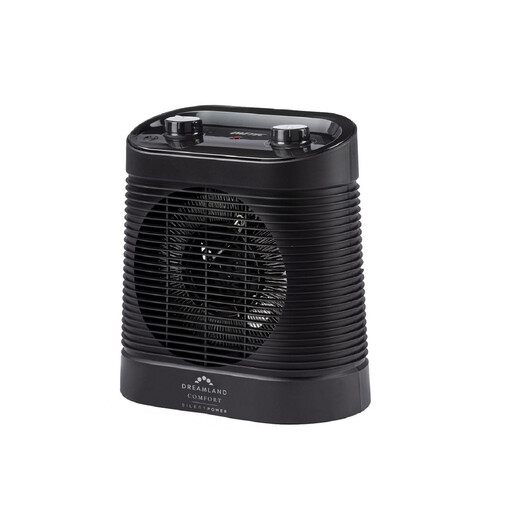 Image unavailable
Its digital controls may suit longer occupied work sessions when you want to adjust the heater without repeated manual switching. The listing describes an adjustable thermostat, a 1-, 3- or 9-hour timer and overheat protection. Confirm tip-over protection, wall-socket reach and noise suitability for your workspace before buying.
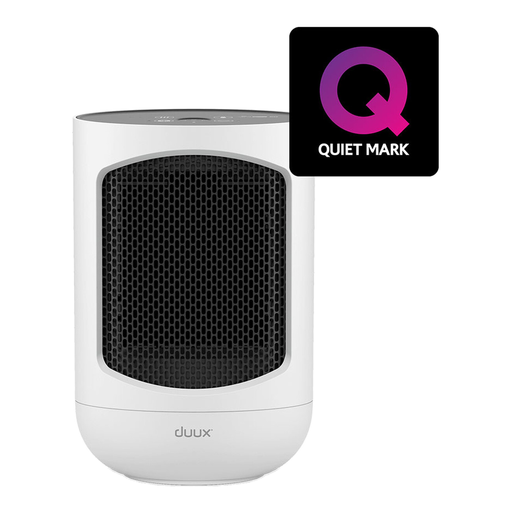 Image unavailable
Consider this personal heater for a small seated area where moving airflow would be useful. It lists 60° oscillation, high and low heat settings, fan-only operation, tip-over protection and overheat protection. If precise temperature adjustment matters, confirm its controls; also check wall-socket reach.
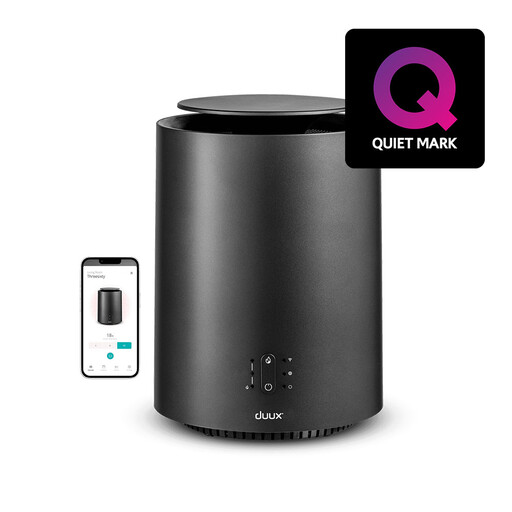 Image unavailable
Consider this model if you want to control temperature from your desk and direct airflow around more of the room. It lists 360° oscillation, app and onboard controls, scheduling, thermostat settings, tip-over protection and overheat protection. Check its dimensions and cord reach for your intended position; scheduling does not make unattended use safe.
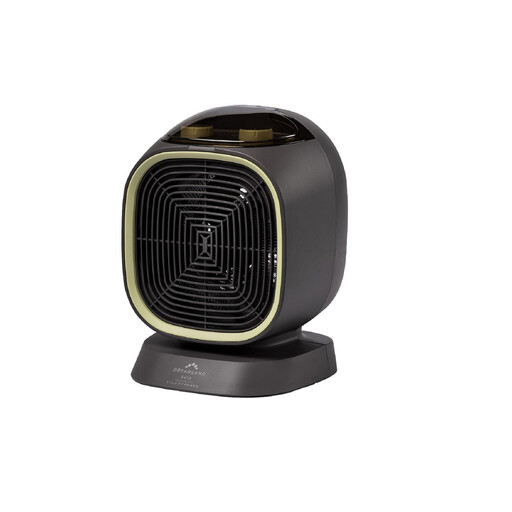 Image unavailable
This portable fan heater is an option for local warmth if its controls and safety features meet your needs. Its listed modes are ECO, hot air, rapid heating and cool air. Confirm its power settings, thermostat, tip-over and overheat protection, size and cord reach before deciding; the model name alone does not establish quieter operation or lower electricity use.
Not necessarily: the choice depends on whether you want local warmth or heat across more of the room, as well as its insulation and heat loss. If you expect to use the heater for extended occupied sessions, compare models with lower heat settings and a thermostat rather than judging them by maximum wattage alone.
Plan to plug a portable heater directly into a wall socket. Dimplex’s heater instructions warn that an extension lead may overheat; check the model’s cord reach and choose a safe position that does not require one.
Place it on a flat, stable surface with clear vents and no cable across a walkway. Warwickshire County Council advises keeping portable heaters at least three feet from flammable materials; make sure your intended desk or floor position allows that clearance.
No. A timer helps manage operation but does not replace supervision or safe placement. The UK Home Office advises unplugging electric heaters when you go out or go to bed; switch the heater off when you cannot keep an eye on it.