
24/7 Customer Support

Free returns

Same-day & Next-day Delivery

Quality Guaranteed

Unlock Your Welcome Offers: FREE Delivery | Up to 80% OFF | Free 30-day JoyPlus trial
Download the APP
Ceramic non-stick cookware appeals to UK households looking for easy food release, simpler cleaning and a cooking surface made without certain fluorinated chemicals. However, product listings can make similar pans appear interchangeable when their construction, care requirements and compatibility differ considerably.
Before buying a ceramic frying pan or ceramic cookware set, look beyond phrases such as “healthy”, “durable” and “non-stick”. These descriptions may not explain the coating composition, oven limitations or how the pan should be maintained.
Most ceramic non-stick cookware has a metal body, commonly aluminium, with a ceramic-based coating applied to the cooking surface. Aluminium can offer quick heat distribution, while the coating provides food release. This is different from solid ceramic cookware, which behaves differently on the hob and may be more vulnerable to impact.
Check the full materials list rather than relying on the product title. A construction such as aluminium with ceramic coating can be practical for everyday frying, but the coating still needs careful handling.
These terms refer to different substances or groups of substances:
For clearer comparison, prioritise listings that identify the coating and state which substances are excluded. Product descriptions should not be treated as a substitute for reading the manufacturer’s care and safety instructions.
A pan described as dishwasher-safe may still last longer with gentle hand washing. Conversely, some pans are explicitly hand-wash only. Oven safety also varies: a heat-resistant handle does not automatically mean the entire pan is suitable for high-temperature oven use.
Always check the maximum temperature, lid material, handle instructions and whether the pan can be used under a grill. These details are particularly important for households that move cookware from hob to oven.
Ceramic coatings generally perform more consistently when used with silicone, wooden or nylon utensils. Metal tools and abrasive scourers can scratch the surface. Avoid heating an empty pan for an extended period, and use low to medium heat unless the instructions say otherwise.
A non-stick frying pan is not maintenance-free. Allow it to cool before washing, avoid sudden temperature changes and store it so that hard cookware does not rub against the cooking surface.
For induction cooking, the pan needs a magnetic base. Look for clear confirmation of induction-compatible cookware, rather than assuming that a stainless steel handle or aluminium body will work. Gas and electric hobs have different heat patterns, so a stable, even base is useful for all-hob cooking.
A thickened or magnetic stainless steel base may improve contact and heat distribution, but pan performance can still depend on hob size and temperature control. Check that the base diameter suits your ring.
A 20–24cm ceramic frying pan suits smaller portions, eggs and compact kitchens. A 26–28cm pan offers more room for family breakfasts, vegetables or several portions of meat. A deep ceramic sauté pan with a lid is more suitable for braising, stir-frying and one-pan meals.
If cupboard space is limited, consider detachable handle cookware or stackable pieces. For camping and motorhome use, confirm the packed dimensions and handle storage system before ordering.
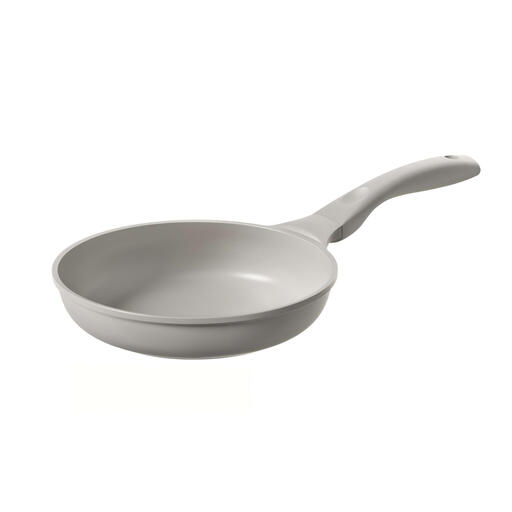
Why This Fits Their Persona: Its 24cm size is practical for everyday portions and smaller UK kitchens, while compatibility with induction, gas and electric hobs avoids the need to replace cookware after a move.
The listing identifies an aluminium, ceramic and stainless steel construction, and states that the coating is PTFE-, PFOA- and PFAS-free. It also specifies dishwasher compatibility, although gentle washing is still sensible for coating care.
All-hob compatibility, ergonomic Bakelite handle and a drip-resistant rim.
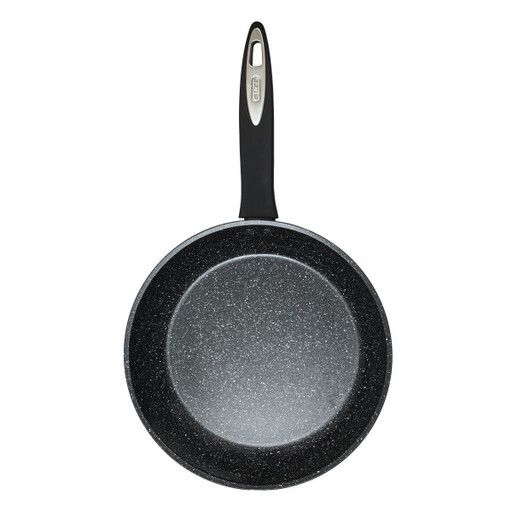
Why This Fits Their Persona: The larger 28cm format gives families and keen home cooks more surface area for frying, searing and sautéing larger portions.
Its stated purpose is straightforward: spacious cooking capacity, ceramic non-stick food release and even heat distribution. Buyers should still confirm hob and oven details before purchase.
28cm cooking area and a design intended for frying, searing and sautéing.
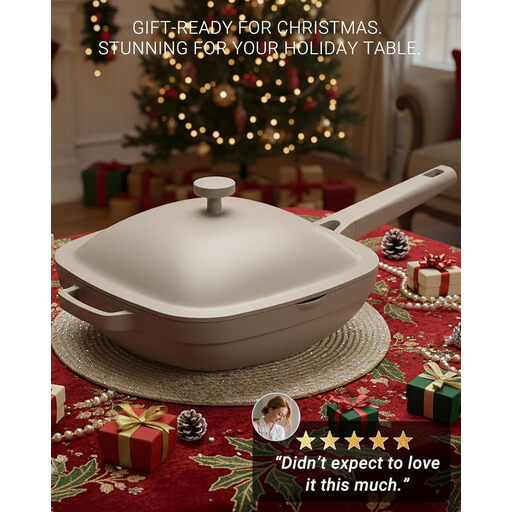
Why This Fits Their Persona: The deeper 3.8-quart format suits meal preparation, sautéing, braising and stir-frying when one shallow pan is not enough.
The listing clearly states that it is not dishwasher-safe or oven-safe, preventing assumptions based on the ceramic coating alone.
Includes a lid, wooden spatula and scrubber; compatible with all stated hob types.
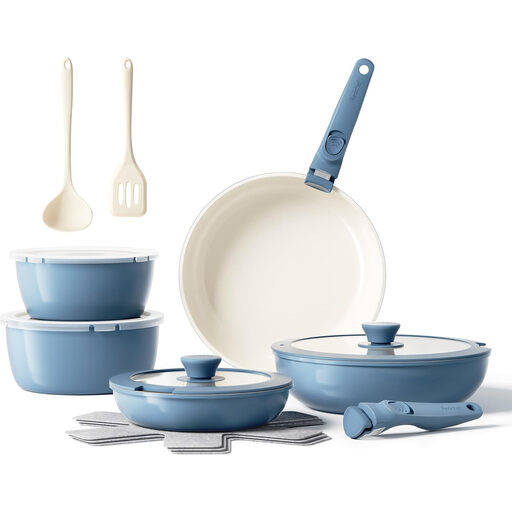
Why This Fits Their Persona: Stackable pieces and removable handles are suited to small flats, caravans, motorhomes and camping storage where cupboard space is limited.
The listing specifies PFAS-, PFOA- and PTFE-free materials, induction compatibility and the need to secure the detachable handle before lifting.
16-piece format, stackable storage and use across hob, oven, grill, fridge and table when handled according to instructions.
We have compiled a complete, real-time list of products that fully satisfy these strict selection criteria and UK safety regulations.
It can be, but only when the pan has a magnetic base. Check the product specification for explicit induction-compatible cookware wording. Aluminium alone is not enough for induction heating.
There is no universal lifespan. Frequency of use, heat level, utensil choice, washing method and storage all affect coating wear. Gentle cleaning and avoiding overheating can help preserve food release, but ceramic coatings should not be expected to remain unchanged indefinitely.
A ceramic non-stick frying pan may support lower-oil cooking and can heat quickly when made with an aluminium body. However, household running costs depend on hob type, pan size, cooking temperature and meal duration. Use a pan that matches the hob ring and avoid heating it empty to reduce wasted energy.