
24/7 Customer Support

Free returns

Same-day & Next-day Delivery

Quality Guaranteed

Unlock Your Welcome Offers: FREE Delivery | Up to 80% OFF | Free 30-day JoyPlus trial
Download the APP
A reliable non-stick frying pan is the cornerstone of any home kitchen, essential for everything from a simple morning omelette to a perfectly seared steak. However, many of us are becoming more mindful of the materials we cook with, seeking durable and convenient options that are also free from certain chemicals. If you're looking to replace an old, scratched pan, navigating the world of modern cookware can be a challenge.
This guide is designed to help you understand the key features of a quality ceramic non stick frying pan. We'll outline what to look for and share some of our top recommendations to help you find a pan that suits your cooking style and gives you peace of mind.
Choosing the right pan involves more than just its non-stick capability. Here are a few practical considerations to keep in mind during your search.
The primary reason many cooks switch to ceramic is the desire for a non toxic frying pan. High-quality ceramic coatings are made without Per- and Polyfluoroalkyl Substances (PFAS), which include PFOA and PTFE. When shopping, look for clear statements that the product is a PFAS free frying pan. This ensures no such chemicals were used in the manufacturing of the coating, offering a more reassuring cooking experience for a healthy non stick pan.
Modern kitchens in the UK often feature a variety of hobs. It's crucial to ensure your new pan is compatible with your cooker. If you have a newer appliance, an induction hob frying pan with a magnetic base is a must. For added versatility, consider an oven safe frying pan. This feature allows you to start a dish on the stovetop and finish it in the oven, perfect for frittatas, bakes or getting the perfect crust on a piece of meat.
A pan is an investment, so you want it to last. Look for features that indicate a scratch resistant skillet, such as coatings reinforced with diamond or titanium. While many pans are listed as a dishwasher safe frying pan, hand washing is often recommended to prolong the life of the non-stick surface. The right size is also important; a 26cm frying pan is a great all-rounder for small families, while a 28cm frying pan is better for larger households. For specific tasks, a smaller omelette pan can be a useful addition.
Here are a few ceramic non-stick pans that stand out for their features, construction and user-focused design.
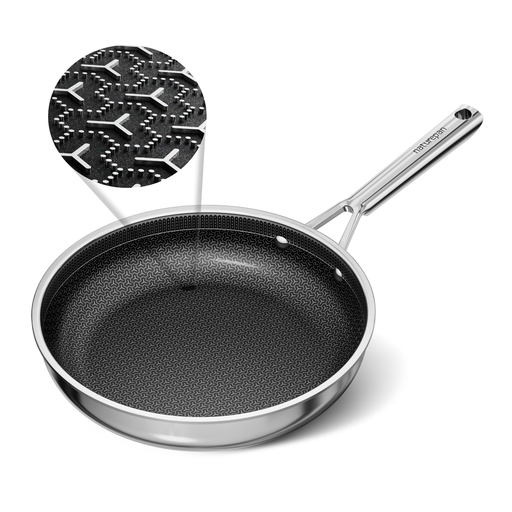
Why It Stands Out: This pan features an innovative hybrid design. A laser-etched hexagon pattern creates raised stainless steel ridges for excellent searing, while the recessed valleys are coated with a diamond-titanium ceramic for effortless non-stick performance. This combination aims to offer the best of both worlds: the durability of stainless steel and the convenience of non-stick.
Pros:
Who is it for? This 28cm frying pan is ideal for families or ambitious home cooks who need a larger, versatile pan for searing large cuts of meat, cooking family-sized stir-fries or preparing dishes that go from stovetop to oven.
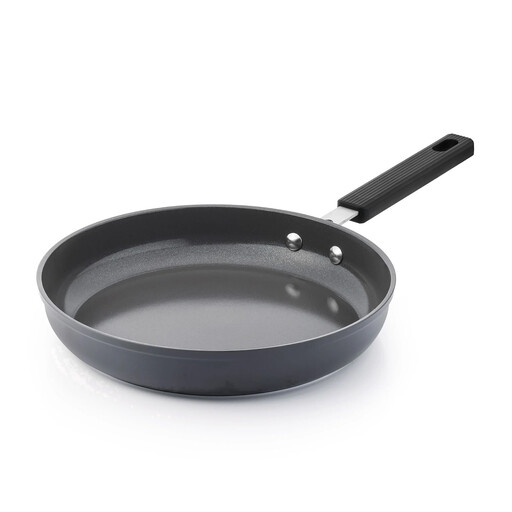
Why It Stands Out: The SENSARTE pan focuses on simplicity, safety and convenience. Its smooth ceramic surface is exceptionally easy to clean, often just needing a quick wipe or rinse. It’s a straightforward, reliable choice for daily cooking tasks.
Pros:
Who is it for? This pan is an excellent choice for individuals, couples or anyone needing a dedicated omelette pan. Its manageable size and easy-clean surface make it perfect for quick, everyday meals like eggs, pancakes or sautéing vegetables.
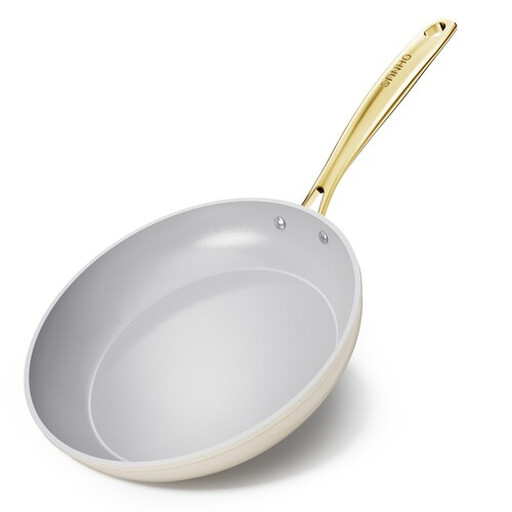
Why It Stands Out: The Sanho pan uses a patented diamond-titanium ceramic coating designed for enhanced durability and scratch resistance. It combines this robust surface with an aluminium core and stainless steel base, ensuring fast, even heating across all cooktops.
Pros:
Who is it for? The 26cm frying pan size makes this a fantastic all-purpose pan for small families or couples. It’s for the home cook who values durability and wants a versatile pan that can handle everything from frying chicken fillets to finishing a casserole in the oven.
If these specific models aren't quite what you're looking for, the world of safe, modern cookware is vast. To find the perfect fit for your kitchen, we invite you to browse our wider selection.
Explore more choices in our Safest ceramic cookware category.
1. Are ceramic non-stick pans truly safe? Modern ceramic coatings are generally considered a safe option because they are manufactured without chemicals like PFAS, PFOA and PTFE. When heated, they do not release the fumes associated with some traditional non-stick pans. Always check the product description to confirm it is a PFAS free frying pan.
2. How should I care for my ceramic frying pan to make it last? To prolong the life of the non-stick surface, it's best to use wooden, silicone or plastic utensils. Avoid using metal tools that can scratch the coating. While many are dishwasher safe, hand washing with a soft sponge and mild soap is often the gentlest method. Finally, avoid using very high heat or heating the pan while empty, as this can degrade the coating over time.
3. Can I use oil or butter in a ceramic non-stick pan? Yes, you can. While one of the benefits of a good non-stick surface is the ability to cook with minimal oil, using a small amount of oil or butter is perfectly fine. It can enhance flavour, improve food release and may even help condition the pan's surface over its lifespan.