
24/7 Customer Support

Free returns

Same-day & Next-day Delivery

Quality Guaranteed

Unlock Your Welcome Offers: FREE Delivery | Up to 80% OFF | Free 30-day JoyPlus trial
Download the APP
A bowl that looks suitable for ramen may not work well for soup, pasta or everyday breakfasts. Ceramic noodle bowls vary significantly in capacity, depth, rim design, weight and care requirements, so checking the details before buying can prevent an attractive but impractical purchase.
For UK households, students and home cooks, three common buying traps are worth avoiding:
Capacity is particularly important for ramen, udon and soup because liquid, noodles and toppings need room without reaching the rim. A deep serving bowl with a capacity around 1.4 to 1.5 litres can suit generous portions, while a smaller ceramic soup bowl may be more practical for cereal, side dishes or lighter meals.
Remember that the stated capacity is usually the bowl’s total volume. The amount you comfortably serve will be lower, particularly when adding broth, noodles and toppings. A bowl with a broad rim can also make chopsticks and spoons easier to use.
A traditional Japanese ramen bowl is generally deeper, helping contain broth and noodles. Wide-rimmed pasta bowls are shallower and make it easier to twirl pasta or serve salads. A cereal bowl typically sits between the two, offering enough depth for milk without making spoon access awkward.
If you want one bowl for several meals, look for a rounded interior, stable base and a rim that is comfortable to hold. Double handles may be useful for hot soup, while a conventional round bowl is usually easier to stack.
Food-safe ceramic and stoneware can provide a substantial feel and a smooth surface for everyday dining. However, check the listing for specific care information rather than assuming a bowl is suitable for every appliance.
Look for clearly stated features such as:
Avoid moving a very hot bowl directly onto a cold surface, and follow the manufacturer’s handling guidance. Glazed finishes may be easier to wipe clean, while textured or embossed surfaces can require more attention around decorative details.
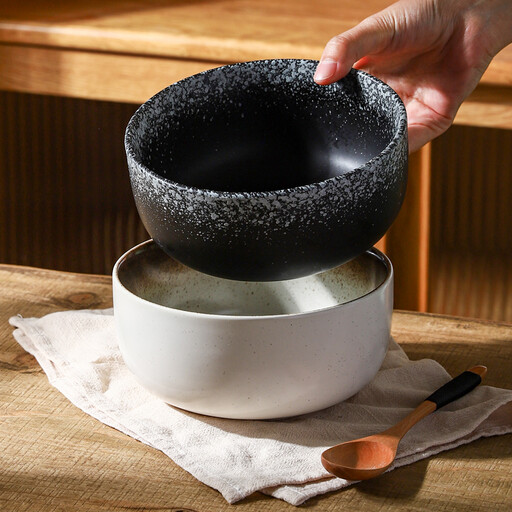
Why This Fits Their Persona: Its 6.5-inch format suits students, couples and shoppers who want a dedicated noodle bowl without committing to a large dinnerware set.
The named size gives shoppers a clearer starting point than relying on appearance alone. Check the listing for capacity and appliance guidance before ordering.
Ceramic construction and a Japanese-style design make it suitable for noodles and individual portions.
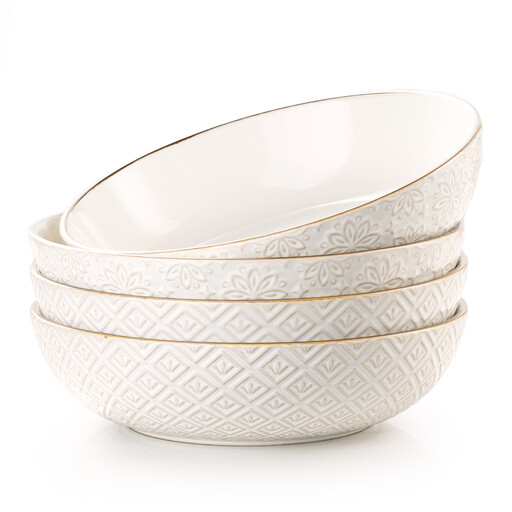
Why This Fits Their Persona: A four-piece set suits households that want coordinated tableware for pasta, salads, soup and shared meals.
The listing specifies a thickened, stackable design and identifies dishwasher, microwave and conventional oven compatibility.
Each bowl measures 8.5 inches by 2.4 inches; the set is described as food-safe ceramic and stackable.
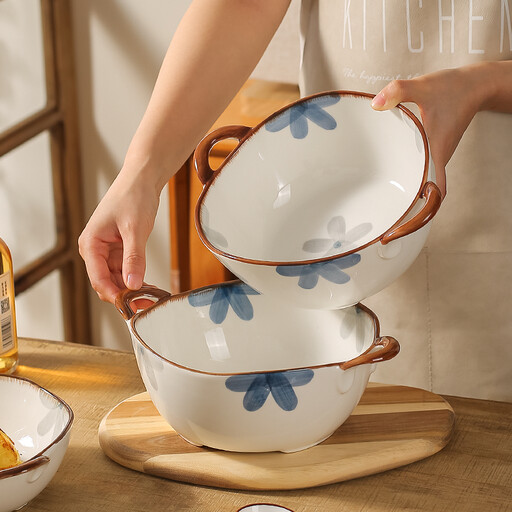
Why This Fits Their Persona: The 1,400ml capacity is suited to generous ramen, pho, noodles and soup portions, while the handles provide an alternative way to hold the bowl.
Its stated capacity and deep profile address the problem of crowded toppings and broth spilling over a shallow rim.
7.5-inch diameter, 1,400ml stated capacity and double-handle construction.
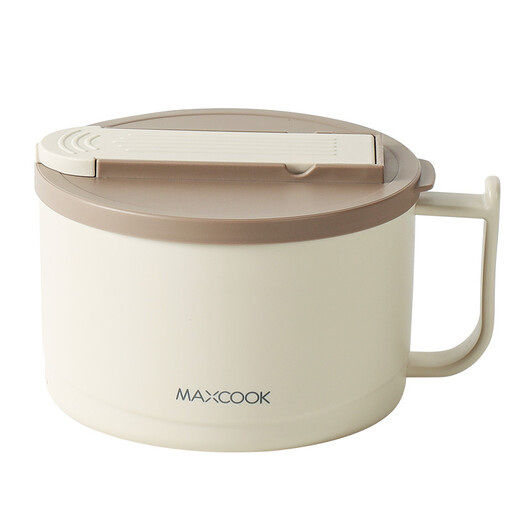
Why This Fits Their Persona: It suits office lunches, student accommodation and picnics where a bowl, lid, chopsticks and spoon need to travel together.
The integrated cutlery tray and leak-proof lid reduce the need to carry separate utensils and containers.
The listing states a 1.5-litre capacity, BPA-free materials, microwave, dishwasher and freezer suitability.
We have compiled a complete, real-time list of products that fully satisfy these strict selection criteria and UK safety regulations.
Use the following as a practical starting point rather than a strict rule:
Before purchasing, compare the bowl’s dimensions with your existing shelves, dishwasher racks and microwave cavity. Product photographs can make bowls appear larger or smaller than they are.
Some are, but not all. Check the individual listing for a clear microwave-safe statement, and follow any instructions regarding metallic decoration, sudden temperature changes and maximum heating time.
For a standard individual portion, a medium-to-large deep bowl is usually more practical than a shallow pasta bowl. Those who add substantial toppings or prefer more broth may prefer a capacity of approximately 1.4 litres or more. Always compare stated capacity with the portion size you normally prepare.
Many modern ceramic bowls are listed as dishwasher-safe, but the finish, printed decoration and manufacturer guidance still matter. Sets such as the listed Dafuceramic pasta bowls and cereal bowls specify dishwasher suitability. Place bowls securely in the rack and check the product instructions before the first wash.