People warming a room for short periods
If you want warmth while you are awake in one small room, a portable ceramic fan heater may fit the task. Choose a position where it can stand level and clear of furnishings, then switch it off when you leave.


A portable ceramic fan heater can suit short, attended warm-ups in one small room if it can stand on a level floor at least one metre from furniture and curtains, as Devon and Somerset Fire and Rescue Service advises. For regular use, compare heat settings and thermostat controls rather than choosing by maximum wattage alone; GOV.UK advises unplugging electric heaters when you go to bed or go out.
If you want warmth while you are awake in one small room, a portable ceramic fan heater may fit the task. Choose a position where it can stand level and clear of furnishings, then switch it off when you leave.
Limited floor space, soft furnishings, pets or a busy walkway can make placement the deciding factor. Tip-over and overheat protection are worth checking, but they do not replace safe clearance or attended use.
If you expect to use a heater regularly in a bedroom, home-working room or lounge, compare its lower heat setting and thermostat as well as its maximum output. Electricity use also depends on how long it runs and how much heat the room loses.
Find a safe floor position before comparing controls or output: a compact heater does not make a crowded position safe.
| Concern | What to check | Who this matters to |
|---|---|---|
| Safe placement | Check tip-over and overheat protection, then measure a level floor position at least one metre from furniture and curtains. | In a crowded room, I need a position that keeps the heater clear of furnishings and out of the walking route. Around 40% of consumers put safe placement and attended use first. |
| Short warm-ups | Compare heat settings and the heater’s dimensions if you intend to warm one occupied area and put the unit away afterwards. | When I am using just one room, I want warmth during the time I spend there rather than a heater running while I am away. Roughly 30% of consumers make a short, single-room warm-up their primary concern. |
| Repeat-use control | Compare stated maximum and lower outputs, thermostat controls and any timer; assess electricity use against your own unit rate and likely running time. | If I use the room often, I want to adjust the heat instead of leaving the heater at maximum output. Around 30% of consumers put control over repeat-use electricity consumption first. |
A tip-over switch addresses a knock-over where fitted; it does not create clearance from bedding, curtains or furniture. GOV.UK also advises unplugging electric heaters when you go to bed or go out.
Measure the intended floor position before buying. If you cannot keep the heater at least one metre from furniture and curtains, choose another position rather than moving it onto a crowded surface.
A maximum-output figure does not tell you which setting you will use after the room warms up. Energy use while heating depends on the selected output and running time; insulation and heat loss affect how long heating is needed.
Compare the lower setting and thermostat alongside maximum output. To assess electricity use, multiply the selected kilowatts by expected operating hours, then apply your own electricity unit rate.
A lead across a walking route or blocked air grilles can make an otherwise convenient position unsuitable. A smaller heater does not remove those placement concerns.
Check that the heater can reach an appropriate wall socket without the lead becoming a trip hazard, and keep its grilles and surrounding floor area clear. Do not use it to dry clothes.
The DXUC2BS illustrates Dimplex’s compact upright ceramic fan-heater format for small spaces.
The HFX65V20 is a tower-format ceramic fan heater for consumers comparing additional controls.
Model 2514041 provides a reference point for the oscillating ceramic PTC tower-heater format.
These Joybuy models cover room-oriented and personal ceramic fan-heater formats. Match their stated controls and output to your intended use, but establish a safe position in the room before choosing any portable heater.
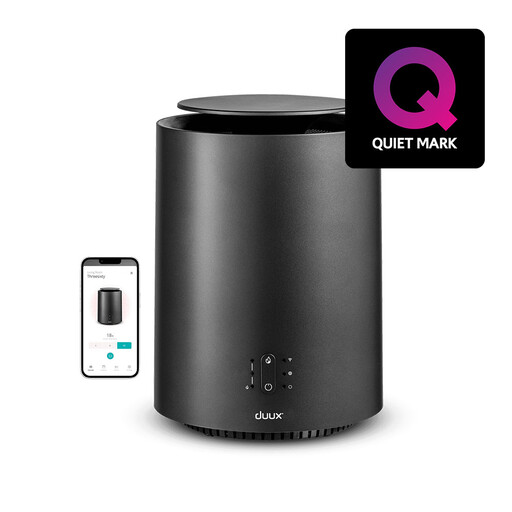 No image available
Consider this model if you want a room-oriented heater rather than warmth directed at one seat.
The product title specifies 1,800 W power and 360° oscillation. Check its dimensions and cable reach against a clear, level floor position, and use it only while attended.
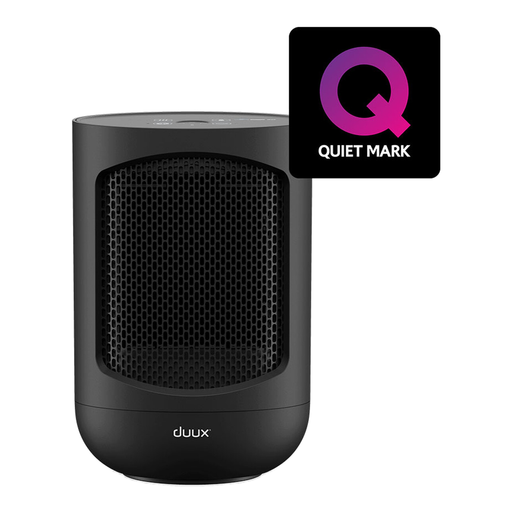 No image available
Consider this personal-use format when you want warmth near your occupied area rather than assuming it will heat the whole room.
The product title specifies 1,500 W power, 60° oscillation and three settings. Check whether its controls meet your needs and whether your intended position maintains clearance from furniture and curtains.
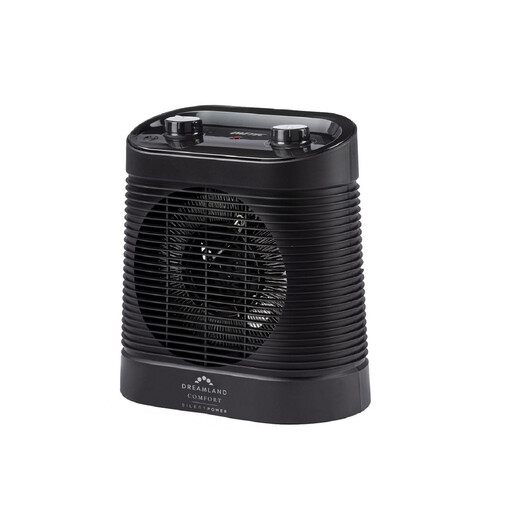 No image available
Consider this model if you want a ceramic fan heater with digital controls for attended sessions in one room.
The product title specifies 2,000 W power. Check its floor-base stability, tip-over protection and available heat settings before deciding whether it fits your room and use pattern.
No. GOV.UK fire-safety guidance advises unplugging electric heaters when you go to bed or go out. A thermostat, timer or tip-over switch does not replace that attended-use precaution.
Keep it at least one metre from furniture and curtains, as Devon and Somerset Fire and Rescue Service advises. Choose a level position where the heater will not be knocked over, and keep its air grilles unobstructed.
Do not move it beside furnishings or across a walking route just to make the cable reach. Check the manufacturer’s connection instructions and find an appropriate socket and clear position before using it; if the room cannot accommodate both, reconsider whether a portable heater fits that space.