People stocking a shared office drawer
Count the wrapped portions and consider whether a choice of flavours matters to colleagues. Check peanut, tree-nut, milk, soya and gluten-related requirements before making a pack communal.


Choose a larger variety pack when several people will share individually wrapped bars; for one person’s between-meals snack, compare the protein, fibre and other nutrition values for the bar you would actually eat. Check every colleague’s allergen requirements before stocking a shared drawer. A bar is convenient at lunchtime, but it does not by itself cover the range of food groups in the NHS Eatwell Guide; if it replaces lunch, include other foods such as fruit or vegetables and a protein-containing food.
Count the wrapped portions and consider whether a choice of flavours matters to colleagues. Check peanut, tree-nut, milk, soya and gluten-related requirements before making a pack communal.
Compare protein and fibre alongside energy, sugars and saturates for the portion you expect to eat, rather than choosing by a front-of-pack protein claim alone.
Check the exact flavour’s ingredients and allergen statement. Vegan and gluten-free descriptions do not answer every allergy question.
Start with who will eat the bars and how many portions they need. Then compare the label for the portion actually eaten, not just the pack front.
| Priority | What to check | Your needs |
|---|---|---|
| Lunch or snack | Decide whether the bar is a snack or one part of lunch. The NHS Eatwell Guide describes dietary balance across a day or week, rather than requiring it in every meal. | If a bar takes the place of lunch, I’ll need other foods alongside it, such as fruit or vegetables and a protein-containing food. |
| Portion and nutrition | Compare labels per 100g and per bar or stated serving. Check protein and fibre alongside energy, sugars, saturates and salt; a twin-bar serving is not the same as one bar. | For a between-meals snack, I want figures for the amount I’m likely to eat, not just a claim on the front of the pack. |
| Allergens | Read the exact flavour’s ingredients and may-contain statement. Check relevant requirements even when a pack is labelled vegan or gluten free. | Before putting bars in a shared drawer, I need to know whether everyone who might take one can eat that product. |
| Pack format | Count bars and inner packs, note grams per bar, and check whether the portions are individually wrapped. Confirm current availability before relying on a particular pack. | A larger pack makes sense for several desk days or colleagues; for myself, a smaller pack may be enough. |
A protein claim or convenient wrapper does not establish that a bar supplies the variety of foods described in the NHS Eatwell Guide.
Plan the bar as a snack or part of lunch. If it replaces lunch, include other foods such as fruit or vegetables and a protein-containing food.
Nature Valley gives nutrition for a two-bar Crunchy Variety serving, while other packs contain single 40g or 50g bars. Per-serving figures therefore describe different amounts of food.
Use per-100g figures for a like-for-like label comparison, then check the figures for the number of bars you would eat.
Products in this category can contain or carry may-contain statements for peanuts, tree nuts, milk, soya or cereals containing gluten. Vegan or gluten-free wording does not settle every allergen question.
Check the current label for each flavour and keep shared bars in their wrappers so the ingredient information stays with them.
The documented examples range from three to 20 bars. A small pack may run out quickly in a shared drawer, and a particular listing’s availability can change.
Work out how many wrapped portions you need, then confirm the chosen pack’s count and current availability.
Its documented multipacks include a crunchy variety format for sharing and a smaller Protein Peanut & Chocolate format for individual portions.
TREK has plant-based flapjacks, including a documented Salted Caramel three-pack listed as vegan and gluten free.
A nut-led option represented here by Maple Syrup, Pecans & Peanuts bars in a small multipack.
Graze describes its Oat Boost range as wholegrain-oat flapjacks and positions it around reduced sugar.
Special K Red Berry provides a single-bar label reference rather than a documented large sharing pack.
These cereal-bar and flapjack multipacks cover individual desk snacks and larger packs for sharing. Compare their different pack sizes and check the exact flavour’s label before placing bars in a communal drawer.
 No image available
Eight individually portioned bars offer an option for one person’s desk-drawer snacks. Nature Valley UK lists around 10g protein and around 4g fibre per 40g bar. The product contains peanut, soya and milk and may contain tree nuts.
 No image available
The 16-bar format is worth considering when you need more portions for a desk drawer. Check the Cocoa Oat flavour’s nutrition, dietary labels and allergen statement before choosing it for yourself or sharing it.
 No image available
This three-pack is a smaller option for an individual desk drawer. Ocado lists the Salted Caramel flavour as vegan and gluten free, with 9g protein, 12g sugars and 4.8g saturates per 50g bar. It contains soya and may contain milk, nuts and peanuts; check the current label.
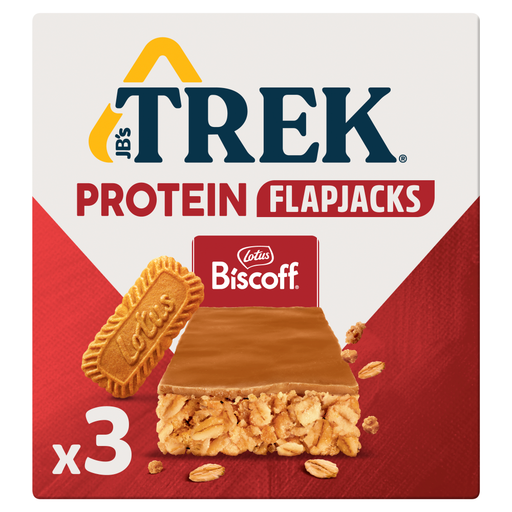 No image available
The three-bar format suits someone who needs fewer desk-drawer portions. Check this flavour’s ingredients, gluten-free status and per-bar nutrition on its current label rather than applying details from another TREK flapjack.
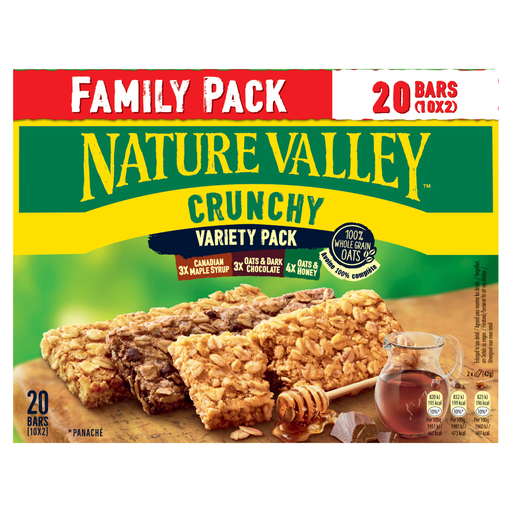 No image available
Ten twin packs provide 20 bars in three flavours, a format to consider when several people need wrapped portions. Nature Valley UK gives 196 kcal and 11.3g sugars for a two-bar serving. The bars may contain nuts, peanuts and wheat, so check the current label before sharing.
A cereal bar can be part of lunch, but a bar alone does not establish the variety of foods described in the NHS Eatwell Guide. The guide considers dietary balance across a day or week; if the bar replaces lunch, include other foods such as fruit or vegetables and a protein-containing food.
Compare the nutrition per 100g, then check the figures for the number of bars you would eat. As NHS food-label guidance explains, a stated portion may differ from your own, so a two-bar serving should not be compared unadjusted with one 40g or 50g bar.
Check total sugars per 100g and per bar. The NHS describes more than 22.5g total sugars per 100g as high for food labels; the per-bar figure shows the amount in the portion you actually eat. Check saturates and salt on the same basis if they matter to your comparison.
No. Read the exact flavour’s ingredients and may-contain statement for the relevant allergens. For example, Ocado lists TREK Salted Caramel flapjacks as vegan and gluten free, but says they contain soya and may contain milk, nuts and peanuts.