Lunch packers comparing calories
If the bar is an extra item alongside a ploughman's lunch, compare kcal for the individual bar you intend to pack. Bar and multipack sizes are not the same measure.


For a cereal bar that adds fewer calories to a ploughman's lunch, compare energy per bar before choosing by pack size or a protein claim. Kellogg's lists its Coco Pops Snack Bar at 82 kcal per 20 g bar, while Tesco lists Graze Cocoa Vanilla Oat Boost at 116 kcal per 30 g boost with 2.7 g sugars; those different portions make the per-100 g panel useful too. Check the exact pack's ingredients and allergens if you are packing lunch for someone else.
If the bar is an extra item alongside a ploughman's lunch, compare kcal for the individual bar you intend to pack. Bar and multipack sizes are not the same measure.
If sugars or fibre matter alongside calories, read those figures on the same product's nutrition panel rather than choosing by its calorie figure alone.
A protein bar is a different lunch add-on choice from a small cereal bar. Check its energy per bar and allergens as well as its protein figure.
Start with the bar's contribution to lunch, then use the nutrition and ingredient panels to check the trade-offs that matter to you.
| Priority | What to check | Your needs |
|---|---|---|
| Energy and portion | Compare kcal per individual bar and its weight. Use kcal per 100 g when comparing bars of different sizes. | I'm adding a bar to lunch, so I want to know what the portion I'll eat contributes. |
| Sugars and saturates | Read sugars and saturates per bar, then compare the per-100 g figures if portions differ. Do not assume a smaller bar has the lighter formulation. | Calories matter to me, but I also want to compare what is in each bar. |
| Protein and fibre | Check grams per bar alongside kcal per bar. Keep the exact product and portion in view when comparing claims. | If I choose a bar for its protein or fibre, I'm willing to consider a different calorie contribution. |
| Allergens and suitability | Read the current pack's ingredients, emphasised allergens and any relevant precautionary wording. Check suitability statements on that exact variant. | I need to know whether the bar suits the person who will eat the lunch, particularly if I'm packing it for someone else. |
A small bar can contribute fewer calories per serving without having fewer calories per 100 g than a larger one.
Use kcal per bar for the lunch you are packing, and the per-100 g figure to compare products of different sizes.
The cited Kellogg's Coco Pops, Graze Cocoa Vanilla Oat Boost and Nature Valley Protein Peanut & Chocolate examples come in 20 g, 30 g and 40 g portions respectively. Their per-bar figures therefore describe different amounts of food.
Check the weight beside each energy figure before drawing a conclusion about the bars' formulations.
Nature Valley lists 195 kcal per 40 g Protein Peanut & Chocolate bar, and Eat Natural lists 220 kcal per 40 g Dark Chocolate & Peanut Protein Bar.
Choose by the protein figure when that is your priority, while allowing for the bar's stated energy contribution to lunch.
The cited product examples include different cereal, milk, soya, peanut and nut-related ingredient or precautionary information; one brand name does not settle suitability across variants.
Read the ingredients and allergen wording on the exact current pack before sharing it.
Its UK product pages provide individual-bar figures for the cited Coco Pops and Special K snacks.
Its oat-boost range offers a different portion and ingredient profile from the smaller cited cereal bars.
Its Protein Peanut & Chocolate bar illustrates a protein-focused choice rather than the smallest cited calorie contribution.
The cited Dark Chocolate & Peanut Protein Bar is a nut-and-protein option with a larger energy contribution than the cited small cereal bars.
Trek's Biscoff Protein Flapjacks are another product line to consider when plant-based suitability is a priority.
Alpen Light variants appear on a Weetabix Food Co. product list dated November 2021.
These Joybuy options include cereal bars, oat bars and a protein bar to consider alongside a ploughman's lunch. Compare nutrition and allergens on the exact pack you choose.
 No image available
For a sweet bar alongside lunch, compare energy and sugars for one 21.5 g bar, and check the exact pack's allergens before sharing it.
 No image available
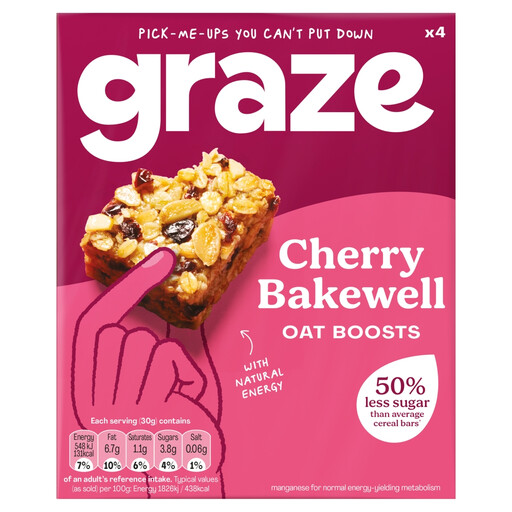
If an oat bar appeals, compare the Cherry Bakewell variant's energy, sugars and fibre per 30 g bar. Check its ingredients when packing lunch for someone else.
 No image available
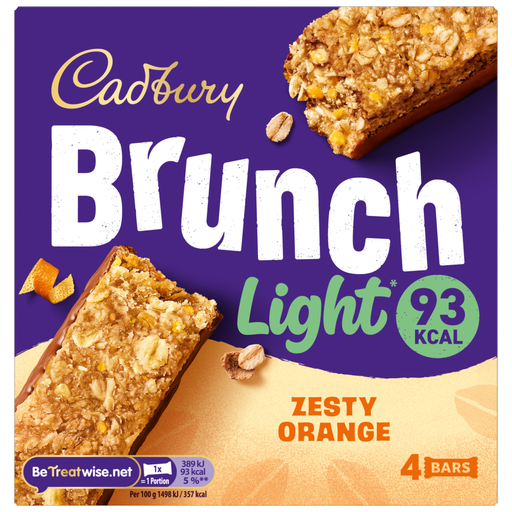
For a chocolate-and-orange cereal bar with lunch, read the current pack's per-bar energy and ingredient information. The stated pack weight is 104 g across four bars.
 No image available
Compare energy and sugars for this 30 g oat bar if you are considering a fruit-flavoured lunch add-on. Read this variant's own panel rather than using figures from another Graze flavour.
 No image available
If you want a protein bar with lunch, compare this 40 g variant's protein and energy figures together. Check its nut and other allergen information on the current wrapper.
Use per-bar kcal to assess the portion you will put in the lunch, and per-100 g figures to compare bars of different sizes. GOV.UK nutrition-labelling guidance describes the per-100 g basis; check the stated portion weight when using an additional per-bar figure.
No. Nature Valley lists about 10 g protein and 195 kcal per 40 g Protein Peanut & Chocolate bar, while Eat Natural lists 7.8 g protein and 220 kcal per 40 g Dark Chocolate & Peanut Protein Bar. Compare protein and energy for the exact bar rather than treating its name as a calorie guide.
Read the current pack's full ingredient list, emphasised allergens and any relevant precautionary wording for the exact variant. GOV.UK guidance describes ingredient and allergen labelling for prepacked food; do not assume another flavour has the same ingredients.
Use figures from the variant and pack you are considering now. Weetabix Food Co. listed several Alpen Light variants in November 2021, but that historical list does not establish the nutrition or ingredients of a current pack.