People packing snacks for busy days
If a bar is going into a work bag, lunchbox or travel bag, compare the protein and calories in one wrapper rather than relying on the multipack’s front label.


Choose a grab bag by the protein in each individually wrapped bar, then compare the calories, sugars, fibre and allergens on the same per-bar basis. The documented Nature Valley, TREK and Eat Natural examples provide different amounts of protein in 40–50 g portions, so a protein-focused name alone does not tell you which portion fits your plans.
If a bar is going into a work bag, lunchbox or travel bag, compare the protein and calories in one wrapper rather than relying on the multipack’s front label.
TREK describes its Protein Flapjacks as providing plant-based protein. Check the exact flavour’s ingredients and dietary labelling, including any precautionary allergen statement, before choosing a pack.
The documented Nature Valley, TREK and Eat Natural examples contain or may contain nuts, soya or milk. Read the ingredients and precautionary allergen wording on the exact pack; another flavour from the same brand may differ.
Start with the nutrition declaration for one bar, then check whether the ingredients and pack format suit how you plan to use it.
| Priority | What to check | Your needs |
|---|---|---|
| Protein per bar | Compare grams of protein per wrapper and the bar’s weight. Nature Valley UK lists 10.4 g per 40 g Salted Caramel Nut bar; Sainsbury’s lists 10 g per 50 g TREK Original Oat flapjack. | I want to know what one bar contributes, rather than calculate it from a multipack or judge it by the word “protein”. |
| Other nutrition | Read calories, sugars, fibre and saturated fat per bar. For example, Nature Valley UK lists 6.4 g sugars per 40 g Salted Caramel Nut bar, while Sainsbury’s lists 12 g per 50 g TREK Original Oat flapjack. | If I pack a bar regularly, I want to compare the whole portion’s nutrition alongside its protein. |
| Ingredients and allergens | Check the exact flavour’s ingredients, highlighted allergens and “may contain” wording. Confirm any vegan or gluten-free requirement against that product’s pack. | A bar needs to fit my ingredient and allergen requirements; another flavour’s label cannot answer that for me. |
| Pack format | Check the number of bars, weight of each bar and whether the portions are individually wrapped. Compare nutrition using the portion you will actually carry. | I want a pack size that fits how often I take a bar out, without committing to more of an unfamiliar flavour than I need. |
Nature Valley UK lists 10.4 g protein in its 40 g Salted Caramel Nut bar, whereas Eat Natural lists 7.8 g in its 40 g Dark Chocolate & Peanut bar. The wording on the front does not make those portions equivalent.
Compare the declared grams of protein for one bar, alongside its weight and calories.
Action on Salt & Sugar’s November 2025 audit of 458 snack bars across 10 major UK retailers found that 37% were high in sugars and 55% were high in saturated fat under front-of-pack labelling thresholds. Those figures describe the audited snack bars, not every protein-bar range.
Read the sugars, saturated fat and calories for the particular bar you are considering, as well as its protein.
The documented bar recipes differ in ingredients and precautionary allergen wording. A dietary label or ingredient list for one flavour does not establish the contents of another.
Check the current pack’s ingredients and allergen advice before buying several portions, especially where an allergy or dietary requirement matters.
An unsuitable flavour or allergen statement can leave bars in the multipack unused.
A brand may sell both protein-focused bars and other cereal-bar formats; compare the exact range and flavour rather than applying one product’s figures across the brand.
Its UK Protein range includes individually portioned nut-based bars.
TREK distinguishes its oat-based Protein Flapjacks from its separate High Protein bar range.
Its nut-based protein bars offer a different format from an oat flapjack.
Graze presents its Oat Boost range around wholegrain oats and fibre rather than a specified protein amount for every flavour.
Special K includes cereal bars and protein-bar products, which should be compared as distinct lines.
Alpen muesli and an individually wrapped Alpen bar are different products for this buying decision.
These Nature Valley and KIND multipacks offer portion-sized bars to compare by pack count, flavour and the nutrition declared for each bar.
 No image available
For a 40 g portion to carry separately, Nature Valley UK lists 10.4 g protein per Salted Caramel Nut bar. Check the pack’s ingredients and allergen advice if nuts, soya or milk matter to you.
 No image available
This eight-bar pack offers 40 g portions; the Joybuy product information lists 10 g protein per bar. Check its milk, peanut and soya ingredients and confirm the flavour suits you before choosing the larger pack.
 No image available
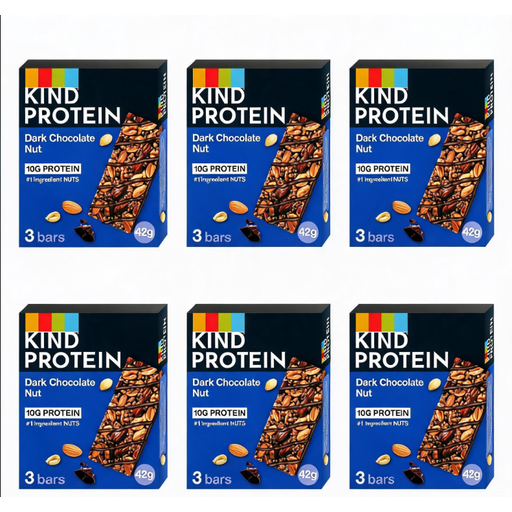
If you prefer a dark-chocolate nut bar, compare the nutrition for one 42 g portion before choosing this bundle. Check the exact pack’s peanut, almond and soya allergen information, including any precautionary wording.
 No image available
This four-bar pack has 40 g portions. Joybuy’s product information lists 10.24 g protein per bar and identifies peanuts, soya and milk as allergens; use the current wrapper for the full nutrition and allergy advice.
 No image available
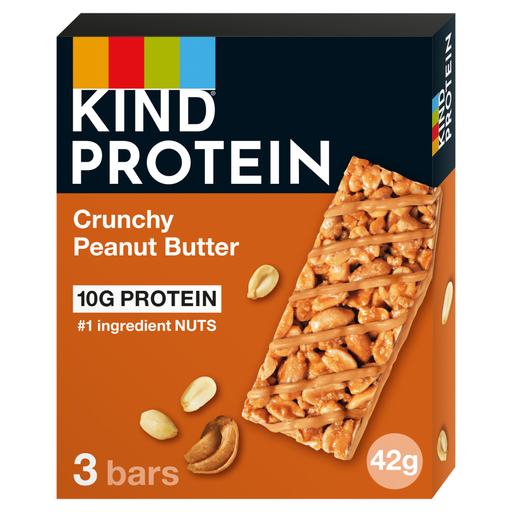
This three-bar peanut-butter pack provides 42 g portions. Compare protein and sugars per bar on the pack, and check its peanut and soya ingredients and precautionary nut wording if relevant.
No. Read the declared grams of protein for one bar, checking whether the nutrition table is given per bar or per 100 g. Compare calories and sugars on the same per-bar basis.
Do not assume that a protein-focused snack replaces a meal. The documented Nature Valley, TREK and Eat Natural examples are 40–50 g bars with different nutrition per portion; read the full label for the role you intend the bar to play.
Check the exact pack for nuts, soya and milk, including “may contain” statements. The documented Nature Valley, TREK and Eat Natural examples differ in which of these ingredients they contain or may contain, so another flavour’s label is not a substitute.
Use the listing to compare candidate packs, then read the physical wrapper’s ingredients, allergen advice and nutrition declaration before eating the bar. This matters particularly when choosing for an allergy or a vegan or gluten-free requirement.