Desk and commute snackers planning a portion
An individually portioned bar may be easier to account for than eating from an open bag. Check the energy and sugars for the stated serving, then decide how that portion fits your planned snack.


For a planned portable snack, compare the energy, sugars, fibre and protein in the serving you would actually eat; an oat or protein claim alone does not settle the choice. Check whether a serving means one bar or two, and read the current allergen information for every flavour in a mixed pack.
An individually portioned bar may be easier to account for than eating from an open bag. Check the energy and sugars for the stated serving, then decide how that portion fits your planned snack.
If those nutrients matter to your choice, compare their amounts for the exact bar and serving size alongside energy and sugars. The word ‘protein’ or ‘fibre’ on the front does not describe the whole nutrition panel.
If you need to avoid particular ingredients, check each flavour in a grab bag. Read the current ingredient list, declared allergens and any relevant precautionary statement rather than assuming every bar in a range is the same.
Start with the portion you intend to eat, then compare its nutrition information and ingredient details across the flavours you are considering.
| Priority | What to check | Your needs |
|---|---|---|
| Portion and energy | Check the stated serving weight, how many bars it contains and the energy for that serving. Work out how many bars you would actually eat. | I want a defined snack portion that fits the rest of my day, whether the pack calls one bar or two bars a serving. |
| Sugars and front-of-pack claims | Compare sugars and energy for the same stated serving. Read a protein, fibre or wholegrain claim alongside the full nutrition panel. | An appealing claim catches my eye, but I want to know what the complete portion contains before choosing a multipack. |
| Protein and fibre | Compare the grams of each in the exact flavour and serving. Keep serving weight, energy and sugars in view when comparing bars. | If I am choosing a bar for its protein or fibre, I want the figures for the portion I will eat—not a claim that might refer to a different serving. |
| Ingredients and allergens | Read the ingredient list and declared allergens for each flavour. Check any precautionary allergen statement relevant to you. | I need to screen the specific bars in a mixed pack, not rely on the suitability of another flavour from the same brand. |
| Pack format | Check the number and weight of bars in the pack, and whether the portion format suits when you plan to carry one. | I want to take a planned snack with me without mistaking the pack size for the serving size. |
A fibre claim does not tell you the sugar content. In its 2025 UK snack-bar audit, Action on Salt and Sugar reported that 31% of bars carrying a high-fibre claim were also high in sugars; that figure describes audited products, not shoppers.
Use the claim to identify a bar to examine, then compare energy, sugars, fibre and protein for its stated serving.
Nature Valley UK lists its Apple & Cinnamon serving as two bars weighing 42 g and containing 195 kcal. Kellogg's UK lists one 27 g Special K Red Berry bar at 104 kcal. The portions differ, so the energy figures need their serving sizes alongside them.
Check how many bars the label counts as a serving and how many you intend to eat. Use per-100-g figures as an additional like-for-like comparison.
Ingredients and precautionary statements can differ between varieties, which matters when a grab bag contains several flavours.
Read the current pack information for each variety you are considering, including any relevant ‘may contain’ statement.
A convenient bar can still become an unplanned extra rather than the snack you intended. NHS guidance on weight management emphasises an eating pattern that fits everyday life.
Decide when you would eat the bar and check its stated portion before choosing a larger pack.
Nature Valley UK lists both Protein bars and Crunchy bars. Compare the named variant rather than treating the range as one nutrition profile.
Graze describes its Oat Boost flapjacks in terms of oats and fibre. Its range claims are a starting point for checking an individual flavour, not a substitute for its label.
Kellogg's Special K range includes individually portioned cereal bars.
These oat, cereal and nut-bar multipacks offer different portion sizes and formats to consider for a planned portable snack. Compare the nutrition and allergen information for the exact pack before choosing.
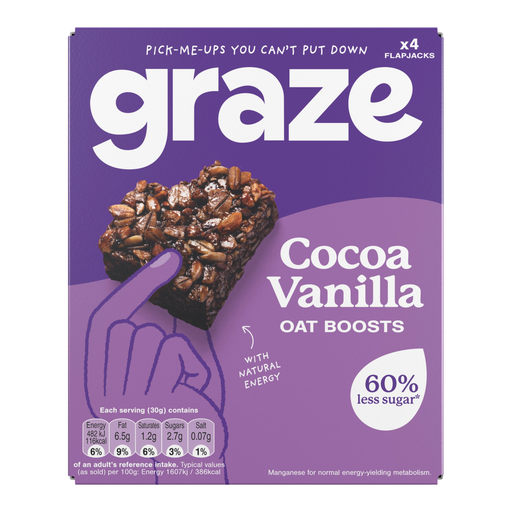 No image available
This pack contains four 30 g oat squares. If the protein wording is important to your choice, compare protein per square with its energy, sugars and fibre on the current pack; check the ingredients and allergens for this variety too.
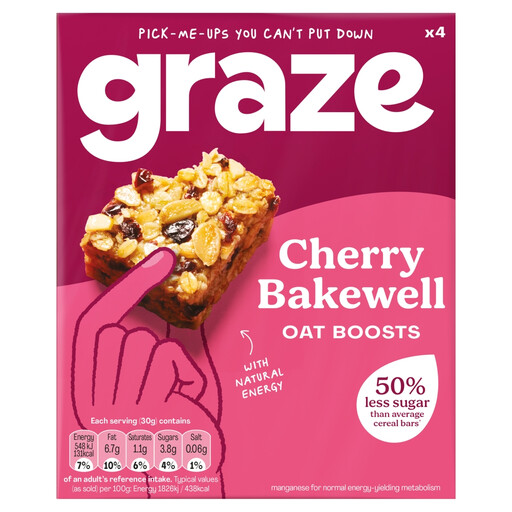 No image available
This Cherry Bakewell pack contains four 30 g oat bars. Compare the stated serving’s energy, sugars, fibre and protein with other oat bars, and check its current ingredients and allergens.
 No image available
This pack contains four 40 g peanut-and-chocolate bars. If you are comparing protein-focused options, check protein alongside energy, sugars and fibre for this exact serving. Check the current allergen statement if you need to avoid peanuts or other ingredients.
 No image available
This pack contains six 21.5 g bars, a size to consider if you want a defined sweet-snack portion. Read this Dark Chocolate variety’s own nutrition and allergen information rather than using figures for another Special K flavour.
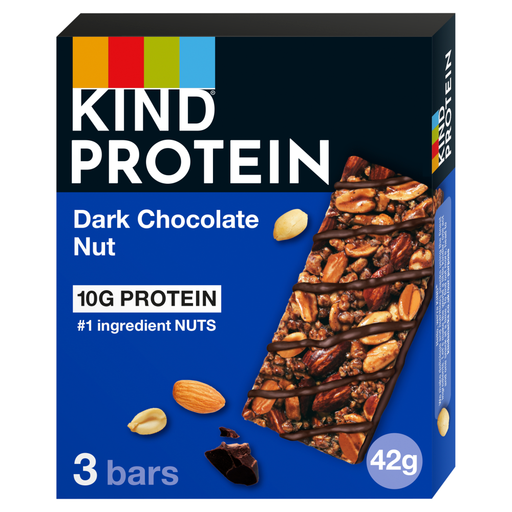 No image available
This pack contains three 42 g dark-chocolate nut bars. Compare the energy, sugars, protein and fibre for a 42 g bar with the portions you are considering, and check the current nut and other allergen information.
No cereal bar causes weight loss by itself. NHS guidance focuses on an eating pattern that reduces overall calories and fits everyday life; use the bar’s stated serving information to decide how a planned snack fits into yours.
Not on that figure alone: compare the portions and their sugars, fibre and protein as well. Kellogg's UK lists 104 kcal for one 27 g Special K Red Berry bar, while Nature Valley UK lists 195 kcal for a two-bar, 42 g Apple & Cinnamon serving, so the serving sizes must accompany any comparison.
No. Check the complete nutrition information for the exact serving, including energy and sugars. Action on Salt and Sugar reported that 31% of bars carrying a high-fibre claim in its 2025 UK snack-bar audit were also high in sugars; this was a finding about audited products, not consumer preferences.
Read the current ingredient and allergen information for each flavour, including any relevant precautionary statement. Do not assume that a different bar from the same brand has the same ingredients or allergen information.