Students stocking a shared cupboard
A multipack can provide bars to take out one at a time. Check both the pack count and whether the declared serving is one bar or a pair, especially if cupboard space is limited.


For a moving-in grab bag, start with the number of bars you can carry and use conveniently, then compare the nutrition panel per bar and per 100g. An oat or soft cereal bar may suit straightforward snacking, while a protein or fruit-and-nut bar offers a different mix of ingredients and texture; none of these formats removes the need to check serving size and the exact pack’s allergens.
A multipack can provide bars to take out one at a time. Check both the pack count and whether the declared serving is one bar or a pair, especially if cupboard space is limited.
If protein or fibre matters to your choice, compare the amounts per bar alongside the rest of the nutrition panel. Nature Valley UK, for example, lists about 10g protein and 4g fibre per 40g Protein Peanut & Chocolate bar; that figure does not describe every protein bar.
Choose by the exact product’s ingredients and allergen declaration, rather than a brand-wide description. The cited ranges include recipes with peanuts, other nuts, soya, milk and gluten-containing cereals, as well as products carrying vegan or gluten-free labels.
Choose a bar format you expect to use, then compare like-for-like nutrition figures and check the current pack for ingredients that matter to you.
| Priority | What to check | Your needs |
|---|---|---|
| Portions and pack size | Check the number of bars, their individual weights and the declared serving. Nature Valley UK lists two bars as a 42g serving for its Crunchy Oats & Honey Family Pack, but one 40g bar as a serving for Protein Peanut & Chocolate. | I want to take a bar to a lecture without misreading a two-bar serving as one bar. A smaller pack may also make sense if I have not tried the flavour. |
| Nutrition panel | Use per-100g figures to compare different-sized bars, then read the amount per bar or serving. NHS food-labelling guidance identifies energy, sugars, saturates, protein and salt among the figures to check. | Is this mainly a convenient sweet snack, or am I comparing stated protein and fibre amounts? I want the figures for the portion I would actually eat, not just a claim on the front. |
| Ingredients and allergens | Read the exact pack’s ingredient list, allergen declaration and any “may contain” wording. Check vegan or gluten-free labelling on the chosen variant rather than applying it to an entire range. | In a shared flat, I need to know whether this particular bar meets my dietary requirements and whether its allergen wording affects where or how I keep it. |
| Format and texture | Distinguish crunchy oat bars, soft baked bars, flapjacks and nut-based bars. Kellogg’s UK describes Nutri-Grain Apple as soft baked; Eat Natural UK lists peanuts and pecans in its cited protein bar. | Would I reach for a soft bar between classes, or do I prefer a crunchy oat or nut-based snack? Texture matters when choosing a multipack that will sit in my cupboard. |
A declared serving may contain more than one bar. Nature Valley UK lists a two-bar, 42g serving for its cited Crunchy Oats & Honey pack, compared with a single 40g bar for its cited Protein Peanut & Chocolate pack.
Read the serving-size line before comparing nutrition figures or deciding how many snacks a multipack represents for you.
Bars described by their protein or wholegrain ingredients can still differ in sugars, saturates and portion size. A single highlighted ingredient or nutrient cannot stand in for the full panel.
Compare similar products per 100g, then check the figures for the bar or serving you expect to eat. NHS food-labelling guidance distinguishes these two bases.
Ingredients and precautionary allergen statements vary by recipe. Nature Valley UK lists peanut, soya and milk ingredients for its Protein Peanut & Chocolate bar, while Eat Natural UK lists peanuts and pecans for its cited Maple Syrup, Pecan & Peanut bar.
Check the current pack of the exact flavour, including its “may contain” statement, before buying or eating it.
These brand examples illustrate different bar formats; the details of one named product do not apply to every flavour or pack in its range.
Its UK range includes Crunchy oat bars and Protein bars, giving students two distinct formats to compare.
Alpen Muesli presents Original and No Added Sugar wholegrain mueslis in its cited UK range.
The cited UK products cover a soft baked Nutri-Grain Apple bar and a toasted-rice-and-milk Rice Krispies Snack Bar.
Graze describes its Oat Boost range as wholegrain-oat flapjacks.
The cited Maple Syrup, Pecan & Peanut Protein Bar is a nut-led 40g option.
TREK describes its Protein Flapjacks as plant-based bars and states that they provide 9g plant-based protein.
These options cover protein bars and flapjacks alongside oat and fruit-and-nut snacks for a student grab bag. Compare the pack format and current label for the particular product you choose.
 No image available
This larger pack is an option if you want peanut-butter-flavoured protein bars to take out individually. Compare the nutrition information per 50g bar and check the current allergen declaration before keeping it in a shared cupboard.
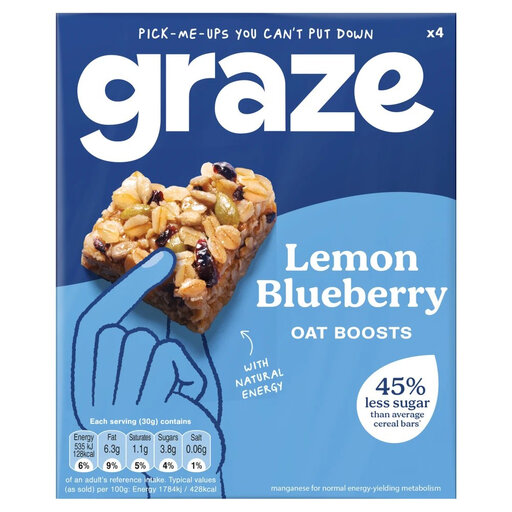 No image available
This four-pack offers an oat-based alternative to a protein bar for a student snack drawer. Check the nutrition panel for each 30g portion and the exact pack’s ingredients and allergen wording.
 No image available
Consider this four-pack if you prefer a peanut-flavoured bar to an oat flapjack. Check the current pack’s nut and other allergen declarations, and compare nutrition per 35g bar as well as per 100g.
 No image available
This three-pack suits a comparison of flavoured protein flapjacks with standard oat bars. Read the nutrition panel for each 50g flapjack and confirm any dietary or allergen requirements on this flavour’s current pack.
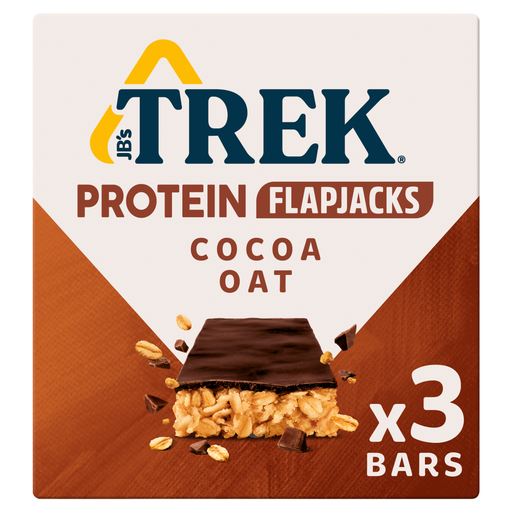 No image available
If cocoa and oat flavours appeal more than salted caramel, this is another three-pack of 50g protein flapjacks to compare. Check its own nutrition and allergen label rather than assuming the two TREK flavours have identical recipes.
Start with the nutrition figures per 100g, then check the figures for the bar or serving you would eat. NHS food-labelling guidance notes that a manufacturer’s declared portion may differ from your own, so read the serving size as well as the pack count.
No: a protein figure describes one part of the nutrition panel, not whether a bar meets everything you want from breakfast. Nature Valley UK lists about 10g protein per 40g Protein Peanut & Chocolate bar; compare its serving size and full panel with any other bar you are considering.
Check the exact current pack’s ingredients, allergen declaration and “may contain” wording before buying and eating it. Recipes differ even within a brand: Nature Valley UK lists peanut, soya and milk in its cited Protein bar, while Eat Natural UK lists peanuts and pecans in its cited nut bar.
Choose by the specific variant’s current label instead. TREK describes its bars as plant-based, and the cited Eat Natural Maple Syrup, Pecan & Peanut bar is labelled vegan and gluten free, but the ingredients and allergen wording of the exact pack still matter.