Small hiking groups
Count wrapped portions as well as bars so everyone can take a portion when needed. Ask about allergies before settling on a pack to share.


Choose the wrapping and pack size around the number of hikers and planned snack breaks: a larger pack can serve a group or several walks, while a three- or four-bar pack may suit fewer people. Before choosing a flavour, compare the amount each person would eat and check the exact pack’s nutrition and allergen information; vegan, gluten-free or protein wording answers only part of that decision.
The useful pack format changes with the number of people sharing, how often they walk and any dietary restrictions in the group.
Count wrapped portions as well as bars so everyone can take a portion when needed. Ask about allergies before settling on a pack to share.
A larger pack may cover several outings. Check the serving size and nutrition panel for the amount you expect to take on each walk, rather than choosing by box size alone.
Read the current label for the exact flavour. Vegan and gluten-free descriptions address different requirements and do not replace an ingredient and allergen check.
Start with the number of usable portions, then compare the label for the portion someone will actually eat. A pack with more bars is not necessarily easier to divide between more people.
| Priority | What to check | Your needs |
|---|---|---|
| Pack and portions | Count bars and sealed portions separately. Check whether the serving is one bar or a twin pack, and allow for the group and planned snack breaks. | We are sharing snacks on the walk, so I want enough portions that people can carry and open separately. |
| Nutrition label | Compare energy, sugars, fat, saturates, protein, fibre and salt for the amount you would eat. Use per-100 g figures to compare differently sized recipes on the same basis; NHS food-labelling guidance explains these label measures. | For my own snack breaks, I want to know what one bar—or a stated two-bar serving—contains, not just what the pack front says. |
| Dietary fit | Check the exact flavour’s ingredients, allergen declaration and any precautionary statements. Confirm vegan or gluten-free wording separately from other restrictions. | Someone in our group may need to avoid a particular ingredient, so I need to check whether each bar can be shared with them. |
Nature Valley’s Crunchy Variety Family Pack has 20 bars in 10 twin packs, according to its product information. That gives a group 10 sealed portions, not 20 separately wrapped ones.
Check both counts and the stated serving size before deciding how many packs to take.
A protein, oat or wholegrain description does not tell you the sugars or salt in the portion you plan to eat. Bar sizes also differ across multipacks.
Read the current per-bar or per-serving panel, then use per-100 g figures when comparing recipes of different sizes.
Ingredients and precautionary allergen statements vary by product and flavour. A vegan or gluten-free claim does not establish suitability for someone avoiding nuts, soya or milk.
Ask the group about relevant allergies and check the exact pack before it goes into a shared snack bag.
These examples show how pack formats and recipes differ; a brand name alone does not establish the details of another flavour or pack.
Its Crunchy Variety Family Pack is a group-sized example: Nature Valley lists 20 bars in 10 twin packs.
TREK’s Protein Flapjacks include a variety multipack described by Ocado as individually wrapped, vegan and gluten-free.
Tesco lists the Salted Caramel fruit-and-nut protein bars in a compact 3 × 40 g pack with individually wrapped bars.
Graze’s Oat Boost flapjacks include 4 × 30 g multipacks, such as the Peanut Butter pack listed by ASDA.
Kellogg’s describes its Apple Nutri-Grain product as a soft cereal bar with an apple filling.
Alpen is a familiar cereal brand, but pack format needs checking for any particular bar listing.
These options cover four-bar Graze oat-bar packs, three-bar TREK flapjack packs and a 20-bar Nature Valley family pack. Match the pack count and wrapping to your group, then check the exact flavour’s label before sharing.
 No image available
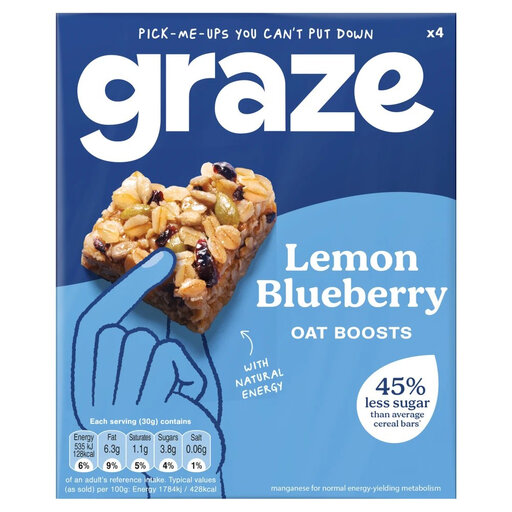
A four-bar pack to consider for a smaller group or several snack breaks. Check the Lemon Blueberry label for its ingredients, allergens and per-bar nutrition.
 No image available
Three bars may cover a small group or separate snack breaks, but check the count against your plans for a larger party. Read this Salted Caramel pack’s dietary, allergen and nutrition information rather than assuming it matches a TREK variety pack.
 No image available
This three-bar format suits a plan needing only a few portions. If choosing between TREK flavours for a group, compare the Cocoa Oat pack’s own ingredients, allergen statement and per-bar figures.
 No image available
Four 30 g bars provide a smaller pack format for sharing. Check the Cherry Bakewell label separately from other Graze flavours, particularly when allergens matter to the group.
 No image available
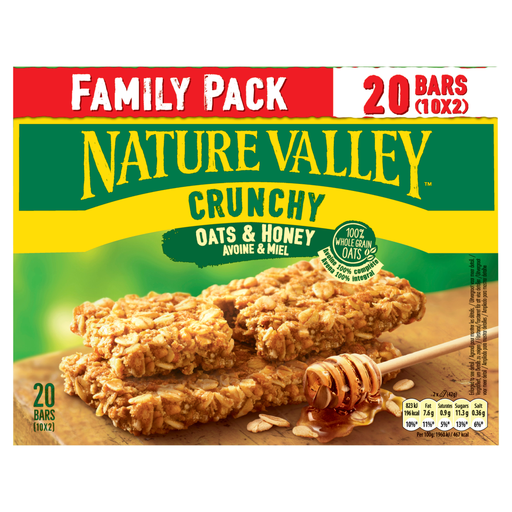
The 20-bar count is worth considering for a group or repeated walks. This is an Oats & Honey pack, not the Crunchy Variety Family Pack: confirm how its bars are wrapped and check its own serving and allergen information before allocating portions.
There is no single bar count for every walk: plan around the route, duration, conditions, group size and the other food you intend to carry. Mountain Training includes nutrition among hill-walking planning considerations; count wrapped portions as well as bars when dividing a multipack.
Use per-100 g figures to compare recipes on the same basis, then check per-bar or per-serving figures for the amount you expect to eat. NHS food-labelling guidance covers the energy and nutrient information shown on pre-packed food labels.
No. A stated protein amount does not tell you the bar’s sugars, salt, other nutrients or allergens. Compare the complete nutrition panel for the exact flavour and the portion you would eat.
Check with each person and read the exact pack’s current ingredient and allergen statements first. Vegan and gluten-free descriptions address particular requirements; neither establishes that a bar is free from every other allergen relevant to the group.