Gym-goers eating a meal later
An individually wrapped bar is convenient between training and your next meal. Check its protein per bar so you know what the snack contributes rather than treating it as the whole meal.


Choose a multipack by what each bar contributes to the food you plan to eat after training, not by its pack size or a ‘protein’ claim alone. A protein-positioned bar can be a convenient snack before a meal; when another demanding session follows soon, check carbohydrate as well as protein. Before buying several bars, compare the exact serving size, ingredients, allergens and best-before date.
The useful role of a bar depends on when you will eat again, whether another session is approaching and whether you can use every bar in the pack.
An individually wrapped bar is convenient between training and your next meal. Check its protein per bar so you know what the snack contributes rather than treating it as the whole meal.
If another demanding session follows within eight hours, consider carbohydrate and protein across what you eat after exercise. A review in Current Sports Medicine Reports discusses both nutrients in short-window endurance recovery; the wording on a snack bar does not describe your whole eating occasion.
Before committing to several servings, check the exact flavour’s ingredients, allergen information, pack quantity and best-before date. Similar-looking bars can have different recipes.
Start with nutrition per bar, then check whether the recipe and number of servings fit how you intend to use the pack.
| Priority | What to check | Your needs |
|---|---|---|
| Protein per bar | Read the grams per bar and its serving weight, rather than relying on a front-of-pack phrase. Compare the amount with the other food you expect to eat afterwards. | I want a portable snack before my next meal, so the amount in the bar matters more to me than a general ‘protein’ label. |
| Carbohydrate alongside protein | Check both amounts per bar and consider the rest of the eating occasion. A review in Current Sports Medicine Reports discusses carbohydrate and protein together when the recovery window before further exercise is under eight hours. | With another demanding session soon, I need to look beyond a bar’s protein figure when planning what to eat between sessions. |
| Ingredients and allergens | Read the current ingredients and allergen statement for the exact flavour. Check any vegan or gluten-free claim on that product rather than applying a brand-wide description to every bar. | A multipack only works for me if each flavour meets my dietary requirements. I also need to read any relevant may-contain statement. |
| Usable pack size | Confirm the bar count, weight per bar and net quantity. Check the best-before date against how often you expect to eat them. | I would rather choose a quantity I can use than assume a larger box is a better fit for my routine. |
One bar may contribute protein, but it does not describe everything you will eat after training. Carbohydrate also matters in the short recovery windows discussed by the endurance-recovery review in Current Sports Medicine Reports.
Read protein and carbohydrate per bar, then consider the bar alongside your next meal and the time before another session.
The documented examples include bars weighing 27g, 30g, 40g and 50g. A per-100g figure alone does not tell you how much you get from the bar you will actually eat.
Compare the nutrition per bar first, alongside its weight. Use per-100g figures for an additional like-for-like comparison.
Peanuts, milk, soya and gluten-containing cereals appear in different documented products. A dietary claim associated with one product does not establish the ingredients of another flavour.
Read the current ingredients, highlighted allergens and any relevant may-contain statement for the exact pack before ordering.
If a bulk pack is unsuitable for its intended user, its extra servings may not be usable.
A 24-bar case can suit frequent use, while a smaller pack may make more sense if you are trying a recipe or will not use many bars before the best-before date.
Check the number and size of the bars, the recipe and the date against your expected rate of use.
These product examples illustrate differences in serving size, protein and ingredients; a brand name alone cannot establish whether a particular flavour suits you.
The Nature Valley UK Protein range includes a Peanut & Chocolate Big Pack of eight bars for shoppers comparing a mid-sized protein-bar multipack.
TREK describes its Protein Flapjacks as plant-based. A UK retailer lists a variety pack containing 24 bars of 50g each for shoppers considering a larger supply.
Graze Peanut Butter Oat Boosts come in a four-pack of 30g bars, an option to compare when the main aim is a portioned oat-based snack.
Kellogg's Special K Red Berry provides a conventional cereal-bar reference when deciding whether a protein-positioned bar is needed.
These Joybuy options are protein-bar and protein-flapjack multipacks for a snack after training. Their packs contain three to eight bars, so check the serving details and your expected use before choosing a quantity.
 Image unavailable
A three-bar flapjack pack for a portable snack after training. Check the exact flavour’s nutrition and ingredients, including soya, against what you need from the snack.
 Image unavailable
A three-bar oat flapjack pack if you want individually portioned snacks. Read the current label for protein and carbohydrate per bar and check the allergen statement, particularly for soya.
 Image unavailable
An eight-bar pack for keeping individually portioned snacks available after training. Nature Valley lists 10g protein and 4g fibre per bar for Peanut & Chocolate and describes the Big Pack as gluten-free. The Joybuy listing names peanuts, milk and soya as ingredients; check the current pack before use.
 Image unavailable
A four-bar option if you want a smaller supply of protein-positioned snacks. Check the nutrition per bar and the exact nut, milk and soya allergen information on the current pack.
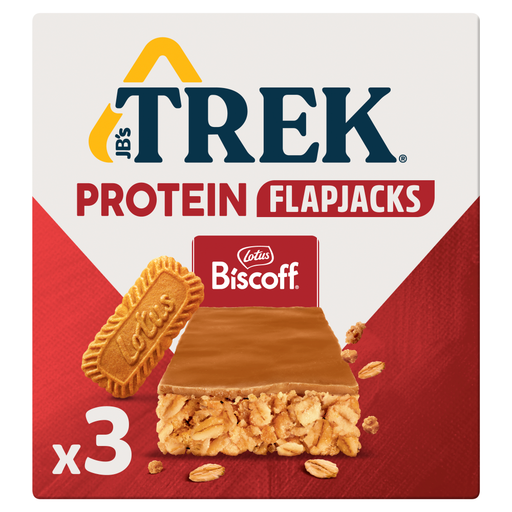 Image unavailable
A three-bar flapjack pack to compare with the other small multipacks. Check protein and carbohydrate per bar on the current label, and read its wheat, soya and other relevant allergen information before choosing it.
Do not assume one bar covers everything you intend to eat after exercise. Check its protein and carbohydrate per serving alongside your next meal and the time until another session. A review in Current Sports Medicine Reports discusses both nutrients when endurance athletes have less than eight hours between sessions.
Start with protein per bar because that is the portion you are considering eating. For example, Nature Valley UK lists 10g per Peanut & Chocolate bar, TREK states 9g per Protein Flapjack and ASDA lists 2.2g per Graze Peanut Butter Oat Boost. Check each bar’s weight too; per-100g figures provide a further like-for-like comparison.
No; ‘oat’ does not establish either claim for a particular bar. Check the exact pack: Nature Valley describes its Peanut & Chocolate Big Pack as gluten-free, while ASDA describes Graze Peanut Butter Oat Boosts as suitable for vegans and lists several ingredients and may-contain warnings. Different flavours need their own checks.
Read the current ingredients list for the exact product and any relevant may-contain statement. GOV.UK allergen-labelling guidance says that any of the 14 regulated allergens present as ingredients in UK prepacked food must be clearly labelled within that list. If the information for a pack is unclear, ask the seller or manufacturer before buying it.
A larger pack makes practical sense when you expect to use its bars, like the recipe and can use them before the best-before date. Compare bar count, weight per bar, nutrition and ingredients across the exact packs you are considering; a larger quantity alone does not establish a better fit.