Home workers keeping lunch-break backups
A cupboard pack can be useful when you want a bar available during a short break. Check the number of bars, individual wrapping and storage instructions against how often you expect to use them.


A larger oat-bar multipack makes sense if you want bars ready for repeated workday lunch breaks and will use the pack. Treat a cereal bar as a snack or lunch addition rather than assuming one bar makes a complete lunch; compare the exact pack’s portion size, nutrition and allergens before choosing a flavour or format.
A cupboard pack can be useful when you want a bar available during a short break. Check the number of bars, individual wrapping and storage instructions against how often you expect to use them.
A larger pack may suit a household that regularly eats the same bars. Consider whether its flavours, portions and date markings work for everyone who will use it.
Buying several bars at once makes the exact flavour’s ingredient list, allergen statement and nutrition panel worth checking before the pack goes in the cupboard.
Start with how the bars will fit into your lunch break, then compare pack formats and the labels of the particular flavours you would buy.
| Priority | What to check | Your needs |
|---|---|---|
| Pack format | Compare bar count, total weight and portion size. Check whether the flavours and storage instructions suit repeated use. | I want enough bars for my usual lunch breaks without committing to flavours I am unlikely to eat. |
| Role at lunch | Read the nutrition information per bar and consider what else you plan to eat. A snack-bar format does not, by itself, establish that a bar makes a complete lunch. | On a short break, I might want a bar alongside lunch or as a backup, not assume it covers the whole meal. |
| Bar style | Distinguish larger crunchy oat packs from six-bar breakfast-style packs and smaller oat-flapjack or protein-bar multipacks. Check the actual bar count rather than relying on the format name. | I would rather choose a texture and pack size I will use than pick a type solely because its front label mentions oats or protein. |
| Nutrition label | Compare sugars, total fat, saturated fat and salt per 100g, then look at the figures per bar. NHS food-label guidance describes more than 22.5g sugars or 17.5g total fat per 100g as high. | I want to know what one bar contains as well as how similar products compare at the same weight. |
| Ingredients | Read the exact flavour’s ingredients, highlighted allergens and any may-contain statement. Recheck the label when buying a different variant or after a packaging change. | Before stocking up for the household, I need to know whether each flavour’s ingredients and allergen information suit us. |
Multipacks can differ in both bar count and total weight, so similar-looking boxes may provide different numbers of portions.
Check the stated weight, number of bars and size of each bar, then consider how quickly you will use the pack.
Oat, protein and fibre descriptions do not tell you a bar’s full per-100g nutrition profile. Nature Valley UK lists 26.8g sugars and 18.1g total fat per 100g for its Crunchy Variety pack; those figures should not be applied to other variants.
Compare the exact pack’s per-100g and per-bar figures, including sugars, saturated fat and salt, rather than judging it by one highlighted ingredient.
Ingredients and precautionary statements can vary between flavours and may change with a recipe update.
Read the label for the precise flavour and pack size you are buying, particularly when the bars will be shared.
A cereal bar is a convenient snack format, but its name or pack size does not establish that it will meet everything you want from lunch.
Decide whether you are buying it as a backup or an addition to another food, and check the portion information accordingly.
These ranges illustrate different pack formats; check the particular flavour and size rather than extending one product’s details to a whole brand.
Nature Valley UK lists Crunchy, Protein and Oaty & Crispy bars, including larger Crunchy packs.
Kellogg's Nutri-Grain provides a breakfast-style cereal-bar format; Tesco has listed Blueberry and Strawberry six-packs.
Graze Oat Boosts are available in four-bar flapjack multipacks, including flavours listed by Tesco such as Lemon Blueberry.
TREK offers oat protein flapjacks in smaller multipacks. Tesco lists Cocoa Oat Protein Flapjacks as 3 x 50g.
These options span larger multipacks, six-bar breakfast-style bars and smaller oat or protein-bar packs for working-from-home lunch breaks. The order below does not rank their nutrition or suitability for a complete lunch.
 No image available
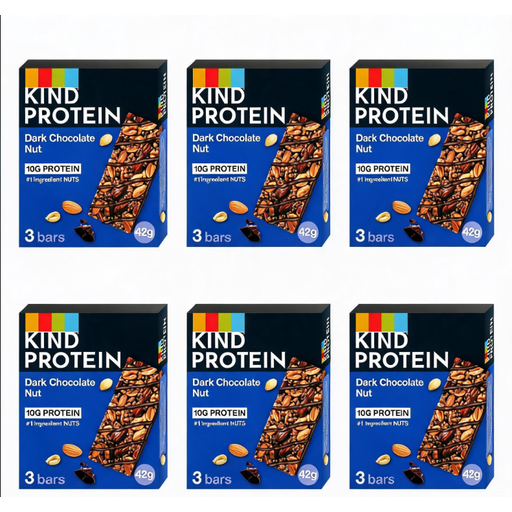
A larger nut-bar pack to consider if you expect to use bars across multiple workday breaks. Check the exact pack’s ingredients and per-bar nutrition when comparing it with oat-based cereal bars.
 No image available
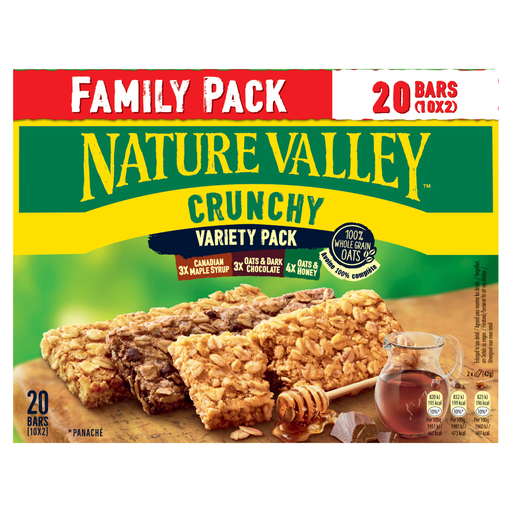
The 10 x 42g pack suits a cupboard stocked for repeated breaks when you want a crunchy variety format. Read this pack’s nutrition and allergen label rather than assuming it matches another Nature Valley variety pack.
 No image available
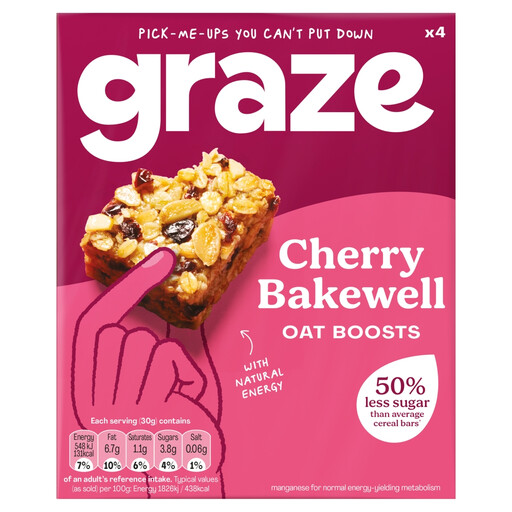
This four-bar oat-flapjack pack is a smaller commitment to one flavour than a larger cupboard pack. Check the Cherry Bakewell label for its ingredients, allergens and nutrition.
 No image available
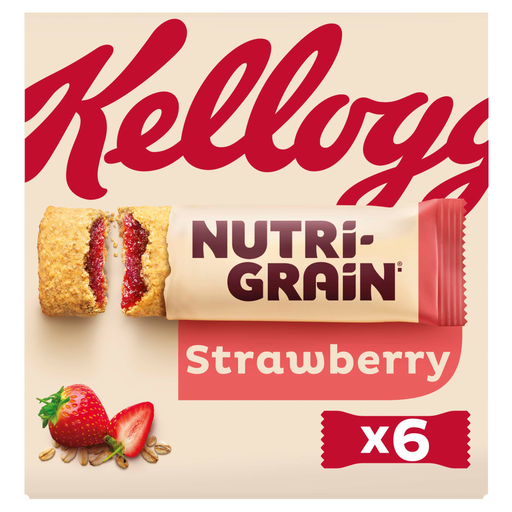
A six-bar breakfast-style pack for someone who prefers that format to crunchy oat bars. Check the Strawberry pack’s per-bar nutrition and ingredients when deciding how it fits into lunch.
 No image available
This four-bar Peanut & Chocolate pack is a smaller protein-bar option rather than a large oat-bar cupboard pack. Check the exact variant’s nutrition and peanut and other allergen information before buying.
Do not assume a cereal bar alone makes a complete lunch. If you are buying it for a short break, decide whether it will be a snack, a backup or an addition to other food, and check the portion information on the pack.
Compare the number of bars, total pack weight and weight per bar. Then check whether the flavours and date markings suit how often you expect to eat them; a larger box is not automatically the more practical choice.
Use per-100g figures to compare similar bars and per-bar figures to understand the portion. NHS food-label guidance describes more than 22.5g total sugars, 17.5g total fat, 5g saturated fat or 1.5g salt per 100g as high for each respective measure.
No. A protein or fibre statement describes one aspect of a product, not its sugars figure. Read the exact bar’s nutrition panel per 100g and per serving before comparing it with another flavour or format.
Read the precise pack’s ingredient list, highlighted allergens and any may-contain statement. Flavours can differ, and an earlier listing or another flavour’s label should not replace the information on the pack you buy.