Students needing a portable backup
An individually portioned bar is convenient to carry when an evening meal is delayed. It works as a stopgap rather than an assumption that one bar covers dinner.


An individually portioned cereal bar can be a portable backup when a student evening meal is delayed, but it should not be treated as a complete dinner on its own. Compare the nutrition per bar, ingredients and portion size for the job you need it to do; the NHS Eatwell Guide describes a varied balance of food groups across a day or week.
An individually portioned bar is convenient to carry when an evening meal is delayed. It works as a stopgap rather than an assumption that one bar covers dinner.
Protein and fibre figures can help distinguish formats. Nature Valley UK lists around 10g protein and 4g fibre for its 40g Protein Peanut & Chocolate bar; Kellogg's UK lists 1.5g protein and 1.4g fibre for a 37g Nutri-Grain Apple bar. Those figures describe different products and portions, not how filling either will feel.
Check the precise flavour and current pack rather than relying on a brand or bar category. Manufacturer information for the bar examples lists different ingredients and may-contain warnings.
Start with the bar's role in the evening, then compare the actual portion and its ingredients before choosing a multipack.
| Priority | What to check | Your needs |
|---|---|---|
| Role in the evening | Decide whether the bar is a portable stopgap or part of a meal. The NHS Eatwell Guide describes balance across food groups over a day or week, not a requirement to fit every group into one meal. | I need something I can carry when dinner is delayed, but I can add other food when it is available. |
| Nutrition per bar | Compare bar weight, protein, fibre, energy and sugars on the same per-bar basis. Nature Valley UK and Kellogg's UK publish different figures for their 40g Protein Peanut & Chocolate and 37g Nutri-Grain Apple bars, respectively. | If I am choosing between a protein bar and a soft fruit-filled bar, I want to see what each actual portion contains rather than rely on the front-of-pack description. |
| Pack format | Check the number of bars, their individual weights and whether the pack format suits carrying a portion separately. A higher bar count does not by itself tell you the size of each portion. | I want portions I can keep on hand for evenings when my usual meal plans change. |
| Ingredients and allergens | Read the exact flavour's ingredients, allergen declaration and may-contain wording. Check any dietary claim against the current pack rather than applying it to every flavour in a range. | For an allergy or dietary exclusion, I need the particular bar to fit my requirements, not just its general category. |
A convenient bar does not establish that the evening's food includes the variety of groups described by the NHS Eatwell Guide.
Use it as a backup when needed, and include other foods across the evening or the rest of the day where possible.
Names such as protein, oat and wholegrain do not replace the per-bar figures. The Nature Valley UK and Kellogg's UK examples differ in bar weight, protein, fibre and sugars.
Read the nutrition panel for the exact bar and compare serving weights as well as the figures.
Nature Valley UK declares peanut, soya and milk ingredients for its Protein Peanut & Chocolate bar and says it may contain tree nuts. Eat Natural UK lists peanuts and soya for its Dark Chocolate & Peanut Protein Bar and says it may contain milk and several tree nuts.
Check the current ingredients and may-contain statement for the precise flavour before choosing it.
Nature Valley UK lists an eight-bar Protein Peanut & Chocolate Big Pack, with each bar weighing 40g.
Graze offers Oat Boost flapjack-style snacks; a Cherry Bakewell listing identifies a pack of four 30g bars.
Nutri-Grain Apple is a soft, fruit-filled breakfast bar listed by Kellogg's UK as a 37g serving.
Eat Natural UK lists a 40g Dark Chocolate & Peanut Protein Bar.
TREK describes its Protein Flapjacks as plant-based and states 9g protein for that range.
Alpen's official availability information lists several former cereal-bar varieties as no longer being made.
These multipacks cover protein-labelled nut bars and a protein flapjack for keeping individual portions on hand. Compare the current pack labels before deciding whether one fits your evening plans or dietary requirements.
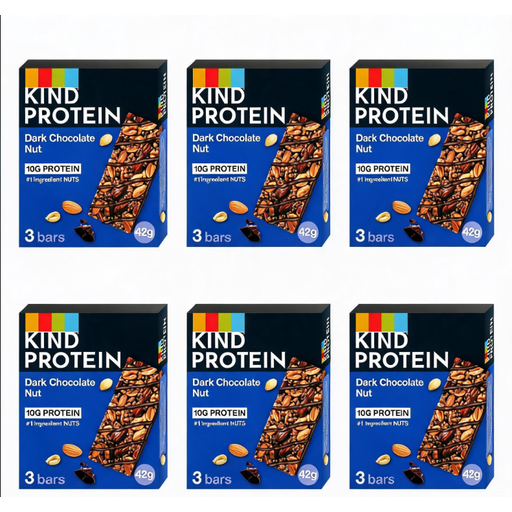 No image available
This nut-bar multipack is an option for keeping portable portions on hand when an evening meal is delayed. Check the current pack's nutrition per 42g bar and its allergen statement.
 No image available
Four 40g bars offer defined portions for an evening backup. Compare the nutrition per bar and check the allergen statement on this exact pack.
 No image available
This salted caramel nut variant has four 40g bars for separate portions. Read its own nutrition and allergen labels rather than applying the figures for another Nature Valley flavour.
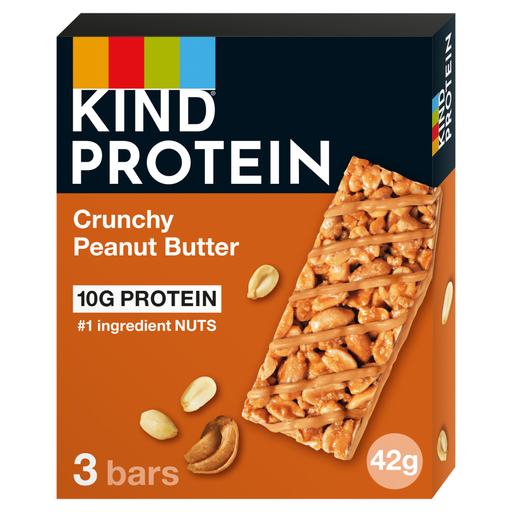 No image available
The three 42g bars provide a smaller pack format to consider for portable snacks. Check the peanut butter variant's current nutrition and allergen information before choosing it.
 No image available
This three-pack offers a 50g flapjack portion rather than a nut-bar format. If plant-based suitability matters, confirm the salted caramel pack's ingredients, dietary labelling and allergen information.
Treat a cereal bar as a portable backup, not as a complete dinner by default. The NHS Eatwell Guide describes a balance of different food groups over a day or week, so consider what other foods you can include when a normal evening meal is delayed.
Start with the weight and nutrition of the actual bar, including protein, fibre, energy and sugars. Nature Valley UK lists around 10g protein and 4g fibre per 40g Protein Peanut & Chocolate bar, while Kellogg's UK lists 1.5g protein and 1.4g fibre per 37g Nutri-Grain Apple bar; those figures do not establish how filling either bar will be for you.
No. A protein figure describes one part of a bar's nutrition, not the variety of foods in a meal. Read the full per-bar panel and consider what else you will eat across the evening or day.
Read the ingredients, allergen declaration and may-contain wording for the exact flavour and current pack. A brand's plant-based description does not, by itself, answer a separate allergen question.
Check both the number of bars and the weight of each one, then compare nutrition per actual bar. A pack with more bars need not give you the same portion size as another pack.