Shoppers comparing protein and fibre
If you want those amounts stated for each bar you carry, compare the declared grams alongside bar weight, energy and sugars. A protein-led name alone does not describe the whole nutrition panel.


Choose a protein-led multipack if the declared protein and fibre per bar matter most to you; choose smaller cereal bars if portion size is the priority. Neither choice settles the nutrition or allergy question: compare values per 100g and per bar, then check the ingredients and allergen statement on the exact pack.
If you want those amounts stated for each bar you carry, compare the declared grams alongside bar weight, energy and sugars. A protein-led name alone does not describe the whole nutrition panel.
A smaller cereal bar may suit a compact gym-bag snack when protein is not the deciding factor. Check the weight and nutrition per bar rather than assuming that all small bars have similar contents.
Check the exact pack's ingredients, allergens and any 'may contain' statement. Recipes and allergen information can differ between flavours and product lines.
Start with the number and size of the bars you would use, then compare nutrition and ingredients for that exact format.
| Priority | What to check | Your needs |
|---|---|---|
| Pack and portion | Check the bar count, weight of each bar and whether the pack format suits how often you want to carry one. | I want enough bars for several trips, but I would choose the portion size before choosing the pack count. |
| Protein and fibre | Compare declared grams per bar at the stated bar weight. Nature Valley UK lists around 10g protein and 4g fibre in each 40g Peanut & Chocolate Big Pack bar; Kellogg's UK lists 1.5g protein in a 37g Nutri-Grain Apple bar. | If these nutrients are my priority, I need to compare the actual bars, not assume that every cereal bar is protein-led. |
| Nutrition panel | Compare energy, sugars, saturates and salt per 100g, then check the values for the bar you would eat. The NHS explains that labels provide a per-100g basis and may also give per-portion values. | A smaller portion matters to me, but I still want to know how its nutrition compares with another bar of a different weight. |
| Ingredients and allergens | Read the ingredients and highlighted allergens on the current pack, including any 'may contain' statement. Check dietary claims on the exact variant. | Before carrying a bar I need to avoid particular ingredients in, I want its current pack label to match my requirements. |
A declared protein amount does not tell you the bar's sugars, energy or saturates.
Compare those values, as well as protein and fibre, per 100g and for the bar you intend to eat.
An oat, wholegrain or gluten-free description does not establish whether a bar contains other ingredients you need to avoid.
Read the current pack's full ingredient list, highlighted allergens and any precautionary statement for the exact flavour.
Bars of different weights can look difficult to compare when each manufacturer gives figures for its own portion.
Use per-100g values for a like-for-like comparison, then use the per-bar figures to assess the portion you would carry.
A product page can remain visible without offering the pack for purchase.
Check the current listing and exact pack size before relying on it for your gym-bag snacks.
Its range includes a Peanut & Chocolate protein-bar multipack for shoppers comparing declared protein and fibre per portion.
Nutri-Grain Apple and Special K Red Berry provide examples of smaller, individually portioned cereal bars with different declared nutrition.
Graze's Oat Boost flapjacks are an oat-based format to consider alongside conventional cereal bars.
These packs represent the protein-led route for carrying bars in a gym bag. Compare their pack quantities and exact labels; the selection does not stand in for the smaller cereal-bar formats discussed above.
 No image available
The four-bar format lets you carry one 40g bar at a time. Check the nutrition and allergen information for this exact pack before choosing it over another flavour or pack size.
 No image available
This is another four-bar format for packing individual 40g snacks. Compare the current nutrition panel and allergen statement for the Salted Caramel Nut variant rather than using figures from a different flavour.
 No image available
Eight 40g bars provide more portions in one pack than the four-bar variant. Nature Valley UK lists around 10g protein and 4g fibre per bar. Joybuy's listing identifies milk, peanuts and soy, and says the bars may contain tree nuts; check the current pack before eating.
 No image available
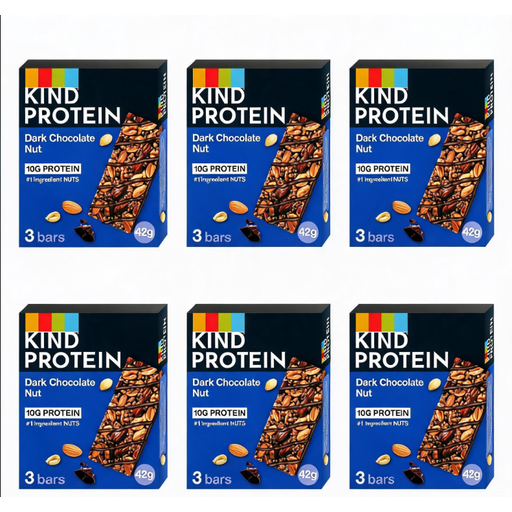
The stated configuration is six sets of three 42g bars, which may suit someone planning to carry bars on several occasions. Confirm the exact pack configuration, nutrition and allergens on the current listing.
 No image available
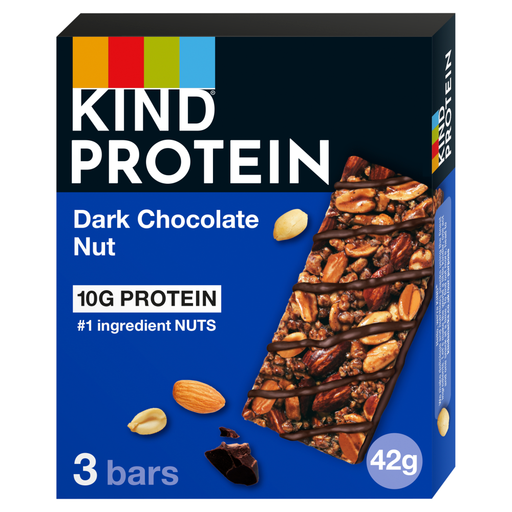
Three 42g bars make this the smaller of the two KIND pack configurations shown here. Check the exact variant's nutrition and allergen statement before putting a bar in your gym bag.
Use both: per 100g helps you compare bars of different weights, while per-bar figures describe the portion you would carry and eat. The NHS explains that nutrition labels provide information per 100g and may also give it per portion.
No. A protein amount alone does not establish the sugar content. Compare sugars, energy and other nutrition values on the exact pack, using both per-100g and per-bar figures.
Read the current pack's ingredients, highlighted allergens and any 'may contain' statement for the exact variant. For example, Joybuy's Nature Valley Peanut & Chocolate eight-bar listing identifies milk, peanuts and soy, and says it may contain tree nuts; a claim such as gluten free does not remove the need for those checks.