Gym-goers wanting a portable snack
A bar fits easily into a gym bag. Check its protein per bar against the role you want it to play, rather than assuming it replaces a meal.


For a portable post-gym snack, compare protein per whole bar rather than relying on the words on the front of the pack. TREK states that its High Protein range provides 15g per bar; Nature Valley lists 10.2g for its 40g Protein Peanut & Chocolate bar, while TREK states that its Protein Flapjacks provide 9g. A bar can be one part of a larger snack: the British Dietetic Association also advises carbohydrate-rich food and fluids when quick recovery after exercise is needed.
A bar fits easily into a gym bag. Check its protein per bar against the role you want it to play, rather than assuming it replaces a meal.
TREK states that its bars are plant-based, with 9g protein per Protein Flapjack and 15g per bar in its High Protein range. Check the exact flavour and pack before choosing.
The exact recipe matters. Nature Valley Protein Peanut & Chocolate contains peanuts, soya and milk and may contain tree nuts, according to Nature Valley. Read the current pack if you need to avoid an ingredient.
Start with the amount in one bar, then check whether your session calls for more than a convenient protein snack. Ingredients and serving sizes can change which bar fits.
| Priority | What to check | Your needs |
|---|---|---|
| Protein per bar | Compare grams per whole bar and its serving size. TREK states 15g per High Protein bar and 9g per Protein Flapjack; Nature Valley lists 10.2g per 40g Protein Peanut & Chocolate bar. | I want to know whether one bar is a small protein addition or the main protein food in my snack. The British Association of Sport and Exercise Sciences discusses roughly 20–30g of high-quality protein per meal for an approximately 80kg individual; that is not a personal target for every gym-goer. |
| Food and drink after training | Consider what else you will eat and drink if quick recovery is needed. The British Dietetic Association advises starting carbohydrate-rich foods and fluids as soon as possible after exercise in that situation. | With another demanding session ahead, I do not want to assume a protein bar alone covers my food and fluid needs. |
| Ingredients and allergens | Read the current ingredients and allergen declaration for the exact flavour. Nature Valley says its Protein Peanut & Chocolate bar contains peanuts, soya and milk and may contain tree nuts. | For a vegan diet or an ingredient I need to avoid, I need the particular pack to fit—not just a protein label or a brand name. |
| Serving-size comparison | Check whether nutrition figures are given per bar, per serving or per 100g. Compare bars on the same basis, including energy and sugars if those matter to your choice. | I want to compare what I would actually eat, especially when packs contain several bars of different sizes. |
The bars described by TREK and Nature Valley provide different amounts of protein, and a bar does not provide a drink. The British Dietetic Association advises carbohydrate-rich foods and fluids when quick recovery is required.
Compare protein per whole bar with what you plan to eat alongside it; include food and fluids appropriate to your session rather than relying on the bar alone.
A protein description does not tell you the grams in the bar you will eat. Pack sizes and serving sizes differ.
Read the nutrition table for protein per bar and check the stated serving size before comparing products.
Nature Valley Protein Peanut & Chocolate contains peanuts, soya and milk and may contain tree nuts, according to Nature Valley. Another bar or flavour needs its own check.
Read the current ingredients and allergen declaration on the pack, particularly if you avoid nuts, milk or soya.
Oat-based products can have different nutritional purposes. Tesco describes Graze Cocoa Vanilla Oat Boosts as wholegrain oat flapjacks and gives a fibre claim, which does not tell you their protein per bar.
If protein is your reason for buying, check the protein figure for the complete flapjack before choosing it.
Compare particular bars and flavours rather than treating every product from a brand as nutritionally alike.
TREK states that its Protein Flapjacks provide 9g plant-based protein per bar and its High Protein range provides 15g per bar.
Nature Valley lists 10.2g protein per 40g Protein Peanut & Chocolate bar.
Eat Natural lists protein fruit-and-nut bars in several flavours.
Graze Cocoa Vanilla Oat Boosts are listed by Tesco as 30g wholegrain oat flapjacks, with 116 kcal per serving.
Kellogg's UK includes protein bars within its Special K snack range.
Alpen’s current product information describes its Original and No Added Sugar mueslis.
These Joybuy options include protein bars, cereal bars and a protein flapjack for a portable post-gym snack. Compare the exact pack and serving size; the selection does not make every bar interchangeable.
 No image available
A pack of four 60g protein bars for a portable snack. Check the current nutrition and allergen information if you are comparing protein amounts or dietary suitability.
 No image available
A four-pack of 40g cereal bars. Check this flavour’s protein per bar and allergen declaration rather than applying figures from another Nature Valley flavour.
 No image available
Nature Valley lists 10.2g protein per 40g bar for this flavour. It contains peanuts, soya and milk and may contain tree nuts; check the current pack.
 No image available
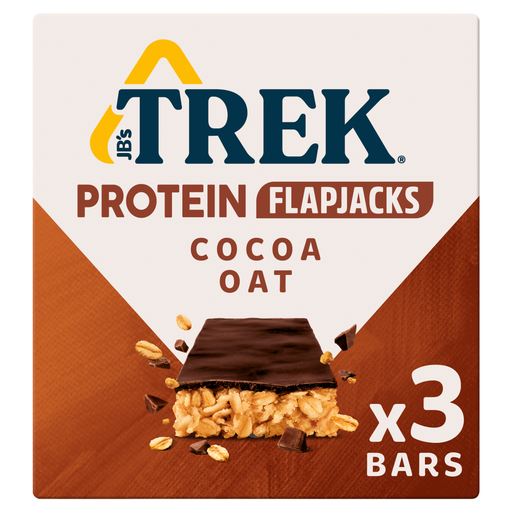
TREK states that its Protein Flapjacks provide 9g plant-based protein per bar. This pack contains three 50g flapjacks; check the exact pack’s ingredients and allergen declaration.
 No image available
Nature Valley lists 10.2g protein per 40g bar for this flavour. It contains peanuts, soya and milk and may contain tree nuts; check the current pack.
That depends on what else you eat and what you need after the session. The British Association of Sport and Exercise Sciences discusses roughly 20–30g of high-quality protein per meal for an approximately 80kg individual, while the TREK and Nature Valley bars described here provide 9g, 15g or 10.2g per bar. A bar can contribute to a snack without having to be the whole snack.
When quick recovery is required, the British Dietetic Association advises starting carbohydrate-rich foods and fluids as soon as possible after exercise. Do not assume that a protein bar alone covers those needs, particularly when another demanding session is coming up.
No. Read the nutrition figure per complete bar alongside the serving size: figures per 100g can make bars of different sizes hard to compare.
Yes, there are plant-based options to check. TREK describes its bars as plant-based, whereas Nature Valley Protein Peanut & Chocolate contains milk. Check the exact product’s current ingredients if a vegan diet matters to you.
Read the current declaration for the exact bar and flavour. Nature Valley says its Protein Peanut & Chocolate bar contains peanuts, soya and milk and may contain tree nuts; do not extend that ingredient list to other products.