Students building a lecture-day stash
Compare the number of portions with the total pack weight. A pack for several campus days is useful only if its bars suit your routine and can be used before the best-before date.


For lecture days, choose a cereal-bar pack by the portions you will use and the ingredients you need, rather than bar count alone. A larger twin-pack format suits a stash across several days; a smaller multipack is easier to match to fewer lunches, while a protein-focused bar calls for a check of the exact nutrition panel and allergens. Check the best-before date and each flavour before committing to a larger pack.
Compare the number of portions with the total pack weight. A pack for several campus days is useful only if its bars suit your routine and can be used before the best-before date.
Check protein on the exact bar rather than assuming all cereal bars are alike. TREK describes its Protein Flapjacks as containing 9g plant-based protein per bar; its High Protein bars are a different range.
Read the current label for every flavour in a pack, particularly if you need to check cereals containing gluten, peanuts, tree nuts, milk or soya, or plan to share the bars.
Start with the pack format, then compare the nutrition and ingredients of the portions you would actually take to a lecture.
| Priority | What to check | Your needs |
|---|---|---|
| Pack size | Check total weight, bar weight and whether the stated count means single bars or twin-packs. Compare the best-before date with your expected use. | I want enough portions for several lecture days, without buying more than I expect to use. |
| Portability | Check whether portions are individually wrapped and whether a twin-pack contains two bars you would carry together. | A wrapped portion that fits in my bag is easier to take between lectures. |
| Nutrition | Compare protein, sugars, saturated fat, salt and calories per stated portion on the exact pack. If present, traffic-light labels offer another way to compare similar products. | If protein matters to me, I want to know how much is in the bar I would eat, alongside its other nutrition values. |
| Ingredients | Read each flavour’s ingredients, emphasised allergens and any precautionary ‘may contain’ statement. Check vegan and gluten-free claims separately. | I need a bar that fits my ingredient requirements, especially if I am buying a mixed pack or sharing it. |
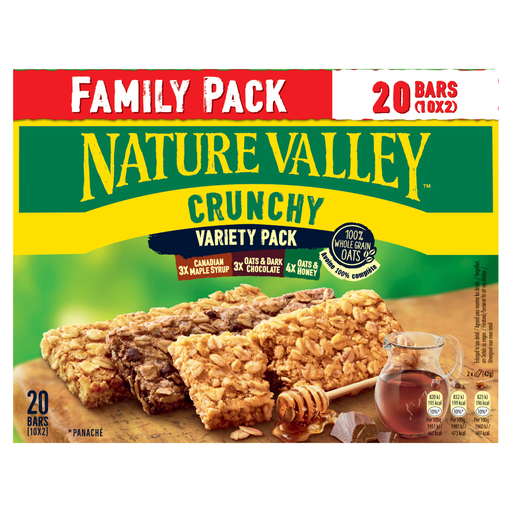
Multipacks differ in bar weight as well as count. Nature Valley UK describes its Crunchy Variety Family Pack as 20 bars arranged in 10 two-bar portions, so its bar count and portable-portion count are different.
Compare the total weight and the portions you would take on each lecture day before choosing a pack size.
A protein figure describes one part of a bar’s nutrition. Nature Valley UK lists 11.3g sugars per 42g two-bar portion of its Crunchy Variety Pack; that figure should not be applied to its separate Protein range.
Use the nutrition panel for the exact flavour and stated portion to compare protein, sugars, saturated fat, salt and calories.
Ingredients and precautionary statements can differ between bars. That matters when a variety pack will be carried regularly or shared.
Read the current outer pack and the information for each flavour, including any ‘may contain’ statement.
These brand examples help distinguish pack formats and product lines; a claim for one flavour or range does not describe every bar bearing the same brand.
Its UK Crunchy Variety Family Pack is a larger oat-bar format, distinct from its Protein bars.
Its Oat Boosts include smaller flapjack multipacks for shoppers who prefer fewer portions at a time.
Its Rice Krispies Cereal and Milk Bar is a smaller, 20g cereal-bar portion rather than a protein-focused format.
Its fruit-and-nut Protein Packed Salted Caramel bars offer a three-bar, individually wrapped format.
Its Protein Flapjacks are a plant-based option when protein is an intentional selection criterion.
Alpen’s referenced UK range describes muesli products, not a cereal-bar multipack to compare with the packs here.
These Joybuy product options cover protein-bar multipacks, a larger Crunchy variety pack and smaller oat-flapjack packs for lecture days. Compare the exact portion format and label; the list is not a comparison of every cereal-bar option.
 No image available
A four-bar format to consider if you want protein bars for a few lecture days. Check the current ingredients and allergen declaration for this nut-bar flavour.
 No image available
The eight-bar pack suits a plan to take the same flavour on several lecture days. Nature Valley UK lists 10g protein for its Peanut & Chocolate Protein bars; check this pack’s current nutrition and allergen information before buying.
 No image available
Nature Valley UK describes this as 20 bars in 10 two-bar portions, a format for taking one twin-pack on each of several lecture days. It lists 11.3g sugars per 42g portion and says the pack may contain nuts, peanuts and wheat. The referenced Joybuy listing identifies this exact pack as no longer available.
 No image available
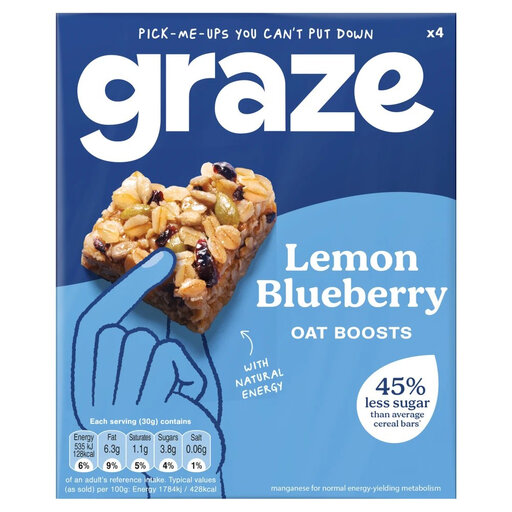
A four-flapjack pack for taking portions on a few lecture days. This is the Lemon Blueberry flavour: check its own nutrition and ingredients rather than applying figures from Graze Peanut Butter Oat Boosts.
 No image available
A three-flapjack format if you want to try a protein-focused option over a few lecture days. TREK describes its Protein Flapjack range as plant-based; check the Salted Caramel pack for its exact nutrition, ingredients and allergens.
Compare total pack weight and the number of portions you would actually take to lectures, not just the number of bars printed on the front. A twin-pack, for example, may contain two bars but work as one wrapped portion for your day.
No. Choose by the snack you want and check protein alongside the other nutrition values on the exact pack. TREK states that its Protein Flapjacks contain 9g plant-based protein per bar; that range figure does not describe every cereal bar or its full nutrition profile.
Read the current ingredients, emphasised allergens and any ‘may contain’ statement for every flavour. Cereals containing gluten, peanuts, tree nuts, milk and soya appear in or are flagged for products discussed here, but the exact declaration varies by bar. GOV.UK guidance requires food businesses to provide information about regulated allergens when they are ingredients.
No. Vegan, gluten-free and allergen suitability are separate matters. Check each claim and the full ingredient and precautionary allergen information on the particular flavour you intend to buy.
Use the actual pack to check its ingredients and allergens, nutrition declaration, net quantity, date marking and any relevant storage instructions. GOV.UK guidance says prepacked food requires mandatory label information; the current pack also lets you check details that may differ between flavours or change over time.