Choose by what you want the bar to provide, not by a post-workout label. The cited Nature Valley and Eat Natural peanut-and-chocolate bars provide about 10g protein per bar, while the cited vegan TREK flapjack provides 9g; Kellogg’s Special K Red Berry is a smaller cereal-bar option with 1.4g protein per 27g bar. Check the exact flavour’s ingredients and portion size, and consider how the snack fits around your activity and other food.
Who is choosing a post-gym bar?
People taking a snack to the gym
If a bar needs to travel in your bag, check the weight of each portion, the number of bars in the pack and whether they are individually wrapped. Compare protein per bar if you want the snack itself to contribute protein.
Vegan or gluten-free shoppers
Check the claim on the exact flavour rather than assuming every oat-based bar has the same ingredients. Tesco Groceries lists its TREK White Chocolate & Raspberry flapjack as vegan and gluten-free; that description should not be carried over to other flavours without checking their packs.
People avoiding particular allergens
Read the current ingredients and precautionary allergen statements before choosing a multipack. The cited Nature Valley Peanut & Chocolate bar contains peanuts, soya and milk and may contain tree nuts; other flavours and brands need their own label check.
What should you compare?
Decide whether you want protein from the bar, a smaller cereal snack, or a particular dietary format. Then compare one bar’s declaration—not just the multipack’s front label.
Nut-based protein cereal bars
Consider when: You want the bar to contribute protein and its ingredients suit you.
Watch for: The cited peanut-and-chocolate examples contain nuts or soya; check each exact pack for allergens.
Vegan oat flapjacks
Consider when: You want an oat-based bar with a verified vegan label on the flavour you buy.
Watch for: Vegan and gluten-free labelling varies by product, so confirm both on the current pack.
Standard cereal bars
Consider when: A portable cereal snack matters more than protein from the bar itself.
Watch for: Kellogg’s UK lists 1.4g protein in a 27g Special K Red Berry Bar; check whether another food is needed for your intended snack.
| Priority | What to check | Your needs |
|---|
| Purpose of the snack |
Consider when you will eat it, the activity and what else you plan to eat. University College London Hospitals NHS Foundation Trust describes carbohydrate-and-protein snacks as one option used around exercise, not a rule for every session. |
I might want something portable after training, but the bar does not have to serve the same purpose after every session. |
| Protein per bar |
Read grams per individual portion alongside its weight. Nature Valley UK states about 10g per 40g Peanut & Chocolate bar; Costco UK lists 10g per Eat Natural Peanut & Chocolate bar; Tesco Groceries lists 9g per TREK White Chocolate & Raspberry flapjack. Kellogg’s UK lists 1.4g per 27g Special K Red Berry Bar. |
If I want protein from the bar itself, I need the figure for the portion I will actually eat, rather than assuming every cereal bar makes a similar contribution. |
| Portion and pack |
Check bar weight, bar count and individual wrapping. The cited packs range from three 50g TREK flapjacks to eight 40g Nature Valley bars and 20 Eat Natural bars of 45g each. |
A small pack may suit an occasional gym-bag snack; if I use bars regularly, the number of separate portions matters too. |
| Ingredients and suitability |
Check the exact flavour’s ingredients, allergen statement and any vegan or gluten-free claim. GOV.UK says regulated allergens present in UK prepacked food must be clearly labelled. |
Before I buy several bars, I need to know whether that flavour fits the ingredients I avoid—not whether a different product from the brand does. |
What can make a multipack the wrong choice?
-
Assuming every cereal bar is a protein bar
Protein per portion differs across the cited products: Kellogg’s UK lists 1.4g in its 27g Special K Red Berry Bar, whereas Nature Valley UK lists about 10g in its 40g Peanut & Chocolate protein bar.
Compare the declaration per bar. If you want protein as part of your post-gym snack, decide whether it needs to come from the bar or another food.
-
Choosing a nut-based multipack before reading the label
The cited Nature Valley Peanut & Chocolate product contains peanuts, soya and milk and may contain tree nuts. That makes its ingredient and precautionary statements important for anyone avoiding those allergens.
Read the current label for the exact flavour before buying or eating it; do not transfer allergen information from another bar in the range.
-
Relying on an old product list
An official Alpen list dated November 2021 names cereal and protein bars. A historical listing cannot establish the pack or recipe of a product you might buy now.
Confirm the exact current product, portion size, ingredients and nutrition declaration on its live listing or pack.
-
Assuming a listed flavour is ready to order
A retailer’s product page can remain visible when that flavour cannot be ordered. The Tesco Groceries listing for TREK White Chocolate & Raspberry was marked out of stock when the cited product details were recorded.
Check current availability and the exact pack details at the point of purchase.
Which brands offer useful reference points?
These examples show how particular UK-labelled bars differ; a brand name alone does not establish the ingredients or nutrition of every flavour.
Nature Valley
Its Protein Peanut & Chocolate Big Pack is an eight-bar cereal-bar example for comparing portions in a multipack.
- Nature Valley UK states about 10g protein and about 4g fibre per 40g bar.
- This flavour contains peanuts, soya and milk and may contain tree nuts.
TREK
The White Chocolate & Raspberry protein flapjack provides an oat-based comparison with the nut-bar examples.
- Tesco Groceries lists three 50g flapjacks, with 9g plant protein per bar, and labels this flavour vegan and gluten-free.
- Check the current ingredients for this flavour and do not assume the same dietary labelling applies across TREK’s range.
Eat Natural
Its Peanut & Chocolate protein bars provide a larger-pack comparison.
- Costco UK lists a 20 × 45g pack with 10g protein per bar.
- The cited peanut-and-chocolate product is nut-based; check its exact ingredients and allergen statements before buying.
Kellogg’s
Special K Red Berry provides a standard cereal-bar reference when protein from the bar is not the main requirement.
- Kellogg’s UK lists 20g carbohydrate and 1.4g protein per 27g bar.
- The cited bar contains milk and gluten-containing cereals and is not suitable for vegans.
Joybuy bars and flapjacks to consider
These Joybuy options include oat flapjacks, nut-based cereal bars and a chocolate protein bar. Use the exact pack label to compare portions, ingredients and dietary suitability; the chocolate protein bar is an alternative format, not a cereal bar.
 No image available
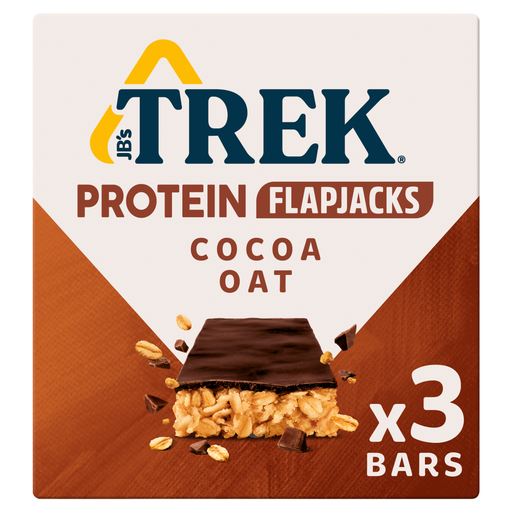
TREK Cocoa Oat Protein Flap Jacks, 3 × 50g
An oat flapjack option for packing a separate portion after the gym. The product name specifies three 50g bars; check the current pack for protein per bar, ingredients and dietary labelling.
View on Joybuy
 No image available
TREK Salted Caramel Protein Flapjacks, 3 × 50g
Another three-bar flapjack pack for taking a portion to the gym. Each bar is listed as 50g; confirm the protein declaration and the exact flavour’s ingredients before choosing it for dietary requirements.
View on Joybuy
 No image available
Nature Valley Protein Peanut & Chocolate, 8 × 40g
For a cereal-bar pack where protein per portion is a deciding factor, Nature Valley UK states about 10g protein and about 4g fibre per 40g bar. This peanut-and-chocolate product contains peanuts, soya and milk and may contain tree nuts; check the current pack before buying.
View on Joybuy
 No image available
Nature Valley Protein Salted Caramel Nut Bar, 4 × 40g
A four-bar nut-bar pack for comparing a smaller multipack with the eight-bar peanut-and-chocolate option. Each bar is listed as 40g; read this flavour’s own nutrition and allergen declarations rather than applying figures from another Nature Valley bar.
View on Joybuy
 No image available
Grenade Soft Core Double Chocolate Protein Bar, 12 × 50g
A chocolate protein-bar alternative if the snack need not be a cereal bar. The product name lists twelve 50g bars; compare its per-bar declaration and check ingredients, allergens and any consumption advice on the current pack.
View on Joybuy
Questions about post-gym cereal bars
Is a cereal bar enough after a gym session?
There is no single bar that answers that question for every session: consider the activity, when you will next eat and what you want from the snack. University College London Hospitals NHS Foundation Trust discusses carbohydrate-and-protein snacks around exercise. If you want the bar itself to contribute protein, check its per-bar amount; a standard cereal bar may serve a different purpose.
How much protein is in the cited bars?
Nature Valley UK states about 10g per 40g Peanut & Chocolate bar; Costco UK lists 10g per 45g Eat Natural Peanut & Chocolate bar; and Tesco Groceries lists 9g per 50g TREK White Chocolate & Raspberry flapjack. Kellogg’s UK lists 1.4g per 27g Special K Red Berry Bar. Those figures describe the named products, not every flavour from each brand.
How do I check allergens in a grab-bag multipack?
Read the current ingredients and precautionary allergen statements for the exact product before buying or eating it. GOV.UK says regulated allergens present in UK prepacked food must be clearly labelled; a different flavour’s label is not a substitute for the one in your bag.
Are oat flapjacks automatically vegan or gluten-free?
No—check both claims on the exact flavour. Tesco Groceries labels the cited TREK White Chocolate & Raspberry flapjack vegan and gluten-free, but its labelling cannot establish the suitability of every oat bar or another TREK flavour.


