Commuters carrying breakfast
Check whether the wrapper holds one bar or two, and whether the labelled serving matches what you plan to eat on the journey.


Choose a cereal bar by the portion you will actually eat, then compare its sugars, fibre, protein and allergen information; a wrapper may contain more than one bar. If the bar is your main morning food, consider what else you will have with it: NHS Grampian describes a well-planned breakfast as including a fibre-rich carbohydrate source, a protein source, and fruit or vegetables.
Check whether the wrapper holds one bar or two, and whether the labelled serving matches what you plan to eat on the journey.
Read both figures for the portion you would eat. Bar sizes and recipes differ, so a claim on the front of a pack does not replace the nutrition panel.
Check the exact product’s ingredients, allergen declarations and any “may contain” statement. A vegan or gluten-free option in a range does not establish the suitability of every flavour.
Start with the pack format and the amount you would eat, then compare nutrition and ingredients on that basis.
| Priority | What to check | Your needs |
|---|---|---|
| Portion and pack | Count the bars in each wrapper. Check whether the nutrition panel describes one bar, two bars or another stated serving, and note the weight of that serving. | I need something easy to take with me, and I want to know whether I would eat the whole wrapper at once or keep part for later. |
| Sugars and fibre | Compare “of which sugars” and fibre for the portion you would eat; use per 100g figures when comparing differently sized products. Kellogg’s UK lists 12g sugars for its 37g Nutri-Grain Apple bar, while Tesco lists 11.9g for the two-bar, 42g Oats & Honey serving in the cited Nature Valley variety pack. | A fruit filling, oat recipe or breakfast-bar name does not tell me the sugars and fibre in my portion. I want to read both lines before choosing. |
| Protein and breakfast fit | Read protein per bar for the exact range and flavour. TREK states that its Protein Oat bars contain 9g plant-based protein and its High Protein bars contain 15g; those are different ranges. If the bar is your main breakfast food, consider what else you will have with it. | When protein matters to me, I need the figure for the bar in my hand, not an assumption based on the brand or the word “protein”. |
| Texture and format | Choose between a crunchy twin-bar pack, a soft-filled bar, an oat flapjack or a nut-based bar according to the product description. Check individual bar weights rather than assuming these formats make equivalent portions. | On a rushed morning, I am more likely to choose a texture I want to eat and a pack format that fits how I travel. |
| Allergens and diet | Read the current ingredient list, emphasised allergens and any precautionary statement on the exact pack. The Food Standards Agency explains that precautionary allergen labelling communicates possible unintended allergen presence; it also says oats remain identified even on foods labelled gluten-free. | If I avoid particular ingredients, I need to check the specific flavour and pack, not rely on a range-wide vegan or gluten-free description. |
The Nature Valley variety pack described by Tesco has two bars in its stated 42g Oats & Honey serving. Comparing that serving with a single bar of another size can obscure how much you would actually eat.
Count the bars in the wrapper and compare the nutrition figures for your intended portion.
Those words do not state the sugars in a serving. Kellogg’s UK lists 12g sugars in its 37g Nutri-Grain Apple bar, while Tesco lists 11.9g in the cited Nature Valley Oats & Honey two-bar serving.
Read “of which sugars” alongside fibre and serving size on the exact pack.
Cereal-bar recipes and precautionary statements differ. The Food Standards Agency explains that a “may contain” statement concerns possible unintended allergen presence, not just the ingredients deliberately used.
Check the current pack’s ingredient list, emphasised allergens and any precautionary wording for the particular flavour.
A protein or fibre claim for one range does not give the amount in another. TREK, for example, states different protein figures for its Protein Oat and High Protein ranges.
Match the range and flavour name to the nutrition panel before comparing it with another bar.
These ranges illustrate different bar formats; check the particular recipe and serving rather than treating a brand description as a specification for every product.
Crunchy oat bars include twin-bar packs that may suit shoppers who want to divide a wrapper between eating occasions.
Fruit & Nut is a compact bar to consider when comparing fibre per portion.
Nutri-Grain Apple is a soft, fruit-filled alternative to a crunchy oat bar.
Oat Boost flapjacks offer an oat-bar format for shoppers comparing individual portions.
The range includes fruit-and-nut bars and options described by Eat Natural UK as vegan or gluten-free.
Protein Oat and High Protein bars are distinct ranges for shoppers comparing protein per serving.
These options cover portable oat, flapjack and protein-bar formats, including a nut-based bar for shoppers considering an alternative to a conventional cereal bar. Compare each pack’s stated portion and current label against your breakfast plans.
 No image available
A peanut-and-chocolate cereal-bar option for a portable breakfast. The pack is described as eight 40g bars; check the current nutrition panel and peanut and other allergen information for the portion you intend to eat.
 No image available
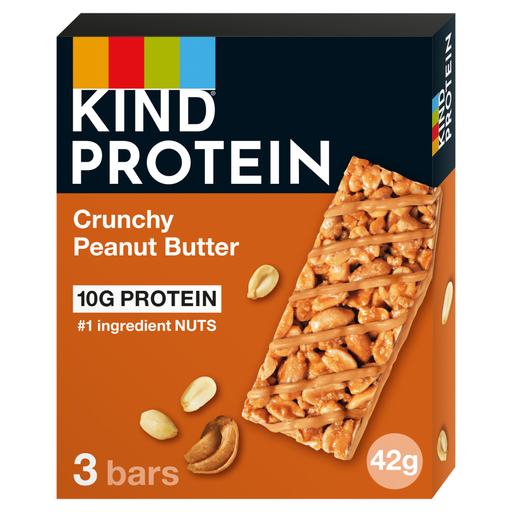
Consider this crunchy peanut-butter bar if a nut-based format appeals more than a conventional oat or wheat cereal bar. The pack is described as three 42g bars; check the exact protein figure and allergen declaration on the current label.
 No image available
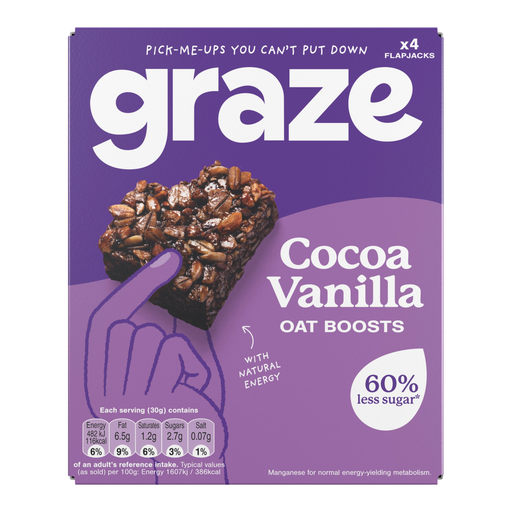
These cocoa-and-vanilla oat squares offer a smaller stated portion than the 40g and 50g bars shown here. The pack is described as four 30g portions; compare its sugars, fibre and protein per portion rather than relying on the “Protein Bites” name.
 No image available
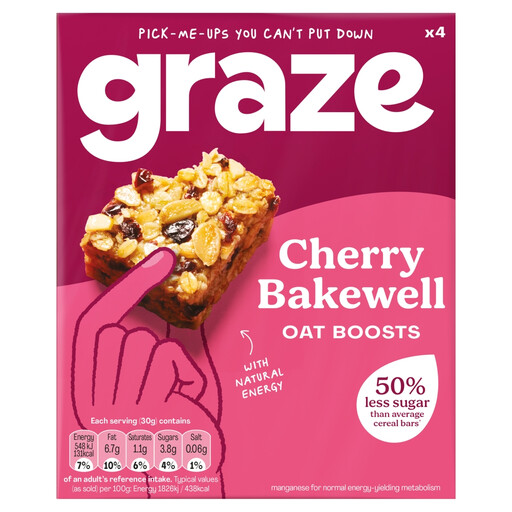
This oat-flapjack format may suit someone who wants a single bar to carry in a bag. The pack is described as four 30g bars; read the Cherry Bakewell flavour’s own sugars, fibre and allergen information before comparing it with another Graze product.
 No image available
A protein-flapjack format to compare if you prefer an oat-style bar. The pack is described as three 50g bars; use this flavour’s current panel for protein, sugars and ingredients rather than applying figures from another TREK range.
A cereal bar can be one part of breakfast, but its name does not establish that it provides everything you want from the meal. NHS Grampian describes a well-planned breakfast as including a fibre-rich carbohydrate source, a protein source, and fruit or vegetables; consider what else you can take with the bar when it is your main morning food.
Use per 100g figures to compare products of different sizes, and the stated serving or per-bar figures to understand what you would eat. Check whether the serving covers the whole wrapper: Tesco lists 11.9g sugars for two Oats & Honey bars in its cited Nature Valley pack, whereas Kellogg’s UK lists 12g sugars for one 37g Nutri-Grain Apple bar.
No. The Food Standards Agency says oats must still be identified as an allergen when a food is labelled gluten-free or very low gluten. If oats or gluten matter to your choice, check the exact pack’s claim, ingredients and any precautionary allergen statement.
Follow the instructions and best-before date on the pack you buy. A Nature Valley product page on Joybuy specifies cool, dry storage and directs shoppers to the packaging for its best-before date; check your particular product rather than applying those instructions to every bar.