Day hikers packing several pocket snacks
Individually wrapped portions are easy to count into a grab bag. Check the serving size as well as the number of bars, and pack for the length of the walk rather than treating one small bar as a meal.


Choose bars by the portions you want to pack: a smaller cereal bar can serve as one of several snacks, while an oat flapjack or protein-and-nut bar offers a different serving size and nutrition profile. Compare the labelled portion, ingredients and nutrition for the exact flavour; a protein, vegan or gluten-free label does not replace an allergen check.
The useful starting point is whether the bars will be several small snacks, a larger single portion or food shared with someone who has dietary restrictions.
Individually wrapped portions are easy to count into a grab bag. Check the serving size as well as the number of bars, and pack for the length of the walk rather than treating one small bar as a meal.
Compare protein and fibre per labelled bar, then check whether the exact flavour carries the vegan or gluten-free label you need. Soya, oats and other ingredients still need checking.
Read the ingredients and any may-contain statement on each flavour and pack size before it goes into a shared bag. GOV.UK says regulated allergens present as ingredients in prepacked food must be clearly labelled in the ingredients list.
Start with the number of usable portions, then compare nutrition and ingredients for the particular bars you plan to carry. A wrapper count alone can give the wrong impression of how a multipack is portioned.
| Priority | What to check | Your needs |
|---|---|---|
| Portions | Check grams per labelled serving, whether pieces are individually or twin-wrapped, and how many portions the pack contains. The Nature Valley Oats & Honey family pack lists two 21g bars as one 42g twin-wrapped portion, according to its Joybuy listing. | I want to divide snacks across the walk, so I need to know how many separate portions I can pack. |
| Protein and fibre | Compare grams per bar on the same serving basis. TREK describes its Protein Flapjacks as providing 9g plant protein per bar; Eat Natural lists 8g protein and 2.5g fibre for its cited 40g peanuts, almonds and cocoa bar. | For a longer outing, I may want a bar with a particular protein or fibre amount rather than choosing by the word “protein” on the front. |
| Allergens | Read the exact ingredients, highlighted allergens and any may-contain statement. Check gluten-free or vegan labelling on the chosen flavour, not just the brand range. | If someone in the group has an allergy, intolerance or dietary requirement, I need a suitable pack for that person. |
| Nutrition labels | Compare energy, sugars, saturated fat and salt per serving; use per-100g figures when comparing differently sized bars. Read any front-of-pack traffic-light label alongside the full nutrition panel. | I want to compare what I will actually eat: a 20g bar and a 50g flapjack are different-sized portions. |
Pack formats vary. The Nature Valley Oats & Honey family pack has 20 bars but describes them as 10 twin-wrapped, 42g portions on its Joybuy listing.
Use the nutrition panel’s serving size and count the portions you intend to carry, not just the pieces printed on the outer pack.
A vegan, gluten-free or protein label addresses a particular feature of a bar, not every ingredient or possible cross-contact warning. Cited bars across these ranges list ingredients or warnings involving soya, nuts, peanuts or milk.
Read the exact flavour’s ingredients, highlighted allergens and any may-contain statement before packing it for someone with an allergy.
Terms such as wholegrain or protein do not describe the full nutrition panel. Serving sizes also differ, which changes the amount in the portion you eat.
Compare the labelled serving and nutrition values, including sugars, saturated fat and salt. Where traffic-light labelling appears, read it alongside those values rather than in place of them.
These brands offer different bar formats, but suitability depends on the particular product and flavour rather than the brand name alone.
The range includes Crunchy bars and named Protein variants. Nature Valley lists 10g protein and 4g fibre for its Peanut & Chocolate and Salted Caramel Nut Protein bars.
Alpen Fruit & Nut is a smaller cereal-bar example: Weetabix Cereals lists 106kcal and 2.8g fibre per 28g serving.
Kellogg's offers several cereal-snack formats. Its Rice Krispies Snack Bar is listed at 20g per serving, with 83kcal and 1g protein.
Graze Oat Boosts include individually portioned oat flapjacks. Tesco lists the Sticky Toffee product as four 30g portions, with 4.7g fibre and 3.8g sugars per portion.
Eat Natural’s cited peanuts, almonds and cocoa protein bar is a 40g nut-led option. The manufacturer lists 8g protein, 2.5g fibre and 218kcal per bar.
TREK’s Protein Flapjacks are plant-based oat bars. TREK describes the range as providing 9g plant protein per bar.
These options focus on protein bars and oat flapjacks for a hiking grab bag. Compare their pack sizes and the exact flavour’s ingredients before choosing portions for your walk.
 No image available
A peanut-and-chocolate protein-bar option when you want to count 40g bars into a grab bag. Nature Valley lists 10g protein and 4g fibre for this named variant. Check the pack’s peanut and other allergen declarations before sharing it.
 No image available
A salted-caramel-and-nut alternative in four 40g bars. Nature Valley lists 10g protein and 4g fibre for this named variant. Check the exact pack for peanuts, almonds, soya and milk if those allergens affect your group.
 No image available
Three 50g oat flapjacks for a grab bag where larger individual portions are wanted. TREK describes its Protein Flapjacks as plant-based; check this flavour’s pack for its nutrition, gluten-free labelling and soya declaration.
 No image available
A cocoa-and-oat option in three 50g flapjacks. Ocado lists 9g protein per 50g Cocoa Oat flapjack in its TREK variety pack. Check the packaging of this exact product for its dietary labels and allergen information.
 No image available
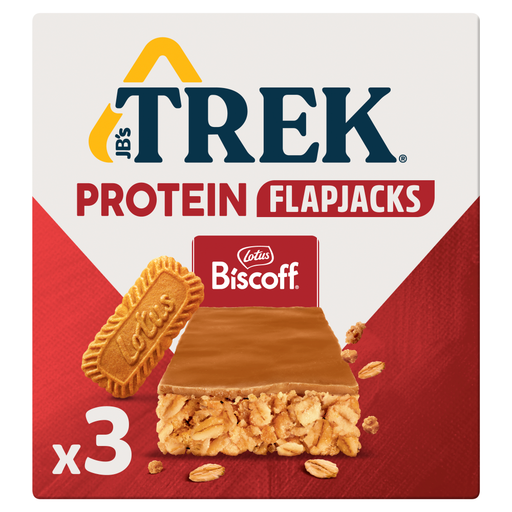
A Biscoff-flavoured flapjack in three 50g portions. This variant contains wheat and soya, so do not apply gluten-free labelling from another TREK flapjack to it. Check its pack for the full ingredients and may-contain statement.
Count labelled portions, then decide how many snacks you want for the route; wrapper count alone can be misleading. For example, the Nature Valley Oats & Honey family pack describes two 21g bars in a twin wrap as one 42g serving. For a long day, do not plan around one small snack bar as your only food.
No. Choose a protein bar when its stated portion and protein amount match what you want to pack; choose smaller cereal-bar portions when you would rather spread snacks across the walk. TREK describes its Protein Flapjacks as providing 9g plant protein per bar, while Kellogg's lists 1g protein for its 20g Rice Krispies Snack Bar. Compare ingredients and the rest of the nutrition panel too.
Not on the basis of its bar type alone. Check gluten-free labelling, ingredients and may-contain statements on the exact flavour and pack. GOV.UK says regulated allergens present as ingredients in prepacked food must be clearly labelled in the ingredients list; the cited bars differ in their use of wheat, oats, peanuts, nuts, milk and soya.