Families choosing holiday snacks
Individually packed bars are convenient to take out, but the serving size and nutrition panel matter more to a lower-fat comparison than words such as “light” or “protein”.


For school holiday snacks, compare cereal bars by total fat per 100g, then check the amount in the bar a child will eat, alongside saturated fat, sugars and allergens. Weetabix Cereals lists 4.3g fat per 100g for Alpen Light Summer Fruit and 6.5g for Chocolate & Fudge; those figures are lower than the declared fat in the Nature Valley, Graze and Eat Natural variants discussed here, but do not establish that either pack makes a formal reduced-fat claim. The British Nutrition Foundation explains that a reduced-fat claim requires at least 30% less fat than a similar product, so a name such as “light” is not enough on its own.
Individually packed bars are convenient to take out, but the serving size and nutrition panel matter more to a lower-fat comparison than words such as “light” or “protein”.
Check the exact flavour and current pack before sharing bars. Ingredients and precautionary allergen statements differ between the cereal, fruit, nut and oat bars discussed here.
Alpen Light Summer Fruit is one example with 4.3g fat and 20g fibre per 100g, according to Weetabix Cereals. Compare sugars and the size of the bar as well as those figures.
Start with the per-100g panel for a like-for-like comparison, then look at the portion that will actually be eaten.
| Priority | What to check | Your needs |
|---|---|---|
| Total fat | Compare total fat per 100g across exact flavours. If a pack makes a reduced-fat claim, check what similar product it is compared with; the British Nutrition Foundation defines the claim as at least 30% less fat. | I’m looking for a bar with less declared fat, not assuming that “light”, “wholegrain” or “protein” means reduced fat. |
| Bar size | Check the weight of one bar, the stated serving and how many bars are likely to be eaten. Alpen Light lists a 19g bar, Kellogg’s Nutri-Grain Blueberry a 37g bar, and Nature Valley Crunchy Oats & Honey a two-bar 42g serving, according to their manufacturers. | For a snack to take out, I want to know what the figures mean for the number of bars being packed. |
| Other nutrients | Read saturated fat, sugars and fibre alongside total fat, using the same per-100g basis before checking the per-bar figures. Where traffic-light labelling appears, GOV.UK says it indicates levels of fat, saturated fat, sugars and salt. | I want a quick way to look beyond fat alone. In a Food Standards Agency and Ipsos Northern Ireland survey, 49% of 611 people interviewed between September and November 2024 said they actively used traffic-light labelling when shopping for food; that is not a figure specifically about parents or cereal bars. |
| Allergens | Read the exact pack’s ingredients and any “may contain” statement. Check dietary labels for the particular flavour rather than applying them to an entire range. | If children will share snacks, I need to check each child’s requirements and any holiday club rules before choosing a bar. |
Those words do not answer the same question. The British Nutrition Foundation says a reduced-fat claim involves at least 30% less fat than a similar product.
Check the exact pack for a reduced-fat claim and its comparison; otherwise use the declared fat per 100g to compare bars.
A lower total-fat figure does not tell you the bar’s saturated fat, sugars or fibre. For example, Kellogg’s UK lists 8.3g fat and 33g sugars per 100g for Nutri-Grain Blueberry.
Read total fat, saturated fat, sugars and fibre together, then check the amounts for the portion being eaten.
Manufacturer serving sizes differ: Nature Valley Crunchy Oats & Honey lists two bars as a 42g serving, while Alpen Light lists one 19g bar.
Check the number of bars in the stated serving before using per-serving nutrition figures to plan a snack.
Ingredients and “may contain” warnings vary by product and flavour; a lower-fat figure says nothing about allergy suitability.
Read the current pack for the exact bar and check the snack policy of any holiday club or childcare provider.
These examples show why the exact flavour and nutrition panel matter; a brand name alone does not establish a bar’s fat content or dietary suitability.
Alpen Light includes small cereal bars with different nutrition figures by flavour.
Nutri-Grain Blueberry is a soft, fruit-filled alternative to a crunchy oat bar.
The Crunchy Oats & Honey variant offers a crunchy oat-bar format, while the brand has separate protein lines.
Graze Oat Boosts include oat-flapjack options for shoppers considering fibre and sugars as well as fat.
Almond & Apricot is a fruit-and-nut bar with a yoghurt coating, for shoppers who can include its ingredients.
Trek Protein Flapjacks with Lotus Biscoff are aimed at shoppers considering a vegan protein flapjack rather than selecting primarily by fat.
These cereal-bar and oat-bar packs offer different formats for school holiday snacks. Compare each exact flavour’s current nutrition and allergen label before choosing for a lower-fat preference or for a group of children.
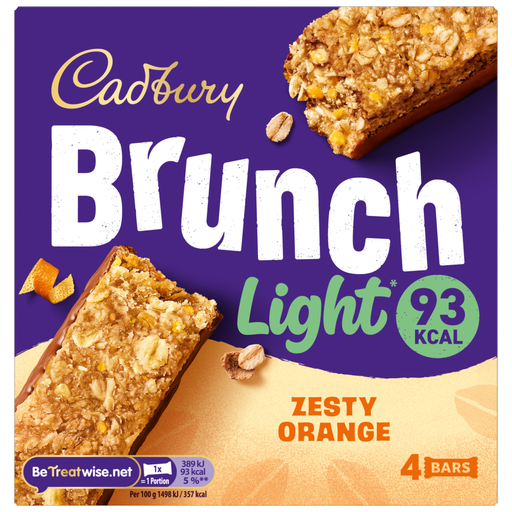 Image unavailable
The four-pack format may be convenient for taking individual bars on days out; compare the Orange variant’s fat, sugars and allergens on the pack rather than relying on “Light” in its name.
 Image unavailable
For a pack of smaller bars, check both the nutrition per 100g and the amount in one 21.5g Red Berry bar. Read the exact pack for allergens before sharing.
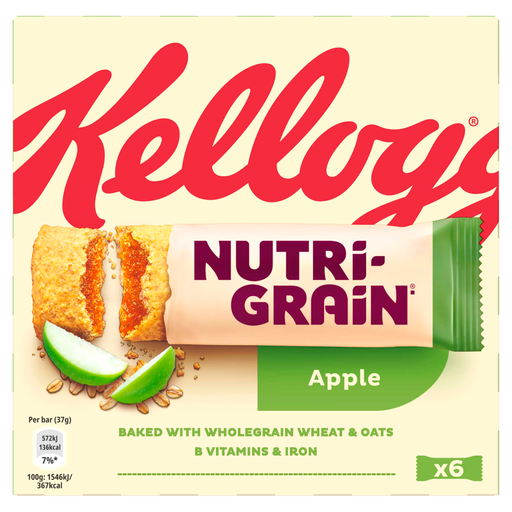 Image unavailable
If a fruit-flavoured breakfast bar suits the snack plan, compare the Apple variant’s own nutrition panel and serving size. Figures for Nutri-Grain Blueberry should not be applied to this flavour.
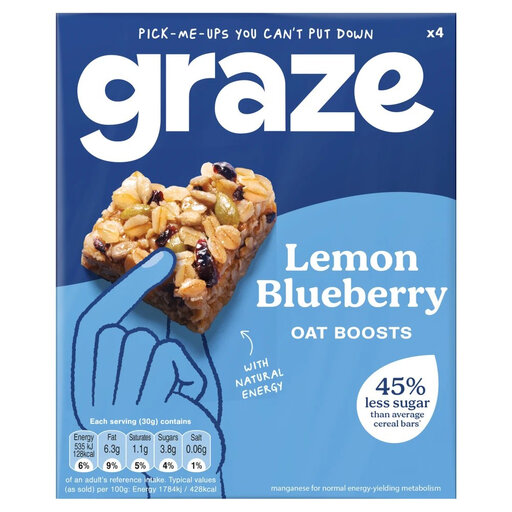 Image unavailable
This oat-bar format is an alternative when texture matters, but check the Lemon Blueberry flavour’s total and saturated fat per 100g before treating it as a lower-fat option. Check its allergen statement for group snacks.
 Image unavailable
For a 30g oat bar, use the Cherry Bakewell pack’s own fat and sugars figures to judge the trade-off against a lower-fat cereal bar. Read its ingredients and allergen warnings before sharing.
The British Nutrition Foundation says a reduced-fat claim means at least 30% less fat than a similar product. Check the exact pack and its comparison; “light”, “wholegrain” and “protein” do not establish the same claim.
Use both: per 100g allows a consistent comparison between bars of different sizes, while per-bar or per-serving figures show the amount in the snack being eaten. Check whether a stated serving contains more than one bar.
Yes. Kellogg’s UK lists 8.3g fat and 33g sugars per 100g for Nutri-Grain Blueberry; Weetabix Cereals lists 6.5g fat and 21g sugars per 100g for Alpen Light Chocolate & Fudge. Compare saturated fat, sugars, fibre and portion size as well as total fat.
Read the ingredients and any “may contain” statement on the exact current pack. For example, Eat Natural says its Almond & Apricot bar contains milk and almonds and may contain other nuts, peanuts and soya; another flavour or brand may carry different warnings.
The Department for Education’s guidance on school food concerns food and drink provided in state-funded schools in England. Ask the particular holiday club or childcare provider about its snack and allergy policy before packing food.