For a lower-calorie snack between the demands of caring for a new baby, compare the calories in the portion you would eat: Weetabix Cereals lists Alpen Light Chocolate & Fudge at 65 kcal per 19g bar, while ASDA lists Kellogg's Special K Juicy Red Berry at 83 kcal per 21.5g bar. Check sugars, allergens and serving size as well; a convenient bar should not stand in for a meal.
Who is choosing a bar?
Parents short on preparation time
A portioned snack may be useful at home or on an outing. NHS Lanarkshire notes that lack of time and sleep disruption can affect snacking after having a baby; the label still matters when choosing what to keep to hand.
Parents comparing calories per snack
Look at the declared portion as well as kcal per 100g. A smaller bar can have fewer calories per bar without having less energy for the same weight of food.
Breastfeeding parents seeking convenience
A cereal bar can be an occasional between-meal option, not a replacement for meals. The NHS says breastfeeding does not require a special diet; check ingredients against any dietary restrictions that apply to you.
What should you compare?
Start with the portion you expect to eat, then read the nutrition panel and ingredient list together rather than judging a bar by its name.
| Priority | What to check | Your needs |
|---|
| Portion and calories |
Compare kcal per bar with the stated serving size. Check kcal per 100g when comparing bars of different weights. |
I want a snack that fits the amount I plan to eat, whether that is one bar or a serving containing two. |
| Sugars and saturates |
Read both figures for the portion you would eat. A wholegrain, fibre or protein description does not replace the nutrition panel. |
For a snack I might buy regularly, I want to compare more than the calorie figure. |
| Fibre and ingredients |
Check declared fibre per serving and the ingredients for the exact flavour. Consider how the bar fits alongside meals. |
Fibre matters to me, but I do not want to assume that an oat-based bar meets every other preference. |
| Allergens and dietary requirements |
Read the current pack's ingredients, allergen declarations and precautionary statements. Check dietary labels on the exact variant. |
If I avoid particular ingredients, I need the declaration for the bar I am buying, not a general claim about its brand. |
| Convenience |
Check the number and size of bars in the pack and whether the stated serving matches what you would take out with you. |
When preparation time is short, I want a portion that is easy to take along without confusing a snack with a meal. |
Common buying mistakes
-
Reading a small calorie figure as the whole story
Bars have different serving weights, and some stated servings contain more than one bar. Calories per bar alone cannot compare equal weights of food.
Use the portion figure for the amount you expect to eat, then compare kcal per 100g across products. GOV.UK's nutrition-labelling guidance identifies per-100g values as part of the nutrition declaration.
-
Assuming a fibre or protein claim settles the choice
In its 2025 report on snack bars sold in supermarkets, Action on Salt & Sugar stated that 37% were high in sugars and 55% high in saturated fat. Those figures describe the products in that report, not the bar in your hand.
Read sugars and saturates on the exact pack alongside its calories and fibre.
-
Using a brand name to judge allergens
Ingredients and precautionary allergen statements can differ between flavours and ranges, so one product's declaration cannot establish another's suitability.
Check the current physical pack for the exact variant, especially if you avoid milk, gluten-containing cereals, soya or nuts.
-
Letting a bar routinely replace a meal
A portioned cereal bar solves a different practical problem from sitting down to eat a meal, even on a day with little preparation time.
Use it as a between-meal option when convenient, rather than judging your food for the day by the bar alone.
Brand and product references
These figures refer to the named products and serving sizes, not to every bar made by each brand.
Alpen
Weetabix Cereals lists Alpen Light Chocolate & Fudge at 65 kcal per 19g bar.
- A small declared serving makes the per-bar figure straightforward to compare.
- Check the current pack for milk, wheat, barley and soya ingredients if these matter to you.
Kellogg's
ASDA lists the Special K Juicy Red Berry bar at 83 kcal per 21.5g bar.
- The declared portion can be compared directly with other single bars.
- Check sugars, saturates and allergens for this flavour rather than relying on the Special K name.
Graze
Tesco lists the Cocoa Vanilla Oat Boost at 116 kcal per 30g boost.
- The stated 30g serving helps distinguish it from smaller cereal bars.
- Graze's wider sugar comparisons are brand claims; check the nutrition panel for the particular flavour.
Nature Valley
Nature Valley lists its Crunchy Apple & Cinnamon Flavour Bars at 195 kcal for a serving of two bars, weighing 42g.
- The two-bar serving is clearly relevant when deciding how much to take as a snack.
- Do not compare its two-bar figure with a single-bar figure without checking the serving sizes.
Eat Natural
Eat Natural lists its Yoghurt, Cashew & Blueberry Cereal Bar at 194 kcal per 40g bar.
- The declared 40g portion makes its calorie figure clear.
- Check the exact pack for milk, cashews, almonds and precautionary nut statements.
Trek
FatSecret UK lists Trek Original Oat Protein Flapjack at 219 kcal per 50g bar.
- A 50g flapjack is a distinct portion to consider when comparing snacks.
- Check the current pack's nutrition and ingredients before choosing this variant.
Cereal bars on Joybuy
These cereal-bar and oat-flapjack options cover several flavours and pack sizes for a convenient snack. Check each current product label for calories, sugars and allergens before choosing.
 No image available
Special K Dark Chocolate Snack, 6 × 21.5g
The six-bar pack offers a stated 21.5g bar size for planning a portion. Check the Dark Chocolate variant's current nutrition and allergen declaration rather than applying figures from another Special K flavour.
 No image available
Cadbury Brunch Light Orange Cereal Bar, 4pk 104g
This four-pack offers a cereal-bar option for keeping snacks to hand. Treat “Light” as part of its product name, not as a substitute for checking calories per serving and per 100g.
 No image available
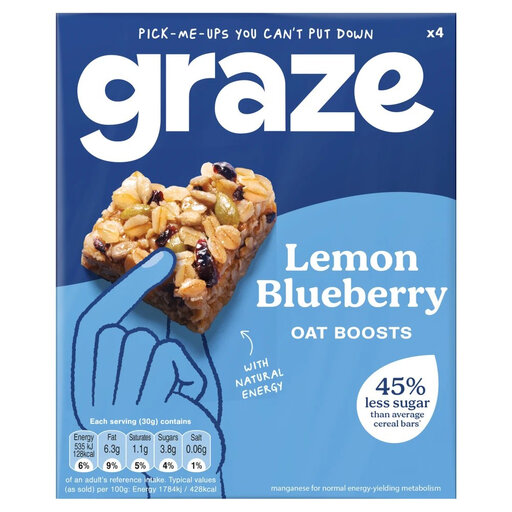
Graze Oat Boosts Lemon Blueberry, 4 × 30g
Choose this flavour if an oat-boost bar in a stated 30g size suits the snack you have in mind. Check its own label for calories and sugars; the Cocoa Vanilla figures above describe a different Graze product.
 No image available
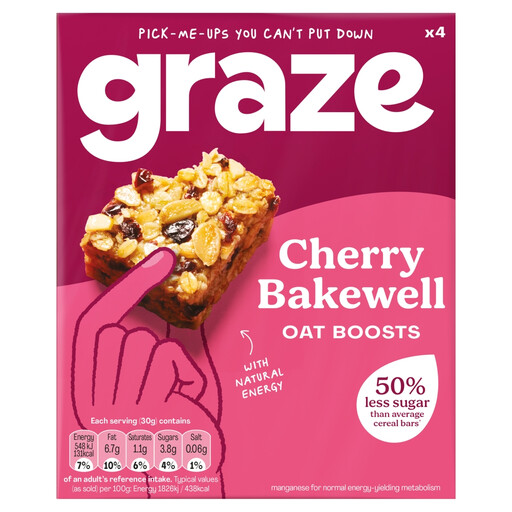
Graze Oat Boosts Cherry Bakewell, 4 × 30g
The stated 30g bar size allows a like-sized portion comparison with the Lemon Blueberry variant. Read this flavour's current nutrition panel and check its almond and other allergen declarations.
 No image available
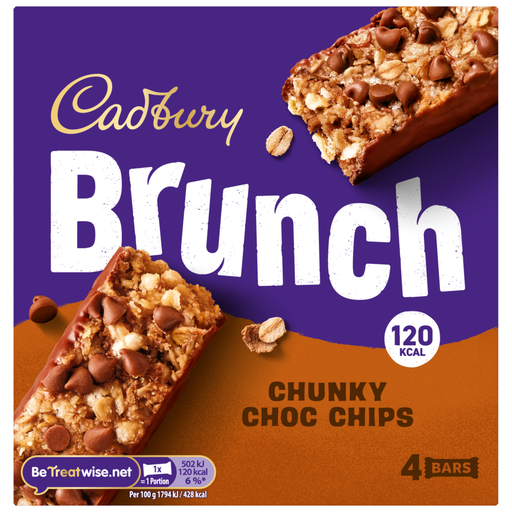
Cadbury Brunch Chocolate Chip Cereal Bars, 4pk 112g
This four-pack is another portioned cereal-bar option for outings. Compare the Chocolate Chip variant's sugars and fibre on its own label, and check its allergen declaration before buying.
Questions about cereal bars
Does “low calorie” simply mean a small cereal bar?
No. In UK nutrition-claim guidance, Business Companion treats “low calorie” as equivalent to “low energy”; a small per-bar figure alone does not establish that claim. Compare the declared serving with kcal per 100g, and do not take “Light” in a product name as your only guide.
Can a cereal bar replace a meal while caring for a baby?
A cereal bar is better treated as a convenient between-meal snack, not as a routine meal replacement. If you are breastfeeding, the NHS says you do not need a special diet; keep the bar in the context of what else you eat and drink.
What if I am breastfeeding and avoid certain ingredients?
Check the current ingredient list, allergen declaration and any precautionary statements for the exact bar. Different flavours can have different ingredients, so a brand-wide description is not enough to establish suitability for your restriction.
Does a protein or fibre claim mean a bar has fewer calories?
No. Those claims describe different features and do not tell you the calories in the portion you will eat. Compare kcal, sugars and saturates on the exact product label alongside any protein or fibre information.


