Someone packing a small lunch extra
An individually wrapped bar is easy to add to a packed lunch. Compare its weight and calories per bar so you know what that one portion contributes.


For a small addition to an office packed lunch, compare the calories in the whole bar you plan to eat, not just the figure per 100g. Eat Natural lists 86 kcal for its 25g Apple Soft Fruit Bar and 87 kcal for its 25g Red Fruits version; check sugars and allergens as well, and treat either small bar as a snack rather than lunch on its own. If you want a larger protein bar or flapjack instead, allow for the higher per-bar calorie figures shown on the exact pack.
An individually wrapped bar is easy to add to a packed lunch. Compare its weight and calories per bar so you know what that one portion contributes.
If you are looking at protein bars or flapjacks, compare their protein and fibre figures alongside calories. The named examples come in larger portions than the 25g Eat Natural bars.
Read the ingredients and precautionary allergen statements on the exact flavour and current pack. The named bars differ in their use of nuts, milk, soya and gluten-containing cereals.
Start with the portion you will actually pack, then read the other nutrition and ingredient details on that same product.
| Priority | What to check | Your needs |
|---|---|---|
| Whole-bar calories | Check kcal per bar, bar weight and whether the stated serving is one bar or more than one piece. | I want to know the calorie contribution of the portion going into my lunchbox, especially when comparing a small bar with a larger flapjack. |
| Sugars | Read sugars per bar alongside calories. Compare figures for the same amount you expect to eat. | A bar with a small calorie total is not automatically the choice I want on sugars, so I will check both figures. |
| Protein and fibre | Check the quantities per bar and the corresponding calorie total; do not treat a protein or fibre claim as a calorie figure. | If I am considering a more substantial snack, I want to see what a larger bar provides before choosing it over a smaller portion. |
| Ingredients and allergens | Read the exact variant’s ingredients, emphasised allergens and any ‘may contain’ statement on the current pack. | For an allergy or dietary requirement, I need to check this flavour rather than assume every bar from a brand has the same ingredients. |
Eat Natural lists 86 kcal for its 25g Apple Soft Fruit Bar, while the product information in this research gives 13.8g sugars per bar. The two figures answer different questions.
Use calories per bar to compare portions, then check sugars per bar separately. Do not treat an under-100-kcal portion as a formal ‘low energy’ claim.
Nature Valley’s Protein Peanut & Chocolate bar is listed at 195 kcal per 40g bar, compared with the 86–87 kcal listed by Eat Natural for its 25g Soft Fruit Bars. These are different-sized snacks.
Decide whether you want a small lunch extra or a larger bar, then compare the whole-bar calories together with the protein and fibre figures.
A per-100g figure alone does not tell you how many calories are in the 25g, 40g or 50g bar you will pack.
Check the weight and nutrition for the amount you expect to eat. For a pack with two pieces, check whether the figures refer to one piece or the pack.
The named products use different combinations of nuts, peanuts, milk, soya and gluten-containing cereals. Some also carry precautionary allergen statements.
Read the ingredients and ‘may contain’ wording on the current pack of the exact variant before choosing it.
These examples describe named bars, not every product from each brand or what is available in the product selection below.
Eat Natural lists individually wrapped Apple and Red Fruits Soft Fruit Bars at 86 kcal and 87 kcal per 25g bar respectively.
Kellogg’s lists 104 kcal per serving for its Special K Red Berry Bar.
Weetabix Cereals lists 106 kcal per 28g serving for the Alpen Fruit & Nut Bar.
Graze’s Oat Boost range is an oat-flapjack option for shoppers considering a different texture from a small fruit bar.
Nature Valley lists 195 kcal, around 10g protein and around 4g fibre for its 40g Protein Peanut & Chocolate bar.
TREK lists 227 kcal per 50g bar for its Cocoa Oat protein flapjack.
These options include cereal and oat bars, plus a twin chocolate bar for shoppers considering a one-piece snack. Check the current pack’s nutrition and serving definition before comparing their calories with the named manufacturer examples above.
 Image unavailable
A multipack of 21.5g bars to consider when you want to pack one defined portion. Check the current pack for calories, sugars and allergens per bar.
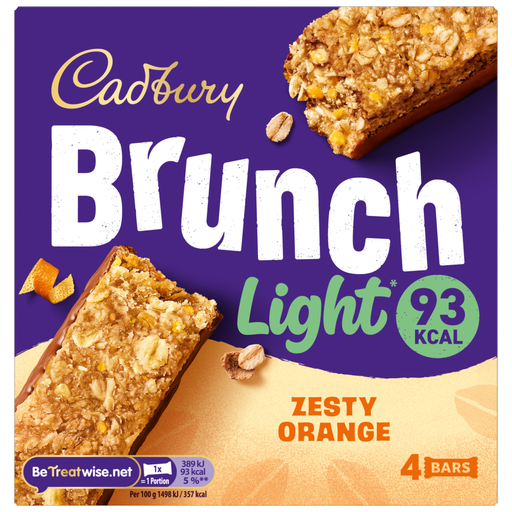 Image unavailable
An orange-flavoured cereal-bar multipack for a packed-lunch snack. Check the pack’s serving weight and calories for one bar; the word ‘Light’ in its name is not a substitute for the nutrition panel.
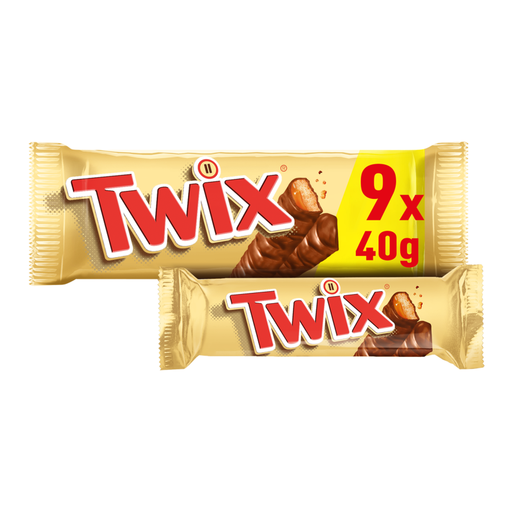 Image unavailable
This is a chocolate bar rather than a cereal bar. If you plan to pack one piece rather than a twin pack, check which portion the pack’s calorie figure describes.
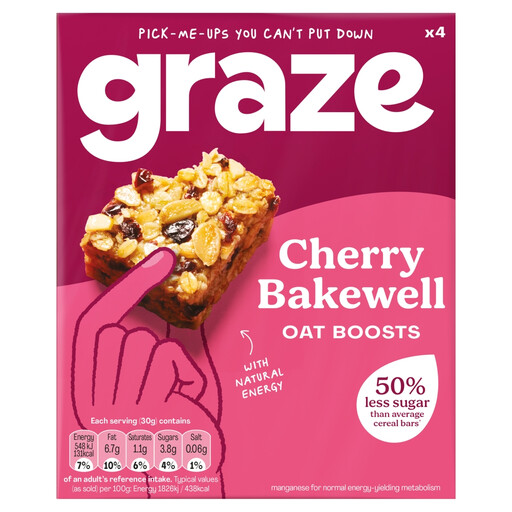 Image unavailable
A 30g oat bar to compare with smaller packed-lunch portions. Check calories and sugars for the Cherry Bakewell variant, as well as its ingredients, on the current pack.
 Image unavailable
Another 30g oat-bar option for an office lunch. Compare this flavour’s own per-bar nutrition and allergen statement rather than assuming they match the Cherry Bakewell variant.
No: an under-100-kcal figure describes that portion, not the food’s energy content per 100g. Compare both figures and do not treat a portion-based shopping label as a formal nutrition claim.
Start with calories for the amount you expect to pack and eat. The per-100g figure provides another comparison, but a 25g bar and a 50g flapjack contribute different totals as whole portions.
Treat a 25g Soft Fruit Bar as a small snack, not a complete lunch. If you are considering a larger bar instead, compare its full-portion calories, protein and fibre with what else you are packing.
Check the exact product’s current ingredients and ‘may contain’ statement. Allergens across the named examples include nuts, peanuts, milk, soya and gluten-containing cereals; do not assume another flavour has the same ingredients.