Quick top-up shoppers
If you want a bar for a bag or desk drawer, check the weight of each bar, not just the number in the pack. A 30g flapjack and a 50g protein flapjack are different portions.


Choose a cereal bar by the portion and format you want: a 30g oat flapjack for a smaller serving, a bar with a stated protein amount if that matters to you, or a fruit-and-nut or breakfast-style bar for a different flavour and texture. Compare nutrition per 100g and per bar, then check the exact pack’s ingredients and allergens; a claim about a range does not establish whether another flavour suits you.
If you want a bar for a bag or desk drawer, check the weight of each bar, not just the number in the pack. A 30g flapjack and a 50g protein flapjack are different portions.
If a stated protein amount guides your choice, compare it per bar alongside the bar’s energy, sugars and saturates. The protein figure alone does not describe the full nutrition panel.
Check the ingredients and allergen information for the exact flavour and pack. Vegan and gluten-free describe different characteristics, and neither replaces an allergen check.
Start with the size and format you would use, then compare the label on the specific bar. The NHS explains that nutrition labels give figures per 100g and may also give them per portion.
| Priority | What to check | Your needs |
|---|---|---|
| Portion and pack | Check the number of bars and weight per bar. Compare per-bar nutrition as well as per-100g figures when serving sizes differ. | A smaller portion would suit my top-up shop, or I want a larger bar for another occasion. |
| Nutrition | Read the stated protein and fibre amounts alongside energy, sugars, saturates and salt. Keep the same per-bar or per-100g basis when comparing figures. | I’m looking for a stated protein amount, but I also want to see what else is in that serving. |
| Ingredients and allergens | Read the exact flavour’s ingredients and allergen information. Do not use a vegan or gluten-free claim as a substitute for checking other allergens. | When I’m buying for someone with a dietary requirement, I need to confirm that this particular bar is suitable for them. |
| Flavour and texture | Distinguish crunchy cereal bars, oat flapjacks, fruit-and-nut bars and breakfast-style bars. Check named ingredients if fruit or nuts affect your choice. | Texture matters to me; a fruit-and-nut bar is not the same choice as a cereal-and-milk bar. |
A protein, fibre or vegan callout tells you about one characteristic, not the whole nutrition and ingredient profile.
Use the current pack’s nutrition table to compare both per-bar and per-100g figures, particularly when the bars have different weights.
The cited Nature Valley Peanut & Chocolate product lists peanuts, soya and milk, while cereal-and-milk bars can contain cereals with gluten. A claim about one dietary characteristic does not settle the others.
Check the exact flavour’s ingredients and allergen statement each time you choose a different product or variant.
A brand may describe selected bars or an entire range, while the portion and nutrition figures you need belong to the individual product.
Use the range description to identify formats, then compare the labels of the flavours you are considering.
These brand references describe formats to compare, not the dietary suitability of every bar in a range.
Nature Valley UK lists Crunchy, Sweet & Salty Nut and Protein bars.
A UK supermarket listing identifies Graze Oat Boost flapjacks in 4 × 30g packs, offering a smaller stated portion than the 40g and 50g examples in this article.
TREK offers plant-based protein flapjacks and protein bars; it lists 9g plant-based protein for its Protein Flapjacks.
Eat Natural UK lists fruit-and-nut, protein and soft-fruit bar formats.
Kellogg's UK presents Nutri-Grain as a breakfast-style bar and also lists Rice Krispies cereal-and-milk snack bars.
These options cover protein flapjacks, protein bars and a breakfast-style bar for a top-up shop. Compare their pack sizes and exact labels rather than treating them as interchangeable portions.
 No image available
Consider this flapjack if you want the salted caramel flavour in a 50g-per-bar pack. Check the exact pack’s nutrition and allergen information when comparing it with another TREK flavour.
 No image available
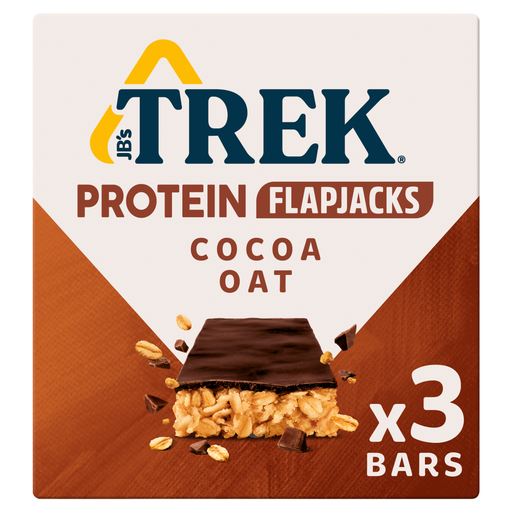
This cocoa-oat option has a stated 50g portion. Ocado lists 9g protein, 227 kcal, 14g sugars and 5.0g saturates per 50g Cocoa Oat flapjack; use the current pack when comparing nutrition or checking allergens.
 No image available
The 40g bars offer a different stated portion from the 50g flapjacks above. Nature Valley lists 10g protein and 4g fibre for this Protein bar; the cited product information also lists peanuts, soya and milk as allergens.
 No image available
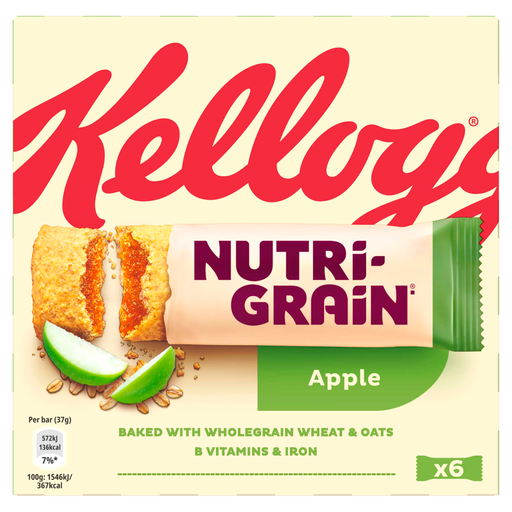
This apple variant is a breakfast-style bar rather than a protein flapjack. The pack contains six bars with a stated total weight of 222g; check its per-bar nutrition and ingredients against the other formats.
 No image available
This salted caramel nut variant comes in a pack of four 40g bars. Choose between it and the Peanut & Chocolate variant by checking each flavour’s nutrition panel and allergen statement, rather than assuming their recipes match.
Check the weight of each bar, then compare nutrition both per 100g and per bar. The NHS explains that pre-packed food labels give figures including energy, saturates, sugars, protein and salt; per-100g figures provide a common basis, while per-bar figures describe the stated serving.
No. It tells you about protein, not the bar’s complete nutrition profile. For example, Ocado lists the TREK Cocoa Oat flapjack at 9g protein, 14g sugars and 5.0g saturates per 50g bar, so compare all the figures relevant to your choice.
No. Vegan and gluten-free are separate descriptions, and neither means a bar is free from every allergen. Read the ingredients and allergen information on the exact pack, especially when buying for someone else.
Check the current package’s full ingredients and allergen information for the exact flavour. Do not substitute another flavour or pack on the assumption that its ingredients are the same.