Parents packing holiday-outing lunches
A wrapped bar is easy to pack alongside a main lunch. Check the packet portion and sugars against what else you are bringing, rather than treating the bar as the lunch itself.


Choose a cereal bar to fit the rest of the school-holiday lunch: a small single bar works as a modest addition, while a twin-bar packet contains a larger stated portion. If you are considering a protein bar, check that its portion and ingredients suit the child; the Nature Valley peanut-and-chocolate example contains peanut, soy and milk. Compare nutrition for the amount likely to be eaten, and read the current pack’s allergen information.
A wrapped bar is easy to pack alongside a main lunch. Check the packet portion and sugars against what else you are bringing, rather than treating the bar as the lunch itself.
Ingredients and “may contain” statements can determine whether a particular bar is suitable. Check the current wrapper before packing it, especially for a shared activity or a term-time lunchbox.
A single bar, a two-bar portion and a protein bar are different packet choices. Compare their stated portions and ingredients with the child’s appetite and the rest of the food packed.
Start with the amount that will actually be eaten, then compare the nutrition label and check whether the ingredients are suitable.
| Priority | What to check | Your needs |
|---|---|---|
| Packet portion | Check the weight and number of bars in a stated serving. Nature Valley UK lists its Crunchy Variety Pack serving as two bars, weighing 42g; Kellogg’s UK lists its Special K Red Berry Bar as one 27g serving. | For a small addition to lunch, I may want one bar. If I pack a twin portion, will both bars be eaten, shared or saved? |
| Nutrition | Compare sugars and other labelled nutrients per 100g, then look at the packet or serving amount. The NHS explains that pre-packed food labels give figures per 100g and sometimes per portion. | I want to judge the amount likely to be eaten, not assume two differently sized packets provide the same amount. |
| Allergens | Read the current ingredients and precautionary statements for the exact flavour and pack. Nature Valley UK lists peanut, soy and milk in its Protein Peanut & Chocolate bar, with a tree-nut precautionary statement. | If an allergy affects our choice, the current wrapper and the child’s individual allergy plan matter more than a product name or an older online listing. |
| Lunch setting | Check any rules for the activity or school where the bar will be eaten. England’s Department for Education guidance says settings may discourage particular allergens, such as nuts; it does not set a universal packed-lunch ban. | A bar packed for a family outing might need a different check before it goes into a term-time lunchbox or a shared group lunch. |
A single 20g Kellogg’s Rice Krispies Snack Bar and a 42g two-bar Nature Valley Crunchy Variety Pack serving contain different amounts of food, according to the brands’ UK product information.
Compare the per-serving figures as well as those per 100g, and decide whether both bars in a twin packet will be eaten.
The products checked have different ingredient and precautionary allergen statements. A nutrition claim or product category cannot establish suitability for someone with an allergy.
Read the exact pack’s ingredients and “may contain” wording, and follow the child’s individual allergy plan and any relevant setting rules.
Nature Valley UK’s Protein Peanut & Chocolate bar contains peanut, soy and milk and may contain tree nuts. That makes its allergen profile an important part of the choice, not a detail to check after packing.
Consider the full portion and ingredients before choosing it for a child or a group outing.
An online listing or remembered ingredient list may not describe the packet you have in hand.
Use the current pack to confirm its nutrition, ingredients and allergen statements before it goes into lunch.
These examples show why the exact bar and serving matter more than the brand name alone.
Nature Valley UK lists a Crunchy Variety Pack with ten two-bar portions and a separate Protein Peanut & Chocolate bar with a 40g serving.
Kellogg’s UK lists a 27g Special K Red Berry Bar and a 20g Rice Krispies Snack Bar, offering two single-bar portion sizes to compare.
Alpen is a cereal-bar brand to consider by individual product, particularly when checking ingredients for a family lunch.
These options include a twin oat-bar pack, peanut-and-chocolate or salted-caramel protein bars, and smaller Graze oat-bar packs. Compare the exact packet portion and ingredients with the lunch you are packing.
 No image available
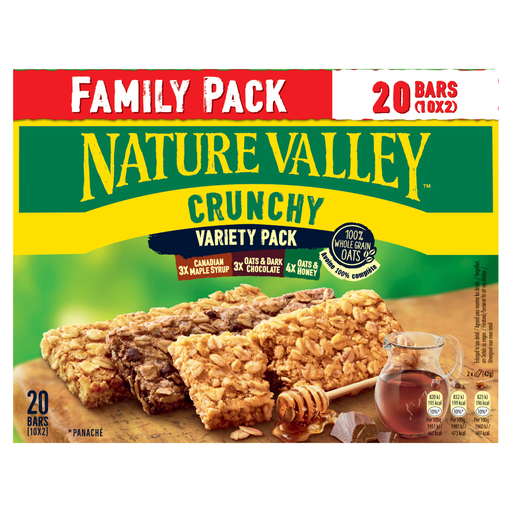
A twin-bar portion may suit an outing when two bars will be eaten or one saved. Nature Valley UK describes its Crunchy Variety Pack portion as two bars weighing 42g; check the exact pack’s ingredients and allergen statements before packing it.
 No image available
This four-pack has 40g bars. Nature Valley UK lists peanut, soy and milk ingredients for its Protein Peanut & Chocolate bar, plus a tree-nut precautionary statement; check the current pack against the child’s allergy requirements.
 No image available
Another four-pack of 40g bars for comparing with the rest of an outing lunch. Check this salted-caramel-and-nut variant’s own nutrition panel, ingredients and allergen statements rather than applying figures from a different flavour.
 No image available
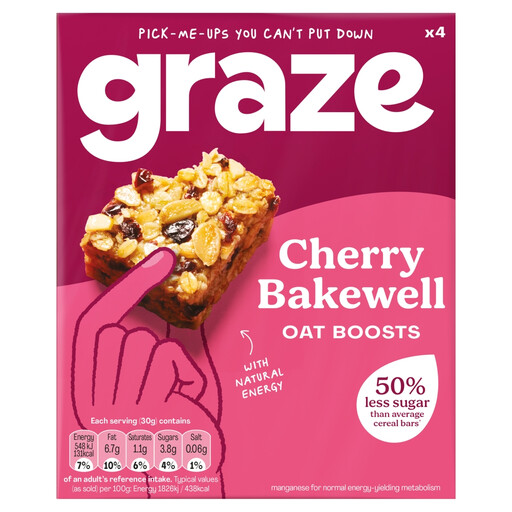
The four-pack lists 30g bars, a smaller stated bar weight than the 40g and 42g options above. Check its current nutrition panel and allergen wording before choosing it for a child or shared lunch.
 No image available
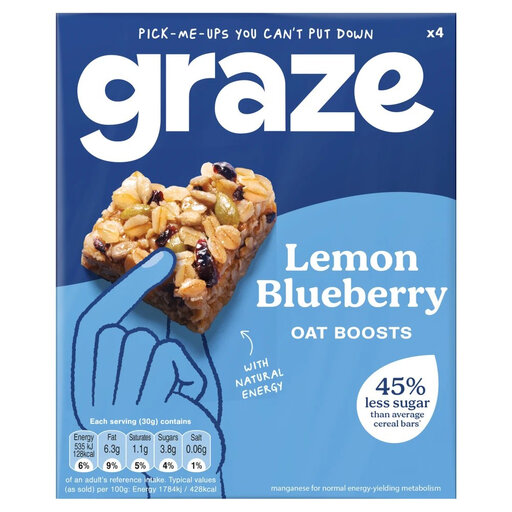
This lemon-and-blueberry four-pack also lists 30g bars. Read this flavour’s own serving figures, ingredients and precautionary allergen statements; do not assume they match the Cherry Bakewell variant.
Treat a cereal bar as one part of lunch rather than assuming its portion or a fibre or protein figure describes the whole meal. Check what else is packed and whether the bar’s stated serving is the amount the child will eat.
Use both: per 100g lets you compare labels on the same weight basis, while per bar or packet shows the amount likely to be eaten. The NHS says pre-packed food labels provide nutrition information per 100g and sometimes per portion.
Start with the serving weight and number of bars, then compare the labelled sugars, saturates, salt, fibre and protein for the relevant portion. Read the ingredients and allergen statements separately; nutrition figures cannot establish allergy suitability.
Check the current physical pack’s highlighted ingredients and precautionary statements against the child’s individual allergy plan. For example, Nature Valley UK lists peanut, soy and milk in its Protein Peanut & Chocolate bar and says it may contain tree nuts. Check any relevant school or activity-provider rules too.
Follow the product pack’s storage instructions and keep the bar in its original wrapper until it is eaten, so its ingredient and allergen information stays with it. Recheck the current label when buying a different pack or flavour.