Tea-break snack planners
If you want something for a short break rather than a breakfast replacement, look at the portion in one bar. Its sugars, saturated fat and calories are more useful for this decision than the size of the outer pack.


For a short morning tea break, choose the portion and type of bar that match what you want from the snack: a fibre-focused oat bar, a protein-focused bar or a smaller cereal-and-milk bar. Compare sugars, saturated fat and nutrition per bar rather than relying on the product name, and check the exact pack’s ingredients and allergens before choosing.
If you want something for a short break rather than a breakfast replacement, look at the portion in one bar. Its sugars, saturated fat and calories are more useful for this decision than the size of the outer pack.
If fibre matters to you, compare the amount per bar alongside sugars. Check the ingredients too: oat-based recipes can include other cereals, nuts or soya.
If you specifically want protein from your tea-break snack, compare it per bar without overlooking the portion’s other nutrition figures. Nut- and soya-based recipes also call for a careful allergen check.
The figures for one bar make the different tea-break formats easier to compare. In its November 2025 analysis of 458 snack bars from 10 major UK retailers, Action on Salt & Sugar reported that 37% were high in sugars and 55% were high in saturated fat under front-of-pack thresholds; those figures describe sampled products, not shoppers’ preferences.
| Priority | What to check | Your needs |
|---|---|---|
| Portion | Check the weight and calories of one bar, then note how many bars are in the pack. Compare bars of different sizes with that serving difference in mind. | I want a portion that suits a short break, not a larger snack chosen just because it comes in a grab bag. |
| Sugars and saturated fat | Read both figures per bar. Use traffic-light labelling where it appears, while checking whether the nutrition table is shown per serving, per 100g or both. | A name such as oat or protein does not tell me what is in one bar; I want to compare the actual figures. |
| Fibre and protein | Compare each nutrient per bar rather than treating an oat bar, a protein bar and a small cereal-and-milk bar as interchangeable. Check the other nutrition figures alongside any protein claim. | If I am choosing for fibre, I will look for its amount on the pack. If I want protein instead, I will check how much this particular bar provides. |
| Ingredients and allergens | Read the ingredients and highlighted allergens on the current pack, plus any precautionary allergen statement. Check a gluten-free claim on the specific product rather than assuming an oat bar has one. | With a relevant food restriction, I need the exact recipe and allergen information before deciding whether a bar is suitable for me. |
Oats, fruit, nuts or protein in a product name do not establish its sugars or saturated fat content. The Action on Salt & Sugar analysis of 458 UK retail snack bars in November 2025 found substantial variation under front-of-pack thresholds.
Compare the figures for one bar and use traffic-light colours where provided; do not choose on a front-of-pack phrase alone.
Relevant recipes can contain nuts, cereals, milk or soya. An oat-based name does not establish that a product is gluten-free, and a gluten-free claim does not answer a separate oat-allergy question.
Check the ingredients and any precautionary allergen statement on the exact pack, including when you have bought the product before.
A small cereal-and-milk bar and a larger protein bar serve different portion preferences. Outer-pack weight can obscure what you would eat in one break.
Start with the weight of one bar, then compare its calories, sugars, fibre and protein against what you want from that portion.
A retailer page may remain visible when its product cannot be ordered. Nature Valley Oaty & Crispy Honey, for example, was marked unavailable on the Joybuy UK page cited in the product research.
Check the current retailer listing and pack details before settling on a particular flavour or multipack.
These examples show how differently brands position individual bars; the figures and claims belong to particular products, not every bar in a brand’s range.
Its UK range includes crunchy oat bars, Oaty & Crispy bars and protein bars.
Its Oat Boost flapjacks offer an oat-based option for a portioned break.
Its fruit-and-nut protein bars are relevant when protein is the main reason for choosing a bar.
Its Rice Krispies Snack Bar illustrates a smaller cereal-and-milk format.
Its Original Oat Protein Flapjack is an oat-and-protein format rather than a small cereal-and-milk bar.
These Joybuy listings cover portioned Graze oat bars and Nature Valley protein bars for a morning tea break. They represent different snack preferences, so compare each exact pack rather than treating the products as interchangeable.
 No image available
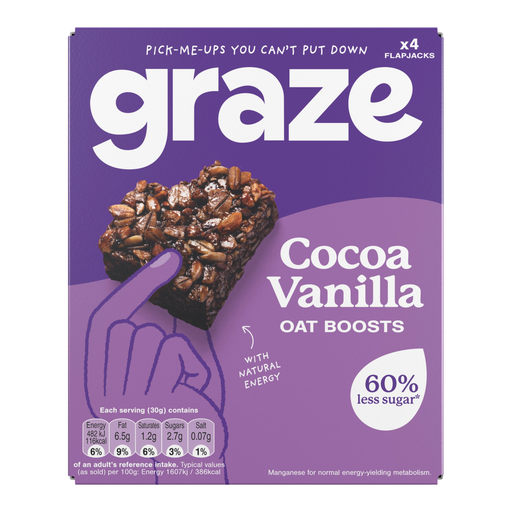
The four 30g oat squares offer a defined portion for a tea break. Compare the current pack’s sugars and fibre if those figures guide your choice, and check its oat, soya and precautionary allergen information.
 No image available
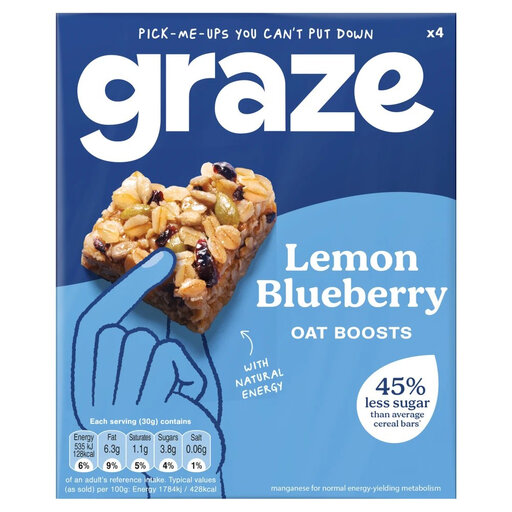
This lemon-and-blueberry oat option comes as four 30g bars. For a routine tea-break choice, compare its per-bar sugars and fibre with other flavours, and read the current allergen statement.
 No image available
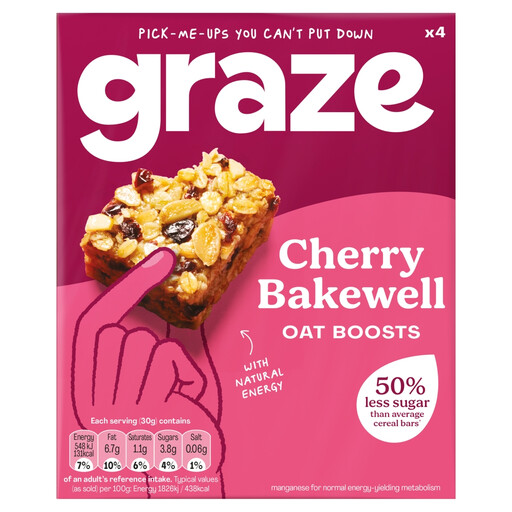
The Cherry Bakewell variant provides another four-bar, 30g-per-bar oat option. Compare its nutrition with the other Oat Boost flavour rather than assuming they have the same recipe, and check the pack’s almond and other allergen information.
 No image available
This four-pack of 40g nut bars is a protein-focused format rather than a smaller oat-square portion. Check protein, sugars and saturated fat per bar on the current pack, along with its peanut, almond, soya and milk information.
 No image available
Nature Valley UK lists 10g protein and 4g fibre for its Peanut & Chocolate bar; this listing is for four 40g bars. Compare the current pack’s full nutrition declaration and check its peanut and other allergen information before choosing it.
Start with the weight and nutrition figures for one bar, because that is the portion you are considering for your tea break. Compare calories, sugars, saturated fat, fibre and protein, and check whether a label presents its figures per bar, per 100g or both. The Food Standards Agency also recommends traffic-light labels for comparing products at a glance where those labels appear.
No: ingredients in the name do not establish the sugars in a serving. The Eatwell Guide notes that cereal bars can contain high levels of free sugars, so read the nutrition declaration for the particular bar instead of relying on its description.
Read the current pack’s ingredients, highlighted allergens and any precautionary allergen statement for the exact flavour. Check that the product itself carries a gluten-free claim if you need one; do not infer it from an oat-based name, and consider oat allergy separately from gluten.
No. A protein figure describes one part of a bar’s nutrition, not whether the portion serves as a meal. If you want a tea-break snack, compare its protein with its serving size, sugars and saturated fat, and check ingredients such as nuts or soya where relevant.
Use it to compare options, then check the pack you receive before eating the bar. Kellogg's UK advises checking pack ingredients and nutrition declarations because its recipes can change; the same pack check is especially important when an allergen matters to your choice.