Small-portion snackers
If you want a sweet snack of around 100 kcal, check the energy for the complete bar rather than assuming every wrapped bar is the same size. Kellogg's UK lists its Frosties Cereal Milk Bar at 99 kcal per 25g bar.


For a deliberately small TV-night snack, compare the energy in the whole bar you plan to eat: Kellogg's UK lists its 25g Frosties Cereal Milk Bar at 99 kcal, while the larger nut and protein examples listed by Ocado, Nature Valley UK and TREK range from 175 to 244 kcal per bar. If protein, fibre or a larger portion matters more to you, compare those features alongside energy, sugars, saturated fat and allergens on the exact pack.
If you want a sweet snack of around 100 kcal, check the energy for the complete bar rather than assuming every wrapped bar is the same size. Kellogg's UK lists its Frosties Cereal Milk Bar at 99 kcal per 25g bar.
A larger bar may offer protein, fibre, oats or nuts, but it is a different portion choice. The examples listed by Ocado, Nature Valley UK and TREK range from 175 to 244 kcal per bar, compared with 99 kcal for the Kellogg's 25g example.
Check the declaration for the exact flavour and pack. The reviewed Kellogg's, Eat Natural and Nature Valley bars list different combinations of cereals, milk, soy or soya, peanuts and tree nuts, including relevant may-contain warnings.
Decide how much of the pack you intend to eat, then compare that portion with the nutrition information and ingredients for the exact bar.
| Priority | What to check | Your needs |
|---|---|---|
| Portion and energy | Check kcal per complete bar, its weight and how many bars you plan to eat. Use the per-100g figure to compare differently sized bars. | I want a small snack for one TV sitting, so the energy in the portion I actually eat matters more to me than the pack total. |
| Sugars and saturated fat | Compare both nutrients per 100g and per bar. NHS food-label guidance describes more than 22.5g sugars or 5g saturated fat per 100g as high. | A small bar appeals to me, but I also want to see what its nutrition label says rather than relying on an oat, fruit or protein description. |
| Protein and fibre | Read the amounts per bar alongside its weight and kcal. Nature Valley UK lists its 40g Peanut & Chocolate Protein Bar at about 10g protein and 4g fibre, with 195 kcal. | I may choose a larger bar for its listed protein or fibre, even if it does not meet my original small-snack calorie aim. |
| Ingredients and suitability | Read the current ingredients, highlighted allergens, dietary statements and may-contain warnings for the exact variant. | If I need to avoid an ingredient, a gluten-free or vegan description alone cannot answer every allergen question. |
| Current product details | Confirm the flavour, pack size and current nutrition panel. Alpen's UK FAQ says several former bar varieties, including Light Chocolate & Orange, are no longer made. | I do not want to base my choice on the nutrition or availability of an older bar with a similar name. |
The reviewed 25g, 40g and 50g examples range from 99 to 244 kcal per bar, according to Kellogg's UK, Ocado, Nature Valley UK and TREK. A comparison per 100g alone will not tell you the energy in the bar you eat.
Check the weight and kcal of one complete bar, then account for any second bar you intend to have.
In its November 2025 review of 458 snack bars from 10 major UK retailers, Action on Salt & Sugar classified 37% as high in sugars and 55% as high in saturated fat under front-of-pack thresholds. Those figures describe the reviewed products, not shoppers' preferences.
Read sugars and saturated fat per 100g as well as per bar before comparing recipes.
A gluten-free description does not establish whether a bar contains nuts, milk or soy. The reviewed Eat Natural and Nature Valley products list several allergens and may-contain warnings.
Check the ingredients and allergen declaration on the exact current pack.
Alpen's UK FAQ lists several former bars, including Alpen Light Chocolate & Orange, as no longer being made.
Confirm that the exact flavour and pack size are current before using an older nutrition listing to compare bars.
Its Frosties Cereal Milk Bar is a concrete example of a small cereal-bar portion.
Its range includes crunchy bars and protein-bar formats for shoppers comparing a small portion with other bar types.
Graze describes its Oat Boost range as wholegrain-oat flapjacks, offering an oat-bar format to compare with smaller cereal bars.
Its Fibre Packed Dark Chocolate & Sea Salt bar is a nut-and-chocolate example for a larger-portion comparison.
The protein flapjacks in the reviewed variety pack represent a 50g oat-bar portion rather than a small cereal-milk bar.
An older Alpen bar name needs checking before it can be used in a current cereal-bar comparison.
These Joybuy cereal and oat-bar options cover smaller snack packs as well as a protein-bar format. Compare the nutrition and allergens of the exact product when deciding what to have during a TV night.
 No image available
For a small TV-night snack, check the energy and sugars for the bar you intend to eat rather than for the whole 104g pack.
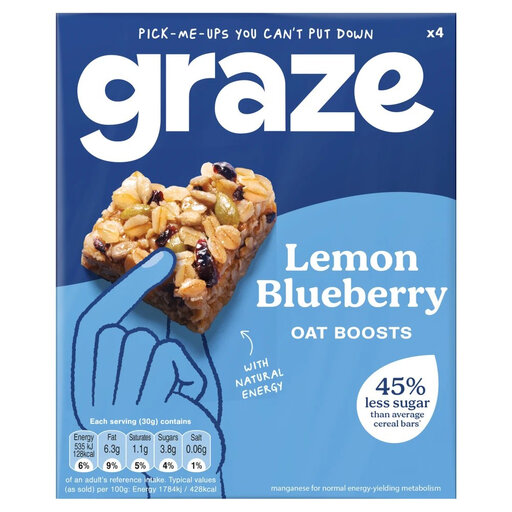 No image available
If you prefer an oat bar to a smaller cereal bar, compare the energy for one 30g bar and read the current ingredients for this flavour.
 No image available
For a chocolate-flavoured cereal snack, compare the energy per 21.5g bar with sugars per 100g; the two figures answer different questions.
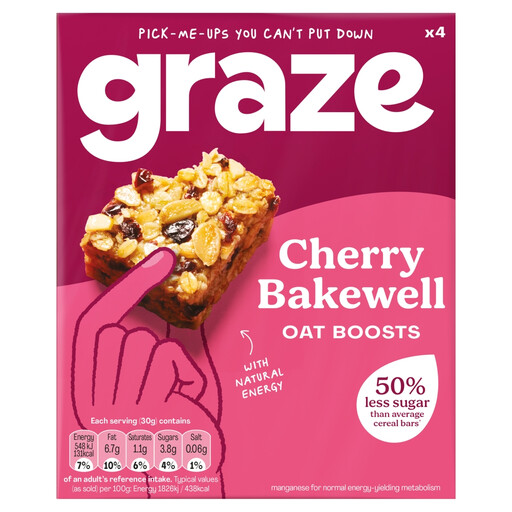 No image available
If this oat-bar flavour appeals to you, check the nutrition for one 30g bar and its current allergen declaration before comparing it with a smaller snack.
 No image available
If you are considering a protein bar instead of a small cereal-bar portion, compare the energy, protein and fibre for one 40g bar. Check the allergens for this Salted Caramel Nut variant rather than using figures for another Nature Valley flavour.
Use the energy in the complete bar you intend to eat as your starting point. Kellogg's UK lists its 25g Frosties Cereal Milk Bar at 99 kcal; the reviewed 40g and 50g nut, protein and flapjack examples listed by Ocado, Nature Valley UK and TREK range from 175 to 244 kcal per bar. These are portion comparisons, not a universal definition of a low-calorie bar.
Use both: per-100g values help you compare bars of different sizes, while per-bar values describe the portion if you eat one whole bar. NHS food-label guidance says nutrition information is provided per 100g and sometimes per portion; check whether the stated portion matches what you plan to eat.
Not necessarily. Nature Valley UK lists its 40g Peanut & Chocolate Protein Bar at about 10g protein and 4g fibre, alongside 195 kcal. Ocado lists the reviewed TREK 50g protein flapjack varieties at 224–244 kcal each. Compare the exact variant's full nutrition panel if protein matters more to you than keeping the portion around 100 kcal.
Compare the per-100g figures and then check how much is in your bar. NHS guidance describes more than 22.5g sugars per 100g as high and 5g or less as low; for saturated fat, its corresponding figures are more than 5g and 1.5g or less per 100g. The per-bar figures show the amounts in the portion you eat.
Read the exact current pack's ingredients, highlighted allergens, dietary statement and may-contain warnings. Kellogg's UK lists barley, milk and soy for its Frosties bar; Ocado lists peanuts, almonds and soya for the reviewed Eat Natural bar and describes the reviewed TREK flapjacks as vegan and gluten free. One dietary description does not replace the full declaration.