TV snackers comparing total fat
If reducing total fat matters to you, start with the current per-100g declaration. A bar’s wholegrain or fibre description answers a different question.


For a TV-night cereal bar, compare total fat per 100g and per bar before relying on “Light”, wholegrain or fibre wording. A reduced-fat claim describes a comparison, not necessarily a low-fat result; check saturated fat, sugars, serving size and the current allergen declaration too.
If reducing total fat matters to you, start with the current per-100g declaration. A bar’s wholegrain or fibre description answers a different question.
Check total fat, saturates, sugars and the amount in one bar. This is particularly useful when comparing multipacks whose individual bars differ in size.
Check the exact product’s ingredients and may-contain statement. Cereal-bar ranges can include cereals containing gluten, nuts, milk or soya, but declarations differ between products.
Start with the claim and total-fat figure, then compare the rest of the nutrition panel for the amount you expect to eat.
| Priority | What to check | Your needs |
|---|---|---|
| Fat claim | Read the exact wording: does it say reduced fat, reduced saturated fat or low fat? For a reduction claim, identify the nutrient being compared and the similar product used as the comparison. | I want to reduce total fat, so a statement about saturated fat alone does not answer my question. |
| Whole nutrition panel | Compare total fat, saturates and sugars per 100g. Use traffic-light information where the pack provides it, checking which nutrient each colour describes. | I want to see more than one positive claim before choosing. In the Food Standards Agency and Ipsos Northern Ireland’s 2024 tracker, 49% of 611 people interviewed between September and November said they actively used traffic-light labelling when shopping for food; that figure is not specific to cereal bars. |
| Serving size | Check the weight of one bar and its per-bar declaration alongside the per-100g figures. Check whether a stated serving is one bar or more. | For an evening snack, I want to know what the bar I plan to eat contains, without assuming that a smaller bar is low in fat or sugars. |
| Ingredients and allergens | Read the current ingredients, emphasised allergens and may-contain statement. Check any dietary-suitability wording on the exact product. | If I need to avoid a particular ingredient, a general description of the brand or range is not enough. |
“Reduced” describes a comparison with a similar product; it does not, on its own, tell you that the finished bar has a low total-fat content.
Check which nutrient the claim names, then read the bar’s current total-fat figure per 100g.
Wholegrain, fibre or protein wording does not tell you the amounts of fat, saturates or sugars in the same bar. Nature Valley’s Crunchy Apple & Cinnamon page, for example, describes the product as high fibre while declaring 17.9g fat per 100g.
Compare the full nutrition declaration rather than using one ingredient or claim as a shortcut.
A smaller bar changes the amount eaten, not its per-100g composition. Waitrose & Partners lists Eat Natural Soft Apple at 86kcal per 25g bar, with 4.9g fat and 55g sugars per 100g.
Use the per-bar values for your planned serving and the per-100g values to compare different bars.
Allergen declarations differ across cereal bars, including products within familiar ranges. An earlier listing is not a substitute for the pack you will eat.
For an allergy, intolerance or specific dietary requirement, check the current physical pack before consumption.
These examples show why a brand or range description cannot settle the fat-content question for an individual bar.
Its UK range includes Crunchy wholegrain-oat bars.
The range includes a Fruit & Nut cereal bar.
Its UK cereal-bar lines include Frosties, Coco Pops, Rice Krispies, Special K and Nutri-Grain products.
The range includes Oat Boost flapjacks.
The range includes fruit-and-nut bars, with vegan and gluten-free options among its products.
These cereal-bar multipacks offer individually portioned options for a TV snack. Their names and pack sizes do not, by themselves, establish a reduced-fat or low-fat claim; compare each current pack’s nutrition declaration.
 Image unavailable
For a one-bar TV snack, check the fat and sugars per bar as well as per 100g. This is a four-bar, 104g pack; “Light” in the name does not replace the nutrition declaration.
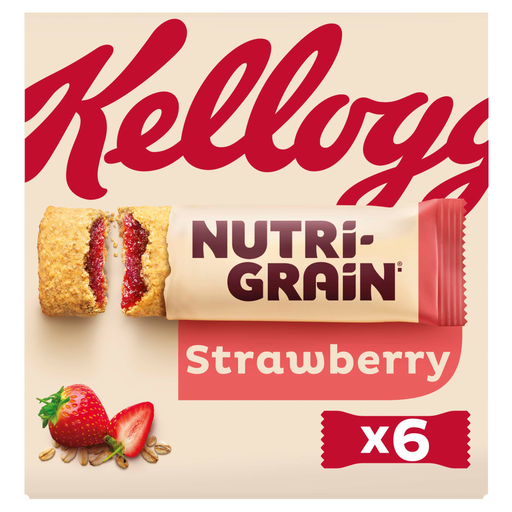 Image unavailable
If you plan to eat one bar during a programme, compare the current per-bar declaration with the per-100g figures. The pack contains six bars and weighs 222g.
 Image unavailable
Each bar is listed at 21.5g, making the serving size clear for a TV-night snack. Check the current per-100g panel before drawing a conclusion about its fat or sugar content.
 Image unavailable
For an individually portioned evening snack, this pack lists six 21.5g bars. Compare its current fat, saturates and sugars declarations rather than inferring them from the bar size.
No. “Reduced fat” describes a comparison with a similar product, while “low fat” concerns the finished product’s fat content. Check the exact wording and the current total-fat declaration per 100g.
Use both: per 100g puts differently sized bars on the same comparison basis, while per bar describes one serving. A small bar is not automatically low in fat or sugars per 100g.
No. They describe different characteristics. Nature Valley’s Crunchy Apple & Cinnamon page, for example, describes the bar as high fibre and lists 17.9g fat per 100g; read the total-fat figure for the exact bar you are considering.
Read the exact current pack’s ingredients, allergen emphasis and may-contain statement before eating. Declarations vary between products: Kellogg’s lists barley, milk and soya for its Frosties Cereal Milk Bar, while Alpen gives separate allergy advice for its Fruit & Nut bar.