People planning a snack for work or travel
An individually wrapped bar is easy to carry, but its calories need to be checked for the amount you intend to eat—not just the amount shown for a smaller serving.


If you want a lower-calorie snack, compare the calories for the bar or serving you will actually eat rather than relying on protein or wholegrain claims. Weetabix Cereals lists Alpen Light Chocolate & Fudge at 65kcal per 19g bar, while Tesco lists Graze Cocoa Vanilla Oat Boosts at 116kcal per 30g portion; check sugars, saturates, fibre and allergens on the current pack before choosing.
An individually wrapped bar is easy to carry, but its calories need to be checked for the amount you intend to eat—not just the amount shown for a smaller serving.
A bar with more fibre or protein may come in a larger portion. Compare those figures alongside calories per bar to decide which format fits the snack you have planned.
Ingredients and precautionary statements matter as much as the nutrition panel when you need to avoid particular cereals, milk, soya, peanuts or tree nuts.
Start with the portion you expect to eat, then use the nutrition panel and ingredient list to compare bars that suit that portion.
| Priority | What to check | Your needs |
|---|---|---|
| Calories and portion | Check kcal per bar, the stated serving size in grams and how many bars make up a serving. Compare per 100g figures when portion sizes differ. | I want to know the calories in the amount I will actually eat, especially if a packet holds more than one bar. |
| Sugars and saturates | Read sugars and saturated fat per serving and per 100g. Treat a protein, fruit or wholegrain description separately from those figures. | A bar’s ingredients sound appealing, but I still want to compare its sugars and saturates with other options. |
| Fibre and protein | Compare grams of fibre or protein per bar alongside its weight and calories. Check whether a larger bar fits the snack occasion. | If I choose a bigger oat or protein bar, I want to know what the larger portion contains as well as its calorie figure. |
| Ingredients and allergens | Read the current ingredient list and highlighted allergens. Check any precautionary ‘may contain’ statement against the requirements relevant to you. | I need a bar whose current ingredients and allergen information fit my dietary requirements. |
A smaller portion can have fewer calories while providing less food for the snack you had in mind.
Compare the bar’s weight, kcal per bar and other label values together. Do not assume a small snack bar replaces a meal.
Action on Salt & Sugar’s 2025 review of 458 snack bars from 10 major UK retailers classified 37% of the sampled bars as high in sugars and 55% as high in saturated fat under front-of-pack thresholds. Those figures describe products, not shoppers’ preferences.
Read sugars and saturates on the nutrition panel even when a bar highlights protein, oats, fruit or wholegrains.
The reviewed bars have different cereal, milk, soya and nut ingredients or precautionary statements. A description of one flavour does not establish what is in another.
Check the exact flavour’s current pack before eating it, particularly when an allergen check is essential.
A nutrition comparison is useful only if the flavour and serving size match the pack you are considering.
Confirm the flavour, pack size, current label and retailer availability before ordering.
These figures describe specific reviewed products, not every bar made by each brand. Compare the exact flavour and serving on the pack.
Weetabix Cereals lists Alpen Light Chocolate & Fudge at 65kcal and 4.2g fibre per 19g bar.
Tesco lists Graze Cocoa Vanilla Oat Boosts at 116kcal and 2.7g sugars per 30g portion.
Kellogg's lists Frosties Cereal Milk Bar at 99kcal per 25g and Special K Red Berry Bar at 104kcal per 27g.
Nature Valley lists Protein Chocolate & Coffee at 197kcal, 10.2g protein and 4.5g fibre per 40g bar.
Eat Natural lists its Dark Chocolate & Peanut Protein Bar at 220kcal and 7.8g protein per 40g bar.
An Amazon UK listing describes TREK Protein Flapjacks as 50g bars with 9g plant protein per bar.
These options include individually portioned cereal bars and 30g oat bars. Compare the current nutrition and allergen information for each flavour against the snack portion you have in mind.
 No image available
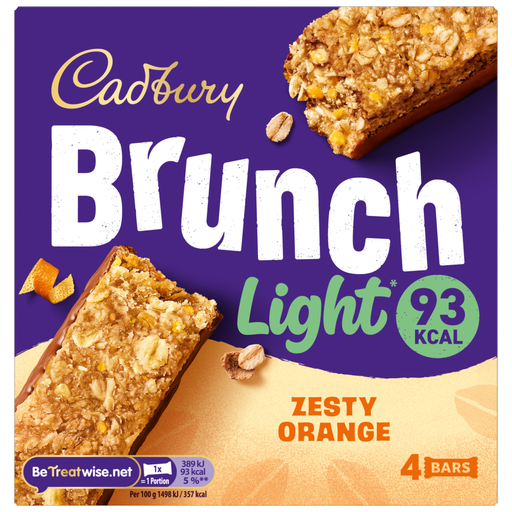
For an individually portioned snack, check the current kcal and sugars per bar against the amount you plan to eat. The pack is labelled as four bars weighing 104g in total; read its ingredient and allergen statements for the orange variant.
 No image available
If a 21.5g bar suits your planned snack, compare its kcal, sugars and saturates with other small bars. Check the current pack for ingredients and allergens rather than applying figures from a different Special K flavour.
 No image available
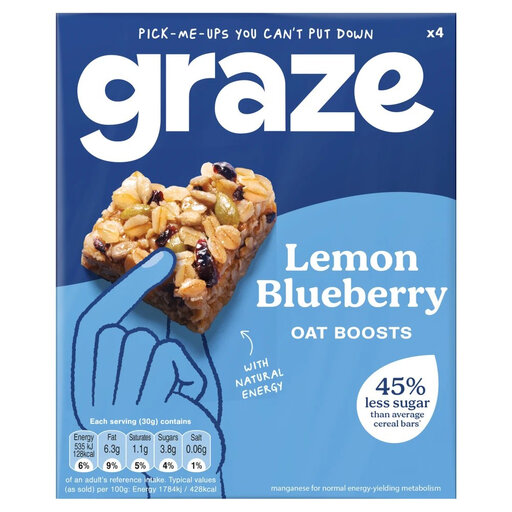
For a 30g oat-bar snack, compare the calories and sugars for this flavour with those of smaller cereal bars. Check its current ingredient and allergen statements before choosing it for a dietary requirement.
 No image available
If you prefer this 30g oat-bar format, read its own per-bar kcal, fibre and sugar figures rather than using those for another Graze flavour. Check the current pack’s allergen information as well.
Compare the calories for the amount you will eat, then check sugars, saturates and fibre. The NHS explains that nutrition labels give figures per 100g and may also give them per portion; using both helps distinguish a smaller bar from a difference in composition.
No. Nature Valley lists its Protein Chocolate & Coffee bar at 197kcal and 10.2g protein per 40g, while Weetabix Cereals lists Alpen Light Chocolate & Fudge at 65kcal per 19g. Compare portion sizes and the full nutrition panels before deciding which snack fits your plan.
No; check the figure for the exact product. Nature Valley lists 9.4g sugars for the 42g two-bar serving of Crunchy Apple & Cinnamon, while Tesco lists 2.7g sugars for a 30g Graze Cocoa Vanilla Oat Boost. The serving sizes differ, so compare per 100g figures too.
Look for energy in kJ and kcal, fat, saturates, carbohydrate, sugars, protein and salt, as described by the NHS. Read the per-100g figures and any per-portion figures, noting whether a portion means one bar or more.
Read the ingredient list and precautionary statements on the current pack for the exact flavour. The reviewed products have differing cereal, milk, soya and nut ingredients; Eat Natural’s Dark Chocolate & Peanut bar, for example, contains peanuts and soya.