What matters when comparing bars?
Start with the per-100g figures to compare bars of different sizes, then use the declared portion to work out what the snack you intend to eat contains.
| Priority |
What to check |
Your needs |
| Total fat |
Read total fat per 100g. The NHS defines low fat for foods as 3g or less per 100g. Check saturated fat separately; its low threshold is 1.5g or less per 100g. |
I want to distinguish a bar that is lower in fat than another option from one that actually meets the low-fat threshold. |
| Portion and energy |
Check the stated serving size and kcal per serving. Establish whether you will eat one bar, both bars in a twin pack or a whole flapjack. |
A small bar may fit the portion I have planned, but I need the figures for the amount I will eat. |
| Sugars |
Compare sugars per 100g and per intended portion. The NHS classifies foods with more than 22.5g sugars per 100g as high in sugars. |
If I am comparing two lower-fat options, I also want to see how their sugar figures differ. |
| Fibre and protein |
Read these values on the exact pack alongside total fat, sugars and kcal. A fibre or protein claim does not establish a bar's fat content. |
Fibre or protein may matter to me, but neither replaces a check of the full nutrition panel. |
| Ingredients |
Check the exact variant's ingredients and allergen statement, including any precautionary wording. Recheck the pack when buying, as recipes can change. |
I need to know whether this particular bar fits my ingredient or allergen requirements, not just whether another bar from the brand does. |
Brand ranges to consider
These brands offer different cereal-bar formats, but a range name cannot tell you whether an individual bar is low in fat.
Graze
Graze Oat Boost flapjacks include smaller, individually stated portions.
- Tesco Groceries lists 119kcal and 3.1g sugars for a 30g Peanut Butter Oat Boost portion.
- The same listing gives 23g total fat per 100g, above the NHS low-fat threshold. A smaller portion or reduced-sugar claim does not change that classification.
Kellogg's
Its Nutri-Grain range includes filled cereal bars; compare the flavour and pack you are considering.
- Tesco Groceries lists the Strawberry bar at 8.3g total fat per 100g and 136kcal per 37g bar.
- It also lists 33g sugars per 100g. Although this bar has less fat per 100g than the other three examples compared here, it does not meet the NHS low-fat threshold.
Nature Valley
The brand offers crunchy oat bars as well as separate fibre and protein options.
- Nature Valley UK states that its Crunchy Oats & Honey family pack has a two-bar, 42g serving containing 196kcal.
- Its listed total fat is 18.1g per 100g. Nature Valley UK also notes that recipes may change, so check the current pack.
Trek
Trek's Original Oat Protein Flapjack is a protein-focused oat option.
- Myprotein UK lists 10.2g protein per 50g flapjack.
- The same flapjack contains 217kcal and 9.8g fat per 50g. Its protein content does not make it a lower-fat choice.
Eat Natural
Eat Natural UK presents fruit-and-nut bars and describes vegan, gluten-free and high-fibre options within its range.
- The range gives shoppers several ingredient and format options to compare.
- Check the nutrition and allergen information for the exact bar; a range description does not establish that every variant has the same ingredients or fat content.
Alpen
Older Alpen bar listings need a current-product check before they inform a buying decision.
- If you encounter an Alpen bar, its exact pack can be assessed using the same per-100g and per-portion checks.
- Alpen's product-availability information lists several older bars, including Alpen Light Chocolate & Orange, as no longer being made. Do not assume an old listing describes a current bar.
Cereal bars on Joybuy
These cereal-bar packs offer portion-sized options to assess for this buying decision. Use each current pack's nutrition panel to check total fat per 100g and the kcal and sugars in the portion you intend to eat; inclusion here does not identify a low-fat bar.
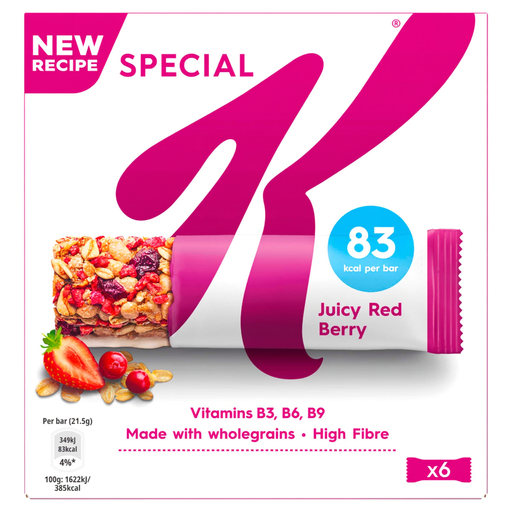 Image unavailable
Special K Red Berry Cereal Bars 6 x 21.5g
For a planned single-bar snack, check the kcal per 21.5g bar alongside total fat and sugars per 100g on the current pack. The pack contains six bars.
View on Joybuy
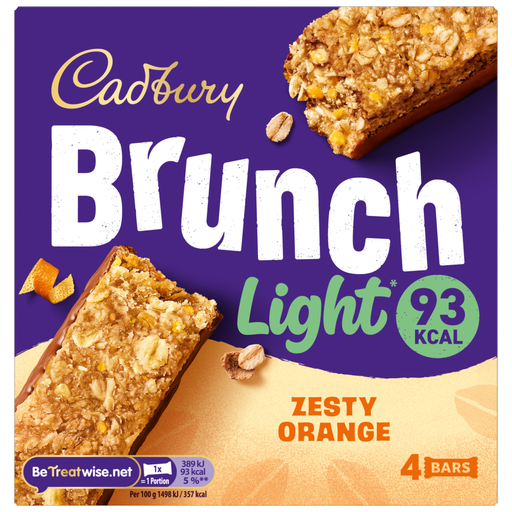 Image unavailable
Cadbury Brunch Light Orange Cereal Bars 4pk 104g
If the Light name draws your attention, check what the current pack says rather than treating it as a low-fat classification. Compare total fat per 100g and the nutrition for the portion you will eat.
View on Joybuy
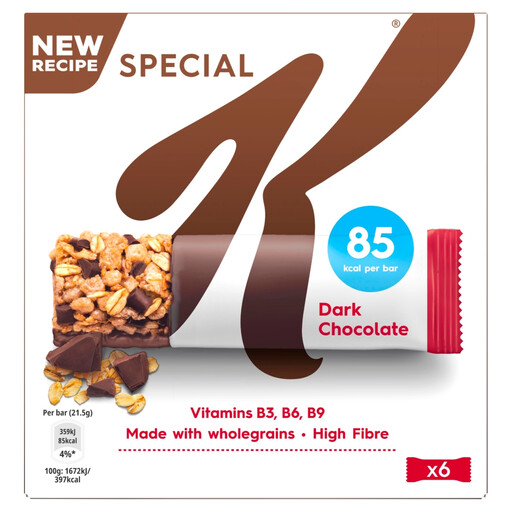 Image unavailable
Special K Dark Chocolate Snack Bars 6 x 21.5g
This six-bar pack allows you to consider a 21.5g bar as one portion. Check its current per-bar kcal and sugars as well as total fat per 100g before comparing it with other flavours.
View on Joybuy
Questions about cereal-bar labels
What counts as a low-fat cereal bar?
The NHS defines low fat for foods as 3g of total fat or less per 100g. Check the total-fat figure on the exact product's nutrition panel; a bar being lower in fat than another bar is not the same as meeting that threshold. Saturated fat is a separate measure, with an NHS low threshold of 1.5g or less per 100g.
Should I compare cereal bars per 100g or per bar?
Use both: per-100g figures let you compare different-sized bars and assess the low-fat threshold, while per-bar figures show what the portion you intend to eat contributes. Check whether the stated serving covers one bar, a twin pack or a larger flapjack.
Does reduced sugar mean a cereal bar is lower in fat?
No. Tesco Groceries lists Graze Peanut Butter Oat Boosts at 3.1g sugars per 30g portion and 23g fat per 100g. Sugar and fat are different measures, so check both on the nutrition panel.
How should I check a cereal bar for allergens?
Read the ingredients and allergen information on the exact pack, including any precautionary 'may contain' statement. GOV.UK guidance says food labels must identify required allergens in the ingredients list; do not assume that two flavours or products from the same brand have identical ingredients.
Can I rely on an old Alpen Light bar listing?
Not as evidence of a current product. Alpen's product-availability information lists several older bars, including Alpen Light Chocolate & Orange, as no longer being made. If you encounter an Alpen bar, confirm its exact identity and read its current pack details.


