Shoppers avoiding gluten
Look for an explicit gluten-free claim rather than relying on the cereal named on the wrapper. Check the current ingredients too: a gluten-free bar can still contain oats or other allergens.


If you need to avoid gluten, choose a cereal bar with an explicit gluten-free label on its current pack, then check the ingredients and any “may contain” statement for your other allergen requirements. A gluten-free claim does not mean a bar is free from peanuts, milk, soya or nuts: Nature Valley’s Protein Peanut & Chocolate bar, for example, contains peanut, soy and milk and may contain tree nuts.
Look for an explicit gluten-free claim rather than relying on the cereal named on the wrapper. Check the current ingredients too: a gluten-free bar can still contain oats or other allergens.
Start with the allergen you need to avoid. Read both the ingredients and the precautionary “may contain” statement on the individual pack; gluten-free bars can still list peanut, milk, soya or nuts.
Once a bar fits your ingredient requirements, compare its portion size and the nutrition information per bar. Protein or fibre figures describe that product’s serving, not whether it meets an allergen requirement.
Set your ingredient requirements first, then compare the portions and formats of bars that meet them.
| Priority | What to check | Your needs |
|---|---|---|
| Gluten-free label | Look for an explicit claim on the exact bar. Coeliac UK explains that “gluten free” means no more than 20 parts per million of gluten; the Food Standards Agency notes that oats must still be identified where relevant. | I need to avoid gluten, so an oat- or rice-based name alone is not enough to choose a bar. |
| Other allergens | Read the current ingredients for the allergen you avoid, then check any separate “may contain” statement. Do not treat a gluten-free claim as an all-allergen claim. | My choice also has to account for ingredients such as peanut, milk, soya or nuts, not just gluten. |
| Nutrition per bar | Compare the stated portion size and nutrition per bar on variants that meet your ingredient requirements. Keep per-bar and per-100g figures distinct. | If I am comparing bars for a desk lunch, I want to know what one bar provides rather than judge by the pack size. |
| Current pack | Check the label on the pack you will eat, including its ingredients and precautionary statement. Nature Valley and Kellogg’s advise checking current packaging because recipes can change. | A bar I have bought before still needs a fresh label check. |
Nature Valley’s Protein Peanut & Chocolate bar contains peanut, soy and milk and may contain tree nuts. TREK Cocoa Oat lists soya and may contain peanuts, nuts and milk.
Check the exact ingredients and precautionary statement against the allergens you need to avoid.
Alpen says its products contain gluten from wheat, barley or oats. Kellogg’s Special K Red Berry Bar lists barley and wheat among its allergens.
If you need to avoid gluten, look for an explicit gluten-free label on the particular bar and read its ingredients.
A familiar bar’s ingredients may change; Nature Valley and Kellogg’s both advise shoppers to check current pack information.
Use the label on the pack you are buying as your final ingredient check. If it is unclear, do not assume an earlier listing still describes that bar.
A brand name does not establish the allergen status of every variant; compare the exact bar and its current label.
Its range includes Crunchy, Protein and Oaty & Crispy bars, with gluten-free claims on specified Protein variants.
TREK offers oat flapjacks and protein bars, including the Cocoa Oat variant made with gluten-free oats.
Eat Natural lists a range of gluten-free bars in fruit-, nut- and protein-based formats.
Alpen bars are a comparison point for shoppers who do not need to avoid gluten.
Check individual Kellogg’s bar recipes rather than applying one allergen assumption across the range.
Graze makes oat flapjacks and other snacks using ingredients that can include grains, fruit and nuts.
These Nature Valley, TREK and Deliciously Ella bars offer different flavours, formats and pack sizes for a desk lunch. Check each exact pack for your required free-from claim and allergen information before choosing.
 No image available
The 4 x 40g pack provides individually sized bars for a desk lunch. If you need a free-from option, confirm the claim, ingredients and precautionary statement on this Salted Caramel Nut variant’s current pack.
 No image available
Nature Valley lists this variant as gluten free, with 10g protein and 4g fibre per bar; this pack contains eight 40g bars. It contains peanut, soy and milk and may contain tree nuts, so check the current pack against your allergen requirements.
 No image available
This Salted Caramel pack contains three 50g flapjacks. For gluten or another allergen requirement, check this variant’s current ingredients, free-from claims and any “may contain” statement rather than applying details from a different TREK flavour.
 No image available
The Cocoa Oat flapjack uses gluten-free oats; this pack contains sixteen 50g bars. TREK lists soya in the ingredients and warns that the bar may contain peanuts, nuts and milk. Check the current pack before choosing it for a specific allergen requirement.
 No image available
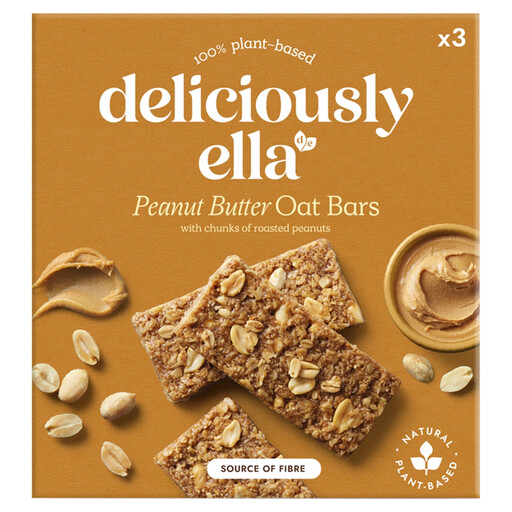
This Peanut Butter variant comes as three 50g baked oat bars. If you avoid peanuts, oats, gluten or another allergen, read this exact bar’s current ingredients and precautionary statement before deciding whether it meets your requirements.
Coeliac UK explains that a food labelled “gluten free” contains no more than 20 parts per million of gluten. The claim does not exclude other allergens: check the bar’s ingredients and any precautionary statement as well.
No. The cereal named on a wrapper is not a gluten-free claim. If you need to avoid gluten, look for an explicit claim on the exact product; oats and other allergens may still appear in its ingredients.
Yes. Nature Valley’s gluten-free Protein Peanut & Chocolate bar contains peanut, soy and milk and may contain tree nuts. Check every allergen relevant to you on the current pack, not just the gluten-free claim.
For prepacked-for-direct-sale food, the Food Standards Agency and Food Standards Scotland state that, since 1 October 2021, the UK label must show the food name and a full ingredients list with the 14 regulated allergens emphasised. This matters for a bar packed for direct sale by an on-site café or similar outlet; read that item’s label rather than assuming it matches a branded retail bar.
Recipes can change. Nature Valley and Kellogg’s advise checking current pack information, so read the ingredients and any “may contain” statement on the bar you are buying.