Who this guide is for

Budget households buying breakfast staples online

For households stretching a grocery order across repeated breakfasts. Compare the retailer’s displayed unit measure before choosing a large pack, as cereal listings can use different measures such as per kilogram or per biscuit. Tesco Groceries provides examples of both approaches.

Families wanting a ready-to-eat higher-fibre cereal

For shoppers who want quick cold breakfasts and a higher-fibre route. NHS guidance identifies plain wholewheat biscuits and plain shredded wholegrain cereal as higher-fibre choices, alongside porridge oats.

Online shoppers managing dietary restrictions

For households where a substitute cereal could create an allergen or nutrition concern. Tesco says substitutions may be offered when customers allow them, while the Food Standards Agency explains that precautionary allergen statements indicate possible unintended allergen presence.

Buying priorities

Start by deciding whether you need a cold ready-to-eat cereal, a porridge staple or a muesli-style breakfast. Then compare like-for-like measures and check the exact pack before placing the order.

Priority What to check Your needs
Usable unit value Compare products using the same retailer measure where possible. For biscuit cereal, check the number of biscuits normally used per breakfast as well as the pack count. Check stock before finalising the basket. I need enough breakfasts for the household without treating a per-biscuit figure as directly comparable with a per-kilogram figure.
Fibre and overall nutrition Check the exact pack rather than relying on a wholegrain-style description. NHS guidance identifies plain wholewheat biscuits, plain shredded wholegrain cereal and porridge oats as higher-fibre breakfast choices. A quick breakfast matters, but I also want a cereal format that fits the rest of our breakfast routine.
Sugars, salt and calories Compare the nutrition declaration for the exact products. Where present, traffic-light labels indicate whether fat, saturates, sugars and salt are low, medium or high. I want to compare familiar cereal, muesli and granola packs without assuming they have the same nutritional profile.
Substitutions and allergens Choose substitution settings carefully when ingredients or allergens matter. Read the delivered pack label, including any precautionary allergen statement. I need an unsuitable replacement cereal kept out of the order when there is an allergy, dietary restriction or fixed ingredient requirement.

Common ordering pitfalls

  • Comparing per-biscuit and per-kilogram figures as if they match

    A biscuit cereal may be displayed per biscuit, while oats, flakes and muesli may be displayed per kilogram. Comparing those figures directly can make one pack appear better value when the measures are not equivalent.

    Use a common retailer measure where available. For biscuit cereal, also consider how many biscuits the household normally serves at breakfast.

  • Assuming a large or wholegrain-labelled pack is nutritionally identical to another cereal

    Cereal formats can differ in sugars, salt, fat and calorie content. NHS guidance on higher-fibre breakfast choices applies to specific plain cereal formats, not automatically to every flavoured or sweetened variation.

    Check the exact nutrition label whenever changing flavour, recipe, pack size or brand, and use traffic-light information where it is supplied.

  • Leaving substitutions enabled when ingredients are critical

    A substitute cereal can have different ingredients, allergens or nutrition. Tesco says substitutions may be offered when customers choose to allow them, and the Food Standards Agency notes that precautionary allergen labelling signals possible unintended allergen presence.

    Disable substitutions where an exact allergen or ingredient profile matters, or inspect and refuse an unsuitable substitute at delivery.

  • Building the basket around one unavailable value pack

    Large cereal packs can become unavailable before an order is picked, so a single planned pack may not be a dependable basis for the whole breakfast shop.

    Check stock close to checkout and keep one acceptable alternative cereal route in mind, such as ready-to-eat wheat biscuits, malted wheat cereal or porridge oats.

Relevant brand references

Kellogg's

A broad ready-to-eat cereal option for households comparing flakes and other familiar branded cereal formats in medium-to-large boxes.

  • Tesco Groceries includes Kellogg's Corn Flakes among its branded ready-to-eat cereal listings.
  • Nutrition profiles vary across the range, so check the label on the exact pack rather than applying one product’s characteristics to the whole brand.

Weetabix

A wholewheat biscuit cereal route for households looking for a ready-to-eat breakfast format.

  • The cited 72-pack listing describes 100% wholegrain wheat and fibre.
  • A per-biscuit measure should not be compared directly with kilogram-based cereal listings without checking pack weight and serving pattern.

Nestlé

A varied cereal range including malted wheats, shredded wheat and multigrain hoops for households seeking larger ready-to-eat packs.

  • Tesco Groceries lists several distinct Nestlé cereal formats in larger packs.
  • Compare the exact product’s format, nutrition declaration and displayed unit measure rather than treating the brand as one value category.

Quaker

A porridge-oat route for households prepared to make breakfast rather than pour and eat cereal cold.

  • Large oat packs provide a clear weight-based comparison point for households planning repeated porridge breakfasts.
  • Preparation and texture make oats a different choice from cold ready-to-eat cereal.

Alpen

Large muesli packs for households that prefer a muesli-style breakfast, including a no-added-sugar variant.

  • The cited Tesco Groceries listings include large Alpen muesli pack formats.
  • The checked listings were out of stock, so availability should be confirmed before relying on either product for a delivery order.

Dorset Cereals

Granola and ingredient-led cereal options for households prioritising nutty granola flavour over maximum pack size.

  • The cited Nutty Granola listing includes wholegrains and nuts as key ingredients.
  • Check allergens carefully: the listing names almonds, hazelnuts and cashews, with a warning for other cereals containing gluten and other nuts.

Joybuy cereal options

These Joybuy options cover large ready-to-eat cereal packs, porridge oats and muesli for households comparing breakfast formats for an online grocery-style order.

Weetabix Super Size 72 Pack 1.52kg

Weetabix Super Size 72 Pack 1.52kg

A substantial ready-to-eat biscuit cereal option for repeated family breakfasts. The pack states 72 biscuits, 1.52kg and 95% wholegrain wheat; it contains wheat and barley, so check the delivered label where allergens matter.

Joybuy
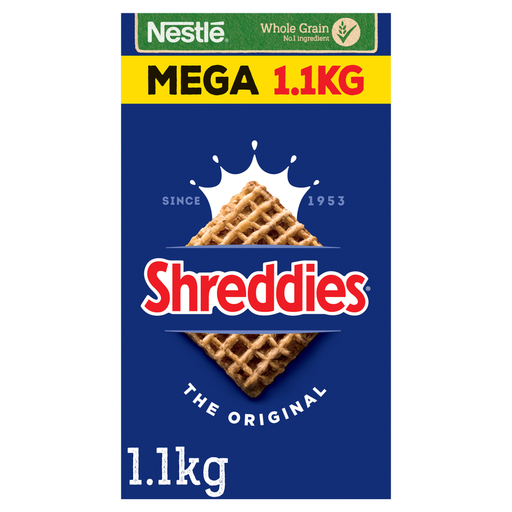
Nestlé Shreddies Original Malted Wheats Breakfast Cereal 1.1kg

Nestlé Shreddies Original Malted Wheats 1.1kg

A large ready-to-eat malted-wheat cereal for cold or hot milk. The listing states 96.1% wholegrain wheat and 12g fibre per 100g; it may contain peanuts and nuts.

Joybuy

Flahavan's Organic Porridge Oats 2kg, two 1kg packs

Flahavan's Organic Porridge Oats 2kg (2 x 1kg)

A bulk porridge route for households willing to cook or soak oats. It contains two 1kg packs of 100% organic wholegrain oat flakes and states 8.3g fibre per 100g; preparation is required and the product contains oats and gluten.

Joybuy
Scotts Porage Oats Original Porridge Oats 1kg

Scotts Porage Oats Original 1kg

A 1kg porridge option for repeated breakfasts, with 25 suggested portions stated on the listing. It requires preparation rather than serving as a cold cereal and may contain wheat and barley.

Joybuy
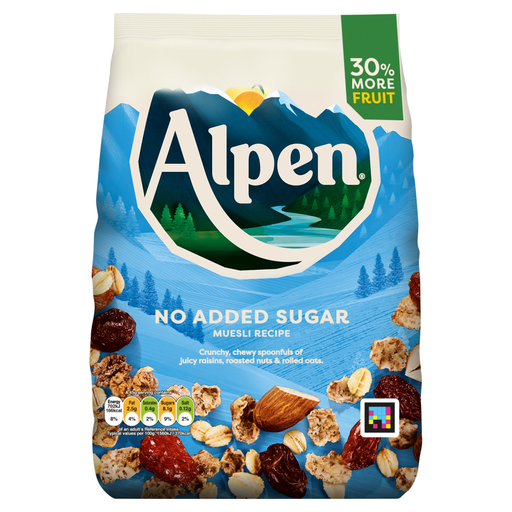
Alpen No Added Sugar Muesli 950g

Alpen No Added Sugar Muesli 950g

A muesli-style option for households that want wheat, rolled oats, raisins and roasted nuts in one pack. The listing states 8g fibre and 18g sugars per 100g; it contains milk, wheat, oats, almonds and hazelnuts and may contain other nuts.

Joybuy

Questions about cereal value packs

Is the biggest cereal pack always the best value for online delivery?

No. Compare the retailer’s displayed measure on a like-for-like basis, such as per kilogram against per kilogram or per biscuit against per biscuit. Then consider whether the household will use the pack consistently, because an uneaten large pack does not offer practical value.

Should I allow cereal substitutions in an online grocery order?

Allow substitutions only when an alternative cereal would still meet your household’s dietary, allergen and budget requirements. Tesco says substitutions may be offered when you allow them, and that an unwanted substitute can be returned to the driver or colleague for a refund.

What should I check on a cereal label when comparing value packs?

Compare the nutrition declaration for calories, fat, saturates, sugars and salt. Where supplied, traffic-light labels indicate whether fat, saturates, sugars and salt are low, medium or high, helping you compare exact packs rather than broad cereal categories.

Which cereal types are practical higher-fibre choices?

NHS guidance identifies plain wholewheat biscuits, plain shredded wholegrain cereal and porridge oats as higher-fibre breakfast choices. Check the exact product label, as flavoured or sweetened cereals in broadly similar categories are not necessarily nutritionally identical.

Can I rely only on the supermarket webpage for ingredients and allergens?

No, particularly where an allergy or intolerance is relevant. Tesco advises shoppers to read the product label because food products can be reformulated, and precautionary allergen statements can indicate possible unintended allergen presence.