
24/7 Customer Support

Free returns

Same-day & Next-day Delivery

Quality Guaranteed

Unlock Your Welcome Offers: FREE Delivery | Up to 80% OFF | Free 30-day JoyPlus trial
Download the APP
By Joybuy Product Recommendation Officer
Ceremonial grade matcha powder can vary considerably in price, flavour, format and preparation requirements. For UK shoppers, the main challenge is separating useful product information from attractive packaging and vague quality language.
A small tin may suit traditional whisking, while matcha powder sachets or pods may be more practical for office kitchens and busy mornings. Before you buy, check the details that affect freshness, taste and everyday value rather than relying only on terms such as “premium”, “high-grade” or “Japanese matcha”.
“Ceremonial grade” is widely used in matcha marketing, but it is not a single legally defined UK grading standard. The term should therefore be considered alongside the ingredient list, origin, harvest information, storage guidance and intended use.
A product labelled 100% ceremonial grade matcha gives you useful information about its stated composition, but it does not automatically confirm that it will suit your preferred flavour or preparation method.
Matcha is a finely milled tea powder. Once opened, exposure to air, light, moisture and strong kitchen aromas can affect its colour and flavour. A 100g bag may offer more servings, but it can be less suitable if you only drink matcha occasionally.
Look for clear storage instructions, a resealable pack or a protective tin. If the product advises refrigeration after opening, follow the packaging directions and close the container securely after each use.
A bright green colour can be a helpful visual sign, but it is not enough to assess the overall product. Similarly, stone-ground matcha describes a milling method rather than a complete quality certification.
Check whether the listing identifies the ingredients, net quantity, country of origin, storage conditions and best-before information. These practical details are more useful when comparing products for regular use.
For a traditional cup, look for an ingredient list stating 100% matcha green tea powder or 100% ceremonial grade matcha, without added sugar or flavouring. If you specifically want organic matcha powder, check whether the product provides relevant organic certification or clearly states its organic status on the packaging.
Flavoured products are different. For example, a strawberry matcha pod may contain matcha alongside coconut sugar and natural flavouring, so it should not be compared directly with an unflavoured powder.
Choose the format according to how you drink matcha:
A 1g serving of powder may provide approximately 30 servings from a 30g pack, although the actual number depends on your recipe.
Matcha contains naturally occurring caffeine. The amount varies by product and serving size. One listed OMGTea product states approximately 34mg of caffeine per 1g serving, while the PerfectTed strawberry pod listing states 51mg caffeine per 1.5g serving. Treat these figures as product-specific information and check the label before use.
Fine powders can clump if added directly to liquid. Sifting before whisking, using a small amount of water to make a paste and then adding the remaining water or milk can create a smoother drink. For iced matcha or a matcha latte, a handheld frother may be more convenient than a traditional bamboo whisk.
The following options match different shopping priorities. Product descriptions and preparation details should always be checked on the current product page before ordering.
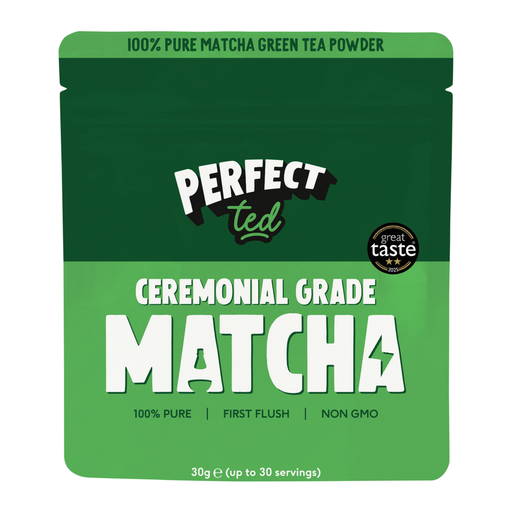
Why This Fits Their Persona: A compact 30g option for UK beginners who want to try unflavoured ceremonial grade matcha without committing to a larger bag.
The stated ingredient is Ceremonial Grade Matcha (100%), with no listed allergens or added flavouring.
30g net quantity; made in the United Kingdom; simple cool, dry storage guidance after opening.

Why This Fits Their Persona: Designed for drinkers interested in organic matcha powder, traditional preparation and detailed product information.
The listing specifies 100% organic matcha green tea powder, a 5–10 micron particle size and storage instructions for refrigeration after opening.
30g aluminium storage tin; suitable for koicha or usucha according to the product description; stated caffeine information per 1g serving.
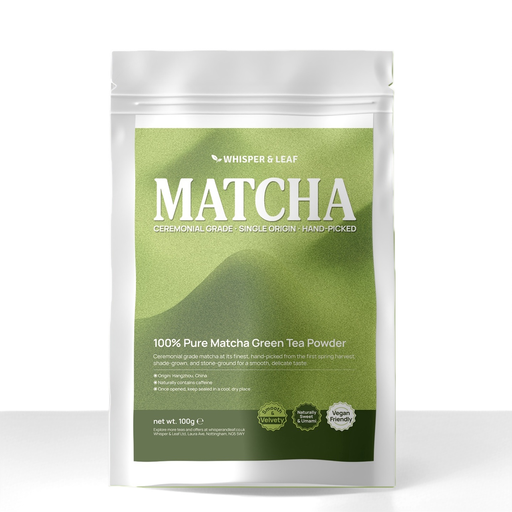
Why This Fits Their Persona: The larger bag suits regular matcha green tea drinkers who also prepare matcha latte powder drinks or use matcha in food.
The description identifies 100% ceremonial grade powder, 1200 mesh fineness, a single-origin Yabukita cultivar and shade-grown leaves.
100g format; described as suitable for traditional whisking and lattes; fine milling specification is provided.
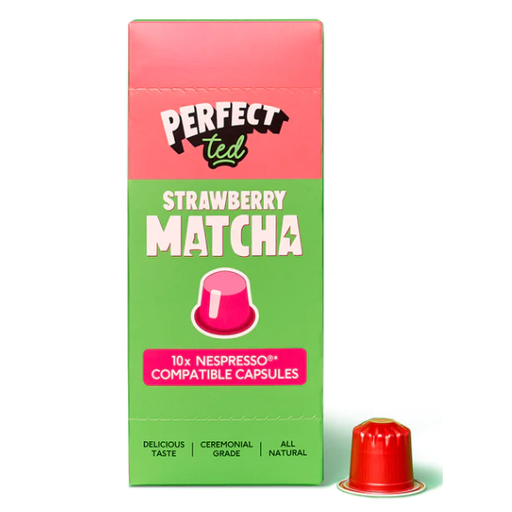
Why This Fits Their Persona: A practical choice for commuters and busy professionals who want a strawberry matcha latte using a compatible Nespresso machine.
The ingredients list identifies coconut sugar, ceremonial grade matcha and natural flavouring, so it is not presented as plain matcha powder.
Pod-based preparation; can be poured over hot or iced milk; machine flushing is specified in the directions.
For traditional Japanese matcha, loose powder gives you control over the water temperature, serving size and whisking technique. A fine tea strainer is useful, particularly with very finely milled products.
Sachets are easier to portion and store at work or while travelling. The PerfectTed sachet format contains 7 x 1.5g servings, or 10.5g in total, and lists ceremonial grade matcha as the sole ingredient.
Pods offer the quickest route to a latte but are less flexible for usucha-style preparation. Check machine compatibility and consider whether you are comfortable flushing the machine after use to reduce flavour carry-over.
If your priority is organic sourcing, compare the organic product label and available certification information rather than assuming that every Japanese matcha or premium matcha tea is organic. If you are trying to buy matcha powder in the UK, also review the seller’s delivery, returns and product labelling information.
We have compiled a complete, real-time list of products that fully satisfy these strict selection criteria and UK safety regulations.
It depends on how you plan to use it. If you drink matcha plain, differences in flavour, texture and preparation may matter more to you. For lattes, baking or flavoured drinks, a larger general-purpose pack may offer more practical value. Compare the ingredient list, pack size and stated origin before deciding.
Keep unopened matcha according to the packaging instructions. After opening, most products should be sealed and stored away from heat, moisture, direct sunlight and strong aromas. Some products, including the listed OMGTea Organic Matcha AAA+, advise refrigeration after breaking the inner seal.
No. Sachets can usually be mixed with water or milk using a whisk, shaker or frother. They are suited to quick preparation, although loose powder provides more control over the strength and texture of a traditional cup. Always follow the product’s directions and check caffeine information on the label.