Hosts serving mixed preferences
Consider a black-tea chai alongside an explicitly caffeine-free herbal option. Guests can then choose their tea base and add milk or sweetener to their own cup.


Choose black-tea chai if guests want a tea-led spiced drink, or offer a caffeine-free herbal chai when the meeting is in the evening or some guests avoid caffeine. For a group with mixed preferences, serving both gives people a choice; if you plan to use plenty of milk, look for a blend specifically described for that style. Check the ingredients on each pack before serving.
The meeting time and how guests like their tea make a useful starting point for choosing a blend.
Consider a black-tea chai alongside an explicitly caffeine-free herbal option. Guests can then choose their tea base and add milk or sweetener to their own cup.
If some guests avoid caffeine, check the exact product rather than relying on the word “chai”. Pukka describes its Spiced Vanilla Chai as a caffeine-free herbal blend; the cited Twinings and teapigs chai products contain black tea.
Choose a blend described for serving with plenty of milk if that is how the group will drink it. Teapigs describes its Assam black-tea chai as strong, spicy and suited to lots of milk.
Decide on the tea base and serving style first, then compare ingredients and pack formats for the number of cups you expect to make.
| Priority | What to check | Your needs |
|---|---|---|
| Tea and spice profile | Read the tea base and named spices. Twinings lists 70% black tea in Classic Chai; Clipper lists cinnamon, orange peel, cloves and fennel in its Indian Chai. | I want guests to recognise the blend they are choosing, rather than assuming every chai has the same spices or tea base. |
| Caffeine | Look for an explicit caffeine-free description when it matters. Pukka describes Spiced Vanilla Chai as caffeine-free and herbal; the cited teapigs chai contains Assam black tea. | For an evening meeting, I would like a choice for guests avoiding caffeine as well as those who want black tea. |
| Milk and preparation | Check whether the maker recommends the blend with milk and follow the instructions on its pack. Teapigs specifically describes its chai as suitable with lots of milk. | If I am making milky cups, I want to choose the blend for that serving style; other guests may prefer to add milk themselves. |
| Ingredients | Check the current pack for ingredients relevant to your guests. The NHS advises avoiding teas containing liquorice root during pregnancy; check the exact ingredient wording before serving. | I need to ask about ingredient restrictions and keep the pack available so guests can check it too. |
| Pack format | Compare the stated number of bags or portions with expected attendance. Tesco has listed Finest Chai and Finest Vanilla Chai in 50-teabag packs; check the current product details before ordering. | For a recurring or larger meeting, I want enough portions without assuming the pack format tells me how the chai will taste. |
A caffeine-free herbal chai and a black-tea chai serve different preferences. Pukka describes Spiced Vanilla Chai as caffeine-free, while the cited Twinings, Clipper and teapigs products contain black tea.
Read the exact product name and ingredients. For mixed preferences, consider offering one of each rather than relying on a single blend.
A chai specifically described for plenty of milk may be the relevant option for milky servings, but that does not tell you what guests who drink their tea without milk will prefer.
Decide whether you will prepare milky cups or let guests add milk individually, then check the maker’s serving and brewing instructions.
Chai spice lists vary. The NHS advises avoiding teas containing liquorice root during pregnancy, so a general description such as “spiced chai” is not enough to assess a particular pack.
Ask guests about relevant restrictions, retain the packaging for them to read and choose another drink where an ingredient is unsuitable.
These examples show differences between specific chai products, not characteristics shared by every blend from each brand.
Twinings Classic Chai is a 20-envelope black-tea blend. Its listed ingredients include black tea, cloves and cardamom, with ginger and cinnamon described in its flavour profile.
Pukka describes Spiced Vanilla Chai as a caffeine-free herbal blend with cardamom, ginger, cinnamon and vanilla. Its separately named Original Chai lists cardamom, liquorice, ginger and cinnamon.
Clipper labels its 20-bag Indian Chai as Organic and Fairtrade. The listed blend contains black tea, cinnamon, orange peel, cloves and fennel seed.
Teapigs describes its Assam black-tea chai as strong and spicy, and recommends it with plenty of milk. Its ingredient list names cinnamon, ginger, cardamom pods and vanilla.
Tesco has listed Finest Chai and Finest Vanilla Chai in 50-teabag packs, a format to consider for regular or larger meetings.
These options include a herbal vanilla chai and instant chai-latte mixes. Compare their preparation formats and check each pack’s ingredients against your guests’ needs.
 No image available
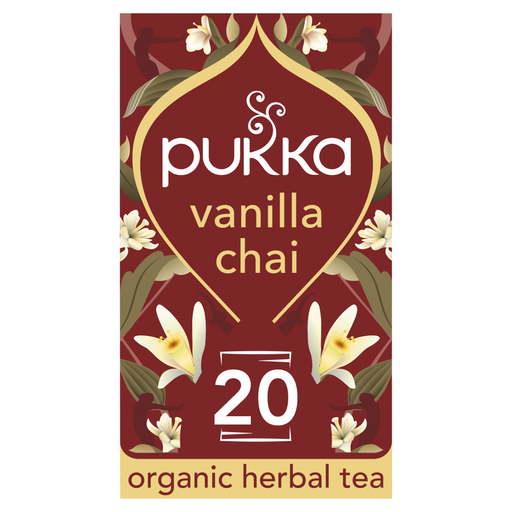
A herbal chai option to consider when serving guests who avoid caffeine: the Joybuy product description calls this blend caffeine-free and names ginger, cardamom, cinnamon and vanilla. Check the exact pack ingredients for guest restrictions, and follow its preparation instructions.
 No image available
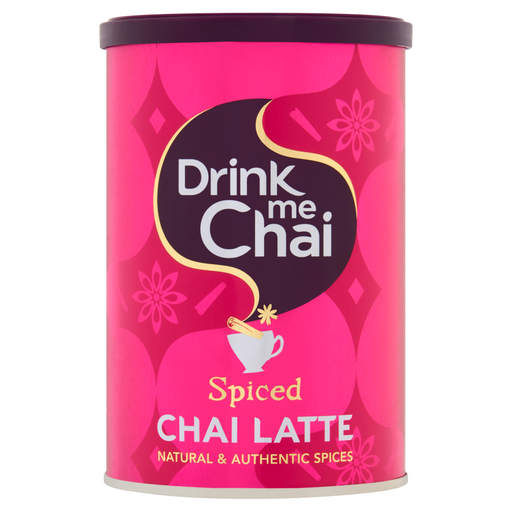
Consider this instant chai-latte format if you want to prepare drinks with hot water rather than steep individual tea bags. Its mix includes milk and sugar, so guests cannot adjust those ingredients in the mix itself. Check the pack before serving anyone with an allergy or who avoids caffeine.
 No image available
The individual sachets offer an instant vanilla chai-latte format for making separate cups. Check the ingredient label if guests expect particular chai spices: the listed ingredients name tea extract and vanilla flavour without identifying those spices. The product information also identifies milk and soya, so check the pack with guests who have allergies; confirm caffeine suitability before serving anyone avoiding it.
Serve black-tea chai if guests want a tea-led cup, and add an explicitly caffeine-free herbal option if the meeting is in the evening or preferences differ. Pukka describes its Spiced Vanilla Chai as caffeine-free; the cited Twinings and teapigs chai products use black tea.
Look for a blend the maker specifically describes for milk. Teapigs says its Assam black-tea chai is good with plenty of milk; guests who prefer a less milky cup may want milk offered separately.
Follow the instructions on each pack rather than using one method for every blend. Check the stated brewing time and whether milk should be added during or after preparation, then let guests adjust their own cup where practical.
Check whether the exact tea contains liquorice root before serving it. The NHS advises avoiding teas containing liquorice root during pregnancy and limiting herbal tea intake; offer a different drink if the ingredient is present or suitability is uncertain.
Ask guests about relevant restrictions and show them the current pack’s ingredient and allergen information before serving. Chai recipes and instant mixes differ, so the name of the drink alone cannot establish whether a particular ingredient is present.