Hosts serving several people
Teabags make it straightforward to prepare separate mugs. Loose leaf suits a pot when you have time to measure the tea and use an infuser or strainer.


Choose black-tea chai if you want a tea base that guests can drink with or without milk; choose a blend explicitly labelled caffeine-free if avoiding caffeine matters for an evening cup. For a Bonfire Night gathering, also decide whether individual teabags, a pot of loose-leaf tea or an instant chai latte mix fits how you will serve it, and check any mix for sugar and milk ingredients.
The choice changes with the number of cups you are making, the time of day and what guests want to add to their drinks.
Teabags make it straightforward to prepare separate mugs. Loose leaf suits a pot when you have time to measure the tea and use an infuser or strainer.
Look for an explicit caffeine-free statement on the exact blend. The word “chai” alone does not tell you whether it contains black tea.
Plain brewed chai leaves milk and sweetener to the person making the cup. An instant chai latte mix can already contain sugar and milk ingredients, so check its pack when planning what to serve.
Start with the tea base and ingredients, then choose a preparation format that works for your gathering.
| Priority | What to check | Your needs |
|---|---|---|
| Tea base | Check whether the ingredients include black tea or whether the pack explicitly says caffeine-free. Pukka identifies its Original Chai as containing black tea and its Spiced Vanilla Chai as caffeine-free. | I want a black-tea cup with optional milk, or an evening herbal infusion without black tea. I need to choose by the exact blend, not just the chai name. |
| Spice profile | Compare the named spices rather than assuming all chai blends taste alike. Clipper lists cinnamon, orange peel, cloves and fennel in its Indian Chai; Twinings lists cardamom, cloves and black peppercorns among the ingredients in its loose-leaf Spicy Chai. | For this gathering, would I prefer the ingredients in a familiar cinnamon-led blend or a different mix of spices? An ingredient list shows composition, not how strong the finished cup will taste. |
| Serving format | Check the directions and what equipment you need. Twinings gives 2–3 minutes for a Classic Chai teabag; for Spicy Chai loose leaf, it directs one teaspoon per cup and a 3–4 minute brew. | Separate teabags would make individual mugs easier for me to prepare. If I can measure and strain tea, I could make a pot instead. |
| Milk and sugar | Distinguish brewed tea from an instant chai latte mix. Twinings describes brewed Classic Chai as sugar-free before additions; a Sainsbury’s listing for Riya’s Original Recipe Masala Spicy Chai gives 16g sugars per 20g serving and lists milk-derived ingredients. | I would rather let guests add their own milk or sweetener, or choose a premixed drink knowing what is already in it. If allergens matter, I need the details for the exact product being served. |
Some chai blends contain black tea, while herbal chai-style blends can be labelled caffeine-free. That distinction matters when choosing a late-evening drink.
Read the ingredients for black tea and look for an explicit caffeine-free statement if you need one.
A brewed teabag leaves milk and sweetener optional. An instant mix can include sugar and milk ingredients before you add anything, changing what you need to check for guests.
Read the current ingredient, nutrition and allergen information for the exact mix; if you want guests to choose their own additions, start with a plain brewed chai.
These ranges illustrate different tea bases, spice lists and formats; compare the exact product rather than treating every blend from one brand as interchangeable.
Twinings lists Classic Chai teabags and a Spicy Chai loose-leaf blend, both with black tea.
Pukka describes Original Chai as a black-tea blend and Spiced Vanilla Chai as a caffeine-free herbal blend.
Clipper’s Organic Indian Chai is a Fairtrade black-tea blend sold in teabags.
Teapigs lists a black-tea chai and a separate Pumpkin Spiced Chai that it describes as naturally caffeine-free.
Tesco listed Finest Chai and Finest Vanilla Chai in 50-teabag, 125g packs.
These options cover herbal chai sachets and chai latte mixes for separate cups. Check the exact pack if caffeine, sugar or allergens affect what you serve.
 No image available
Herbal tea sachets offer a way to make individual chai-style cups at an evening gathering. This pack contains 20 sachets (40g); check the exact pack for its caffeine statement if avoiding caffeine matters.
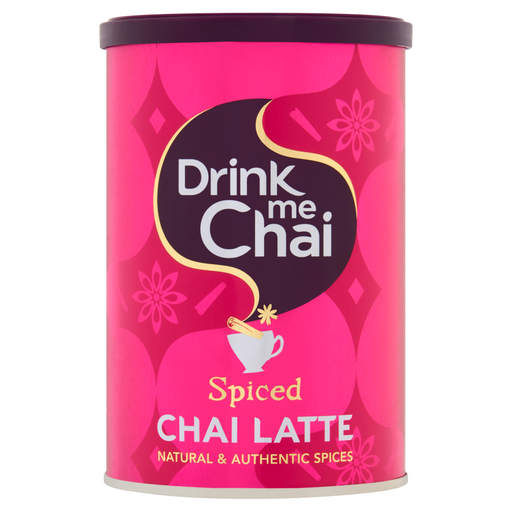 No image available
This 250g chai latte mix is an option when you want a premixed drink rather than plain brewed tea. Sugar and milk ingredients matter when serving guests; check the current pack for those details and for caffeine information.
 No image available
The 10 individual 20g sachets provide a portioned chai latte mix for separate cups. Check the current pack for milk and soya allergens, sugar, named spices and caffeine status before choosing it for guests.
Choose black-tea chai if you want a tea base that can be served with milk. If avoiding caffeine is the priority, choose an exact product labelled caffeine-free: Pukka describes its Spiced Vanilla Chai that way, and Teapigs does the same for Pumpkin Spiced Chai.
Compare the named ingredients. Twinings lists cinnamon, cardamom, cloves, fennel and black peppercorns in Spicy Chai, while Clipper’s Indian Chai includes cinnamon, orange peel, cloves and fennel. The lists show different compositions, not a measured ranking of flavour strength.
Yes, where the product directions allow it. Twinings leaves milk and sugar optional for its Classic Chai, so you can brew the tea and let guests add either separately; check the milk you serve for anyone with a relevant allergy.
Read the current pack or retailer information for the exact mix, including its ingredients and any “may contain” statement, and account for milk added when serving. The Food Standards Agency explains that precautionary allergen statements indicate possible unintended presence through cross-contact; they are different from ingredients deliberately included in a product.