Which guests are you serving?
A chai that works in a large mug of milk may not answer a guest’s request for pronounced spice or a drink without caffeine. Plan the main brew and any alternative separately.
Hosts serving chai with milk
If the chai will be served latte-style, look for a blend whose maker gives milk-serving guidance. Teapigs describes its black chai as strong and spicy and suitable with lots of milk. Try it at the milk-to-tea ratio you intend to use.
Guests who favour pronounced spice
Twinings describes Chai Ultra Spice as a black tea with a bold, spicy taste. That makes it worth considering for spice flavour, but the description does not establish how strong its black-tea character will taste after milk is added.
Guests avoiding caffeine
Pukka describes Spiced Vanilla Chai as caffeine-free. Serve it as a clearly labelled herbal alternative rather than presenting it as the same drink as a black-tea chai, and check the current pack’s ingredients before offering it.
What should you check when choosing chai?
Decide whether the main cup needs noticeable black tea after milk, prominent spice, or both. Then choose and label a separate caffeine-free drink if your guest list calls for one.
| Priority |
What to check |
Your needs |
| Serving with milk |
Check whether the maker recommends milk or a latte-style serve. Follow the preparation directions, then test a cup with your planned amount of milk. |
I’m serving milky chai and want its flavour to remain noticeable. Teapigs explicitly describes its black chai as suitable with lots of milk; that description is not a comparison with other blends. |
| Tea and spice character |
Check for a black-tea base, then read the spice list separately. A bold-spice description does not measure black-tea strength. |
I’m looking for a fuller black-tea cup, not just a stronger cinnamon or clove aroma. Twinings describes Chai Ultra Spice as bold-spiced, so I would taste it with milk before making it the main brew. |
| Caffeine choice |
Check the product’s caffeine-free declaration rather than judging by its name or spice ingredients. Label herbal and black-tea servings distinctly. |
Some guests may want chai-style spices without caffeine. Pukka describes Spiced Vanilla Chai as caffeine-free, while Teapigs’ chai is a black tea. |
| Instant mixes |
Read the ingredients and allergen declaration, including any milk or soya. Check sugars per portion on the current pack if choosing a sweetened mix. |
If I offer a quick chai latte alongside brewed tea, I need guests to know which drink already contains other ingredients. Joybuy’s Nestlé Everyday Vanilla Chai Latte product information lists sugar, milk solids and soya. |
Chai brands to consider
These are product-line references for comparing the main milky brew with spice-led and caffeine-free alternatives, not a claim that every chai from a brand has the same ingredients.
Teapigs
Teapigs Chai Tea Temples are a black-chai option for hosts planning to serve chai with milk.
- Teapigs describes this chai as strong and spicy and suitable with lots of milk in a latte-style cup.
- The strength description is the brand’s own positioning, not a controlled comparison. Check how many servings you need when choosing the 15-temple pack.
Twinings
Twinings offers black-tea chai choices, including the spice-led Chai Ultra Spice and Classic Chai.
- Twinings describes Chai Ultra Spice as having a bold, spicy taste. Its Classic Chai ingredients list states 70% black tea.
- A bold-spice description does not tell you how much black-tea flavour you will notice after adding milk.
Clipper
Clipper Indian Chai is a black-tea choice for hosts comparing declared spice ingredients.
- Clipper’s ingredient list states cinnamon at 17%, cloves at 8% and fennel seed at 5% in its Organic Indian Chai Black Tea.
- Those ingredient proportions do not establish how strong the tea will taste with milk; prepare a trial cup if that is the deciding factor.
Pukka
Pukka Spiced Vanilla Chai is a herbal option to consider alongside, rather than in place of, a black-tea brew.
- Pukka describes Spiced Vanilla Chai as caffeine-free and flavoured with chai-style spices and vanilla.
- Check the current ingredients and any liquorice warning before serving; Pukka Original Chai is a different blend and should not be assumed to have the same caffeine status.
Joybuy chai option
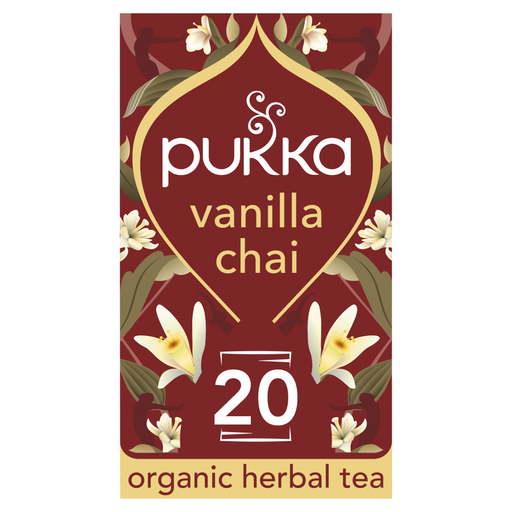
This herbal chai offers a caffeine-free serving choice for a coffee morning. It is separate from the black-tea chai you might choose as the main milky brew.
 No image available
Pukka Vanilla Chai 20 Herbal Tea Sachets, 40g
A caffeine-free herbal chai choice for guests avoiding black tea. The pack contains 20 sachets and weighs 40g. Check the current ingredients and any liquorice warning before serving; do not rely on it for the same black-tea character as a milky black chai.
Joybuy
Coffee-morning chai questions
What should I choose for chai served with plenty of milk?
Look for a black-tea chai whose maker explicitly recommends serving it with milk, then try it at your planned milk-to-tea ratio. Teapigs describes its chai as strong and spicy and suitable with lots of milk, but that description does not establish that it tastes stronger than other brands.
Does extra spice mean stronger black tea?
No: spice intensity and black-tea character are separate things to assess. Twinings describes Chai Ultra Spice as bold-spiced, so check the tea base and taste a prepared cup with milk if tea character is your priority.
Should caffeine-free chai replace the main black-tea brew?
Serve it as a separate choice if you want to accommodate guests avoiding caffeine. Pukka describes Spiced Vanilla Chai as caffeine-free, whereas a black-tea chai serves a different flavour preference; label each drink clearly.
Is instant chai latte the same as brewed chai?
No: an instant latte mix may contain ingredients beyond tea and spices. Joybuy’s Nestlé Everyday Vanilla Chai Latte product information lists sugar, milk solids and soya, so check the current pack and identify it separately from brewed chai for guests.
What if a chai blend lists liquorice?
Check the pack’s ingredients and warnings before serving it, and provide another choice for guests who wish to avoid liquorice. The British Heart Foundation says consuming too much liquorice glycyrrhizin can raise blood pressure and cause fluid retention.


