Who is each chai style for?
For elevenses, the useful distinction is whether you want black-tea character, a particular mix of spices or a chai-style drink without caffeine.
Drinkers who add milk
If you want a black-tea chai that keeps its intended character when served with milk, look for a blend with an explicit milk method or milk-friendly description. Tea India gives a simmered-milk method, and teapigs describes its chai as suitable with plenty of milk.
Drinkers who favour spice
If cinnamon, ginger, cardamom or clove is the main attraction, compare the ingredients of the exact blend. A maker’s description of bold spice does not, by itself, tell you how prominent the black tea will taste.
Drinkers avoiding caffeine
A product explicitly labelled caffeine-free offers a different route from black-tea chai. Pukka Vanilla Chai is a herbal infusion with spices and liquorice root; teapigs states that its Assam black-tea chai naturally contains caffeine.
What to check before choosing
Decide first whether black tea or a caffeine-free herbal blend fits your cup, then compare the spice recipe and preparation instructions for the way you serve it.
| Priority |
What to check |
Your needs |
| Tea and spice intensity |
Check whether the blend contains black tea and whether words such as “strong” describe the tea, the spices or both. Compare the named spices on the exact pack; a maker’s flavour description is not an independent strength test. |
I want a chai with noticeable black-tea character, rather than choosing solely for its spice aroma. |
| Serving with milk |
Look for a stated milk-preparation method or an explicit milk-friendly description. Tea India specifies 3–5 minutes for its simmered-milk method; teapigs describes its chai as suitable with plenty of milk. |
Milk is part of my elevenses cup, so I want instructions or product guidance that cover that serving style. |
| Brewing method |
Follow the instructions for the particular blend rather than using one time for every chai. Sainsbury’s Taste the Difference Chai specifies 3–5 minutes in water, while Twinings Classic Chai specifies 2–3 minutes. |
I would rather adjust the brew within the stated range than assume another chai’s timing applies. |
| Caffeine |
Check the tea base and the product’s caffeine statement. teapigs says its Assam black-tea chai naturally contains caffeine; Pukka Vanilla Chai is labelled caffeine-free and is a herbal blend. |
If I am avoiding caffeine, a spiced herbal cup suits that requirement even though it will not be the same as black-tea chai. |
| Ingredients |
Read the current label for the exact blend, including spices, flavourings and ingredients such as liquorice root. Check any milk or milk alternative you add separately. |
I need to know what is in the drink I actually make, particularly when an ingredient matters to me. |
Brand and product-line references
These examples show how particular chai blends differ; a brand name alone does not establish the ingredients or strength of every product in its range.
Tea India
Tea India Masala Chai is a black-tea option for a cup prepared with water or simmered milk.
- The Sainsbury’s product listing describes a “strong cup”, lists 73% Assam black tea and gives 3–5 minute methods for water and milk.
- “Strong” is a product description, not a comparative taste measurement.
teapigs
teapigs Chai is an Assam black-tea blend positioned for a spicy cup with plenty of milk.
- teapigs describes this chai as “strong and spicy”, suitable for latte-style preparation, and states that it naturally contains caffeine.
- The strength description comes from the maker; it does not establish that this blend will taste stronger than another chai.
Twinings
Twinings has distinct black-tea chai blends, so the named variant matters when comparing recipes and brewing times.
- Twinings describes Ultra Spice as robust and boldly spiced, with black tea, cardamom and clove; its instructions specify a 3-minute infusion.
- The Sainsbury’s listing for Classic Chai gives a different 2–3 minute infusion, while Twinings Spicy Chai is a loose-leaf blend containing black tea, rooibos and spices.
Clipper
Clipper Organic Indian Chai is a black-tea-and-spice option for shoppers comparing ingredient lists.
- Clipper lists black tea, cinnamon, orange peel, cloves and fennel seed, and describes this product as organic and Fairtrade.
- Its listed ingredients do not, on their own, establish how strong the brewed tea will taste or how it will work with milk.
Pukka
Pukka Original Chai and Pukka Vanilla Chai serve different choices within the chai style.
- Pukka describes Original Chai as containing black tea and spices and says it can be taken with or without milk.
- Pukka Vanilla Chai is a caffeine-free herbal infusion containing liquorice root, not a substitute for the black-tea component of Original Chai.
Sainsbury's Taste the Difference
Its Chai Teabags offer a stated water-brewing range and a separate simmered-milk method.
- Sainsbury’s lists 64% black tea with ginger, cassia, cardamom and black pepper, and specifies 3–5 minutes in water or five minutes simmered in milk.
- Sainsbury’s advises checking the pack because ingredients may change.
Chai option on Joybuy
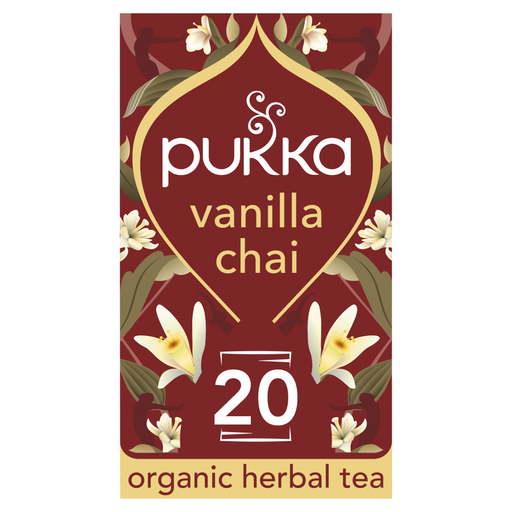
This Pukka option is for an elevenses drinker choosing chai spices without caffeine; it is a herbal alternative to the black-tea blends discussed above.
 No image available
Pukka Vanilla Chai 20 Herbal Tea Sachets 40g
Choose this for a chai-spiced elevenses drink when you want a caffeine-free herbal infusion rather than black-tea chai. The 20-sachet, 40g product includes cinnamon, ginger, cardamom and vanilla; liquorice root is also listed, so check the current pack if that ingredient matters to you.
View on Joybuy
Chai questions answered
How can I make my elevenses chai more intense without adding a second tea bag?
Use the brewing range stated for your particular chai and try its upper end if you prefer the resulting cup. Sainsbury’s Taste the Difference Chai specifies 3–5 minutes in water, and Tea India gives 3–5 minutes for its water or simmered-milk methods; other blends can have different instructions.
Is every chai caffeinated?
No. teapigs says its Assam black-tea chai naturally contains caffeine, whereas Pukka Vanilla Chai is labelled caffeine-free and is a herbal infusion. Check the statement on the exact blend rather than assuming that all products called chai have the same tea base.
Which chai should I consider if I add milk?
Start with a blend that gives milk instructions or is explicitly described as suitable with milk. Tea India specifies a simmered-milk method, teapigs describes its chai as suitable with plenty of milk, and Sainsbury’s Taste the Difference Chai gives a five-minute milk method. Those descriptions do not establish which cup will taste strongest to you.
Can a caffeine-free herbal chai replace a strong black-tea chai?
It can provide a spiced chai-style cup, but it does not provide the black-tea component you may be seeking. Pukka Vanilla Chai is caffeine-free and herbal, while teapigs Chai contains Assam black tea and naturally contains caffeine; compare their current ingredient lists as well as their names.
Is a retailer’s ingredient listing enough to make my final choice?
Use it to compare blends, then read the current pack before consuming. Sainsbury’s advises that ingredients may change, which matters if you need to check a particular spice, flavouring or other ingredient.


