Choose a caffeine-free herbal chai if avoiding tea-leaf caffeine matters more than keeping the taste of black tea; Pukka describes its Spiced Vanilla Chai as caffeine-free. If a conventional black-tea taste matters more, decaffeinated black tea is another route, but it can retain traces of caffeine and may require a separate way to add chai spices. For an older adult, check herbal ingredients against any regular medicines, and do not treat tea as a replacement for food.
Who might choose each type?
The useful distinction is between a herbal chai labelled caffeine-free and a decaffeinated tea made from tea leaves.
Older adults avoiding caffeine
A caffeine-free herbal chai may suit someone who likes chai spices but wants to avoid tea-leaf caffeine, including in an evening drink. Pukka describes its Spiced Vanilla Chai as caffeine-free; Twinings notes that decaffeinated tea can retain traces of caffeine.
Carers planning regular drinks
A familiar hot drink can be part of a drinking routine: the NHS says tea counts towards fluid intake. Keep any individual fluid or swallowing advice in mind, and do not use a cup of tea in place of food.
People with medicine or iron-related checks
Someone taking regular medicines should check a herbal blend’s ingredients with a pharmacist or clinician where suitability is uncertain. For a person following dietary advice for iron deficiency anaemia, the timing of conventional tea around meals also matters.
What should you check before buying?
Start with the caffeine wording and tea base, then consider how the drink fits the person’s medicines, meals and drinking routine.
| Priority |
What to check |
Your needs |
| Caffeine status |
Look for an explicit caffeine-free claim if avoiding tea-leaf caffeine is the aim. If the product says decaffeinated, check whether it is black tea rather than a herbal infusion; Twinings says decaf tea can retain traces of caffeine. |
I want chai spices without choosing a drink made from caffeinated tea leaves, particularly later in the day. |
| Tea taste and format |
Check whether the chai flavour comes in a ready-made herbal blend or whether you would need to add spices to decaffeinated black tea. A herbal infusion will not have the same black-tea base. |
The taste of conventional tea matters to me, even if getting a chai flavour takes an extra step. |
| Ingredients and medicines |
Read the full ingredient list, including liquorice and other herbs. If the person takes regular medicines or has a relevant condition, ask a pharmacist or clinician about the particular blend. |
Before making herbal chai a regular drink, I need to know whether its ingredients are suitable alongside existing medicines. |
| Drinks and mealtimes |
Tea counts towards fluid intake, according to the NHS, but does not replace meals. For iron deficiency anaemia, University Hospitals Coventry and Warwickshire NHS Trust advises avoiding conventional tea within one hour before or after meals. |
I’m looking for a drink that fits a regular routine without overlooking food intake or iron-related mealtime advice. |
Mistakes to avoid
-
Assuming decaf means caffeine-free
Decaffeinated tea can retain traces of caffeine, so the two labels answer different needs.
When avoiding tea-leaf caffeine is the priority, look for an explicit caffeine-free claim and check whether the blend contains black tea or herbs.
-
Choosing chai because it sounds nourishing
The NHS counts tea towards fluid intake, but a cup of chai is not a substitute for meals when someone has poor food intake.
Keep drinks and food in view separately. Seek individual advice for poor intake, swallowing difficulties or prescribed fluid limits.
-
Skipping the herbal ingredient list
Pukka lists liquorice in its Vanilla Chai. The name of a herbal blend alone does not establish whether its ingredients are suitable for someone taking medicines.
Check the current pack and ask a pharmacist or clinician about the specific ingredients if the person takes regular prescriptions or has a relevant condition.
-
Serving conventional tea with an iron-focused meal
For people following advice for iron deficiency anaemia, conventional tea around meals can affect iron absorption.
Follow the person’s clinical advice on timing. University Hospitals Coventry and Warwickshire NHS Trust advises avoiding tea within one hour before or after meals in its iron deficiency anaemia guidance.
Brand options to consider
Brand ranges differ: check the particular product’s caffeine wording and ingredients rather than relying on a chai label alone.
Pukka
Pukka describes Spiced Vanilla Chai as a caffeine-free herbal chai, rather than a decaffeinated black tea.
- Pukka lists vanilla, cinnamon, ginger, cardamom, fennel and liquorice among its ingredients.
- Its herbal base will not meet a preference for black-tea flavour. Check the liquorice ingredient where medicine or condition-related suitability matters.
Twinings
Twinings offers decaffeinated tea for someone who prefers a conventional tea base; its chai range is a separate choice to check product by product.
- Its decaffeinated range includes black-tea formats.
- Twinings says decaffeinated tea can retain traces of caffeine. Check the exact pack rather than assuming a Twinings chai is decaf.
Clipper
Clipper’s Indian Chai is a black-tea blend; its herbal infusions are a different part of the range.
- Clipper lists black tea and spices in Indian Chai, making its tea base clear.
- Indian Chai is not a decaf choice. Check the individual label for a caffeine-free claim when considering an infusion.
teapigs
teapigs lists Pumpkin Spiced Chai in a caffeine-free section of its UK range.
- The caffeine-free category offers a chai-flavoured option to investigate.
- Read the current product label for its full ingredients before choosing it for someone with ingredient or medicine-related concerns.
A caffeine-free herbal chai on Joybuy
This option is a ready-to-brew herbal chai for someone seeking chai spices without a black-tea base; it does not represent the decaffeinated black-tea route.
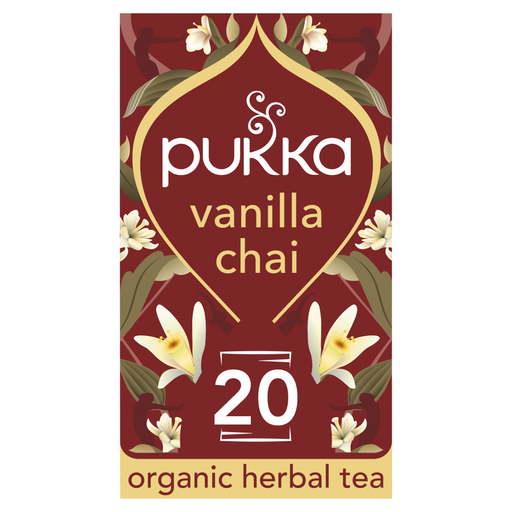 No image available
Pukka Vanilla Chai Herbal Tea, 20 Sachets, 40g
For someone seeking chai spices without a black-tea base, Pukka describes this herbal blend as caffeine-free. The pack is labelled as 20 sachets, 40g; Pukka lists vanilla, cinnamon, ginger, cardamom, fennel and liquorice among its ingredients. Check the current pack and ask a pharmacist or clinician about suitability if the person takes regular medicines or has a relevant condition.
View on Joybuy
Questions about chai and decaf tea
Is decaf chai the same as caffeine-free chai?
No. Decaffeinated tea can retain traces of caffeine, according to Twinings. Pukka describes its Spiced Vanilla Chai as a caffeine-free herbal blend, which is a different tea base from decaffeinated black tea. Check the wording on the particular pack before buying.
Does chai count towards an older adult’s fluid intake?
Tea counts towards fluid intake, according to the NHS. It does not replace food, and anyone with a prescribed fluid limit or swallowing guidance should follow their individual advice.
Should someone taking medicines check a herbal chai first?
Yes, check the ingredients of the particular blend and ask a pharmacist or clinician where suitability is uncertain. Pukka lists liquorice in its Vanilla Chai, and NHS guidance notes that some herbal products may not be suitable alongside certain medicines.
When should conventional tea be served if iron deficiency is a concern?
For someone following advice for iron deficiency anaemia, University Hospitals Coventry and Warwickshire NHS Trust advises avoiding tea within one hour before or after meals. Follow the person’s own clinical or pharmacist instructions for prescribed iron.


