What matters when choosing chai?
Start with the preparation the person can manage, then compare the ingredients and serving information for the exact product.
Black-tea chai bags
Consider when: Choosing milk and sweetness separately matters.
Bear in mind: The drink needs brewing, and black tea is not caffeine-free.
Caffeine-free herbal chai bags
Consider when: Avoiding caffeine matters more than having a black-tea chai.
Bear in mind: Herbal blends vary; Pukka Vanilla Chai contains liquorice root.
Sweetened instant chai
Consider when: Mixing a drink with hot water is easier than brewing tea.
Bear in mind: Sugar and milk may already be part of the mix, leaving less choice over additions.
| Priority | What to check | Your needs |
|---|
| Preparation |
Check whether the product needs brewing or is mixed with hot water. Consider who will make it and whether its directions are manageable. |
If making a drink involves help from someone else, I want a method that fits that routine. |
| Sugar and milk |
Read the ingredients, milk allergen information, serving size and sugars per serving. ASDA lists 13.2 g sugars per serving for Royal Premium Instant Tea Masala Chai Sweetened 220g; that figure does not describe other mixes. |
I want to decide how much milk or sweetness goes into the cup, or check a ready-sweetened mix against an individual food plan. |
| Caffeine and herbs |
Look for black tea or an explicit caffeine-free label. Twinings notes that caffeine in tea varies with the type of tea and brewing conditions; check herbal ingredient lists too. |
If caffeine avoidance matters to me, a spiced flavour alone does not tell me whether the drink is caffeine-free. |
| Wider nutrition needs |
Check the prepared drink’s ingredients and serving information, including anything added to a tea bag. Seek professional advice about poor appetite, unintended weight loss or suspected malnutrition rather than relying on chai. |
I want a drink the person enjoys, without treating it as a replacement for their wider food and fluid plan. |
Brand and retailer references
A brand name alone does not establish the ingredients of a particular chai; compare the exact product label and format.
Pukka
Pukka has both herbal and black-tea chai products.
- Pukka Vanilla Chai is listed as caffeine-free and contains cinnamon, cardamom, ginger, fennel, vanilla and liquorice root.
- Pukka Original Chai contains black tea; check which product you are choosing, particularly if caffeine or liquorice matters.
Twinings
Twinings Classic Chai is a spiced black tea.
- Twinings lists ginger, cinnamon, cardamom and cloves in Classic Chai; milk and sweetness can be chosen when making the drink.
- It is not a caffeine-free herbal chai. Twinings says caffeine in tea varies with brewing conditions.
Clipper
Clipper Organic Indian Chai is a black-tea chai bag option.
- Clipper lists black tea, cinnamon, orange peel, cloves and fennel seed in this blend.
- Its black-tea base makes it a different choice from a product labelled caffeine-free.
teapigs
teapigs describes its chai as a black-tea blend for preparation with milk.
- The brand presents its chai tea temples as an option for a milk-based drink.
- Tea temples need brewing and are not the same format as an instant powder mixed with hot water.
Tesco
Tesco product information provides examples of both chai tea bags and sweetened instant chai.
- Tesco Finest Chai lists black tea with ginger, cinnamon, cardamom, clove, black pepper and anise.
- Tesco’s listing for Royal Sweetened Instant Karak Chai describes a hot-water instant product; do not assume its ingredients match the tea bags.
Sainsbury’s
Sainsbury’s product information includes both herbal and black-tea chai from other brands.
- Its listings describe Pukka Vanilla Chai as caffeine-free and Tea India Masala Chai as a black-tea blend with spices.
- These are separate formulations: check each product’s ingredients rather than treating a retailer’s chai range as one drink.
Chai options on Joybuy
These two options represent different preparation choices: a caffeine-free herbal chai in sachets and an instant spiced chai latte mix. Compare their ingredients and directions against the older adult’s needs rather than treating them as interchangeable.
 No image available
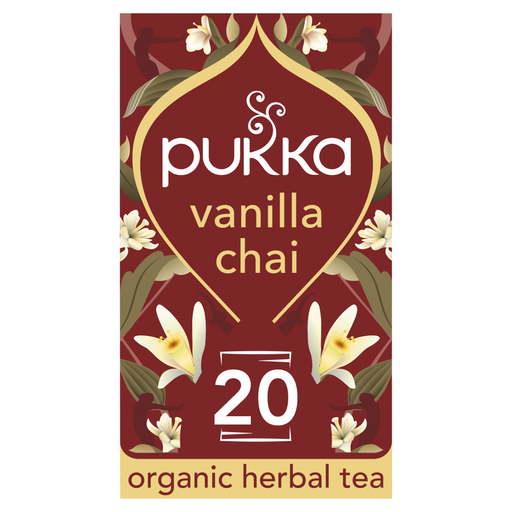
Pukka Vanilla Chai Herbal Tea, 20 Sachets, 40g
A caffeine-free herbal chai for someone who prefers to choose any milk or sweetener when brewing. It contains liquorice root, so check the pack and its warnings if that ingredient is relevant to the person drinking it.
View on Joybuy
 No image available
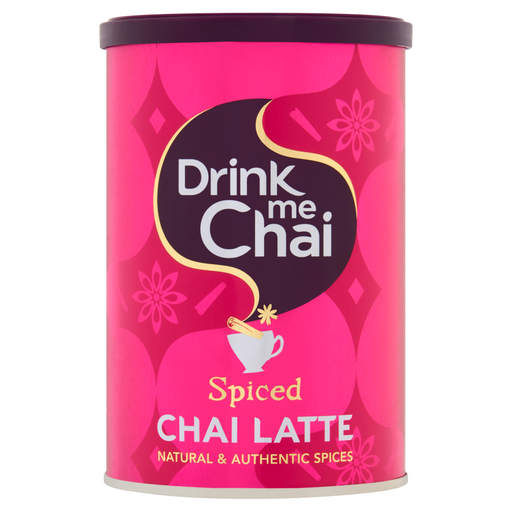
Drink Me Chai Spiced Chai Latte 250g
An instant chai mix prepared with hot water when brewing a tea bag is less convenient. It contains sugar and milk and is unsuitable for someone with a milk allergy; check the pack’s serving directions and nutrition information if sugar intake matters.
View on Joybuy
Common questions
Is chai a nutritional drink for an older person with a poor appetite?
Chai can be a drink they enjoy, but it is not a substitute for assessing poor appetite or suspected malnutrition. The NHS describes malnutrition as not getting the right amount of nutrients; seek advice from a GP, dietitian or other appropriate clinician if appetite has declined or weight loss is unintended.
Is instant chai the same as chai made from tea bags?
No. Tea India Masala Chai bags contain black tea and spices, while ASDA lists sugar and skimmed milk powder as well as tea extract in Royal Premium Instant Tea Masala Chai Sweetened 220g. That particular instant mix lists 13.2 g sugars per serving; check the label of any other mix separately.
Which chai should I consider if caffeine is a concern?
Look for a product explicitly labelled caffeine-free, such as Pukka Vanilla Chai, rather than assuming a spiced chai has no caffeine. Black-tea chai contains black tea, and Twinings notes that the caffeine in brewed tea varies with tea type and preparation.
Why check for liquorice in herbal chai?
Pukka Vanilla Chai lists liquorice root, even though it is labelled caffeine-free. Check the actual pack and its warnings; if the person has hypertension or takes medicines that make herbal ingredients a concern, ask a pharmacist or clinician for individual advice.
Can tea be one of the drinks offered to an older adult?
Yes, tea can be among the fluids offered during the day. The British Dietetic Association notes that older adults can be at higher risk of dehydration; follow any individual fluid restriction or swallowing guidance given by a clinician.


