What should you check?
For a shared brunch, decide whether a particular certification is required, then check the tea base, ingredients and serving directions of the blends under consideration.
| Priority |
What to check |
Your needs |
| Fairtrade claim |
Check the exact chai pack for the FAIRTRADE Mark and read the product description. Clipper Tea Shop describes its Organic Indian Chai Black Tea as Fairtrade; confirm the pack when buying. |
I want the certification claim to apply to the chai I serve, not merely to another product from the same brand. |
| Label meaning |
Distinguish Fairtrade from Fair for Life. Fairtrade International permits mass balance for tea, so a Fairtrade claim does not, by itself, establish that the tea in an individual bag was physically segregated throughout processing. |
If physical traceability matters to me, I will read the pack's explanation rather than assume the mark answers that separate question. |
| Tea and spices |
Read the ingredient list for black tea, other tea ingredients and spices. For a caffeine-free option, confirm that claim on the exact pack; Pukka Original Chai, for example, is described by Pukka as containing black tea. |
Some guests may want black-tea chai, while others may prefer a separately checked caffeine-free spiced drink. |
| Serving with milk |
Check the blend's directions and whether milk ingredients are already included. Twinings leaves milk and sugar to the drinker for Classic Chai; an instant chai latte may have a different ingredient list. |
I want guests to know what is in their drink before they add milk or choose an alternative. |
Brand and blend references
These examples illustrate different label and serving choices; a brand-level claim should not be substituted for the certification shown on an individual chai pack.
Clipper
Clipper Tea Shop describes its Organic Indian Chai Black Tea, sold in a 20-bag format, as Organic & Fairtrade.
- Its stated ingredients are black tea, cinnamon, orange peel, cloves and fennel, giving hosts a specific blend and claim to check against the pack.
- It contains black tea, so choose a separately checked option for guests seeking a caffeine-free drink. Fairtrade certification alone does not establish physical segregation of every tea leaf.
Pukka
Pukka states that its teas are Fair for Life certified. It says at least 20% of the herbs in each tea blend are grown on Fair for Life-certified farms.
- Pukka says its Original Chai can be served with or without milk and honey.
- Fair for Life is not the FAIRTRADE Mark. Pukka also describes Original Chai as containing black tea, so do not assume that blend is caffeine-free.
Twinings
Twinings Classic Chai is a black-tea option for hosts who want guests to decide whether to add milk and sugar.
- Twinings lists black tea at 70% for Classic Chai and leaves milk and sugar to the drinker in its serving guidance.
- If a FAIRTRADE Mark is essential, check the exact Classic Chai pack rather than treating a general brand claim as product certification.
Joybuy chai options
These options cover a caffeine-free chai-style infusion and an instant chai latte for brunch. Check the exact pack if Fairtrade certification is part of your decision.
 No image available
Pukka Vanilla Chai Herbal Tea, 20 Sachets, 40g
A chai-style option for guests who want a caffeine-free infusion at brunch.
The product description identifies it as caffeine-free and lists cinnamon, ginger, liquorice, fennel, cardamom and vanilla. Pukka's Fair for Life statement is distinct from a product-specific FAIRTRADE Mark; check this pack for the certification you require and its ingredients for guests' needs.
View on Joybuy
 No image available
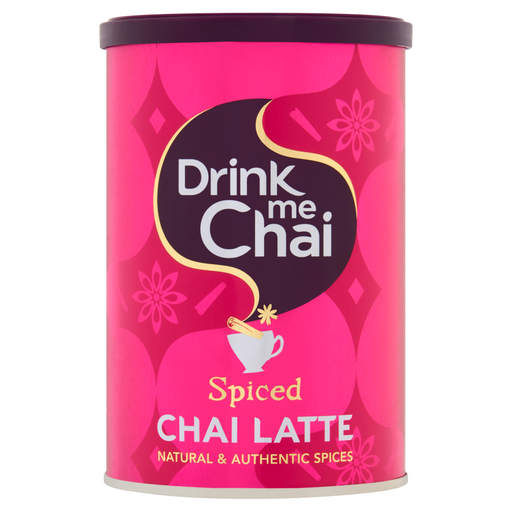
Drink Me Chai Spiced Chai Latte, 250g
An instant chai latte option for hosts planning to prepare drinks with hot water.
The product description lists instant black tea, cinnamon, spices and milk ingredients; it gives a value of 63.9g sugars per 100g. Check the pack for guests avoiding milk and for any ethical certification required for the brunch.
View on Joybuy
Questions about chai and Fairtrade
Does the FAIRTRADE Mark mean every tea leaf was kept separate?
No. Fairtrade International permits mass balance for tea, so the mark does not necessarily establish physical segregation of the tea in an individual bag throughout processing. Read the pack, including any explanation beside the mark, for the claim that applies to that product.
Is Pukka chai Fairtrade because Pukka uses Fair for Life?
No: Fair for Life is a separate certification, not another name for the FAIRTRADE Mark. Pukka says its teas are Fair for Life certified and that at least 20% of the herbs in each blend are grown on Fair for Life-certified farms; check the exact chai pack if you specifically require Fairtrade.
Which chai can guests serve with milk?
Twinings leaves the addition of milk and sugar to the drinker for its Classic Chai, which lists 70% black tea. Pukka also says Original Chai can be served with or without milk and honey. For an instant chai latte, check whether milk ingredients are already in the mix.
What should I check before serving chai to guests with dietary requirements?
Read the ingredient information on each current pack and tell guests which blend they are being offered. The blends discussed here differ: Clipper Indian Chai contains black tea and spices, Pukka Original Chai is described as containing black tea, and Drink Me Chai Spiced Chai Latte lists milk ingredients.
How can I check whether a particular chai has a Fairtrade claim?
Look for the FAIRTRADE Mark on the exact product pack rather than relying on general ethical-sourcing language or another blend from the same brand. Fairtrade International says the mark is used when a product's ingredients meet the applicable Fairtrade Standards.


