Frequent chai drinkers
For repeat cups, compare the number of bags, the stated brewing time and how the pack should be stored once opened.


For regular cups, start with a bagged black-tea chai and compare pack size, ingredients and brewing instructions. If you usually add milk, look for a blend with milk-serving guidance; if avoiding caffeine matters, choose a herbal chai explicitly labelled caffeine-free. Check the ingredients before stocking up, particularly if liquorice is a concern.
The right format depends on how often you make chai, what you add to it and which ingredients you need to check.
For repeat cups, compare the number of bags, the stated brewing time and how the pack should be stored once opened.
Look for a black-tea blend with instructions or a serving suggestion for milk. Teapigs describes its Assam chai as suitable for a latte-style cup, while Tea India gives methods using milk.
Black-tea chai contains caffeine. If you need a caffeine-free cup, check for an explicit label and read the full ingredient list, including whether the blend contains liquorice.
Choose the tea base and drink format first, then check whether the pack and preparation instructions suit repeated use.
| Priority | What to check | Your needs |
|---|---|---|
| Tea base | Check for black tea or an explicitly caffeine-free herbal blend. The word “chai” alone does not establish caffeine status. | If I am avoiding caffeine, I want the pack to say caffeine-free rather than relying on its flavour name. |
| Milk preparation | Look for a milk-serving suggestion or preparation method. Teapigs suggests lots of milk for its Assam chai; Tea India describes both adding milk and infusing in simmering milk. | For a milky cup, I want instructions that match the way I plan to make it. |
| Ingredients | Read the complete list: the spices and other ingredients differ between blends. Check specifically for liquorice if its inclusion matters to you. | I may prefer one spice combination over another, or need to avoid a particular ingredient. |
| Pack format | Check the bag count or loose-leaf weight. For loose leaf, check the amount required per cup and whether you have an infuser or teapot. | Portioned bags are convenient for my regular cups; loose leaf makes sense if I am happy to measure each brew. |
| Brewing time | Follow the specific pack: Tesco Finest Chai states 4–5 minutes, Twinings Classic Chai 2–3 minutes and Teapigs Chai at least 3 minutes. | If I make chai in a hurry, I want preparation instructions that fit my routine. |
| Storage | Follow the pack directions after opening. Tesco Finest Chai specifies a cool, dry place and an airtight container once opened. | When I keep several packs in the cupboard, I want to know how to store an opened one. |
Black-tea chai contains caffeine, whereas a herbal chai may be explicitly labelled caffeine-free. The distinction matters if you are choosing a cup for a particular time of day.
Check the tea base and look for a caffeine-free statement on the specific pack when you need one.
Recipes vary: Tesco Finest Chai lists black pepper and anise, Clipper Indian Chai lists orange peel and fennel, and Pukka Original Chai lists liquorice.
Read the whole ingredient list before choosing a larger pack, rather than judging the flavour by “chai” alone.
Tea-bag disposal instructions are product-specific. In-store availability can vary too; Sainsbury’s says its stock checker cannot guarantee an item will still be there when you visit.
Check the pack and your local council’s accepted waste stream. For a special shopping trip, check the exact item with the store first.
These product lines illustrate different chai formats and ingredient profiles; check the particular pack rather than assuming every blend from a brand is alike.
Tesco Finest Chai is a 50-bag black-tea-and-spice option for regular cupboard use.
Classic Chai bags and Spicy Chai loose leaf offer different preparation formats.
Clipper describes its 20-bag Indian Chai as an organic and Fairtrade black-tea blend.
Teapigs describes its Assam black-tea chai as strong and spicy and suggests serving it with plenty of milk.
Pukka has both a black-tea Original Chai and a herbal Spiced Vanilla Chai that it labels caffeine-free.
Sainsbury’s offers a store stock checker for shoppers adding chai to a grocery trip.
These options cover a herbal chai in tea bags and two instant chai-latte mixes. An instant mix is a different format from brewed black-tea chai, so check which kind of cup you want.
 No image available
A portioned herbal chai option for someone seeking a caffeine-free cup rather than black-tea chai. It contains liquorice; check the pack if managing liquorice intake.
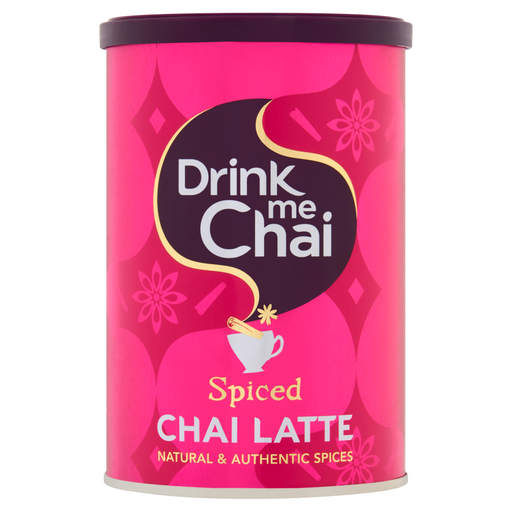 No image available
A powder mixed with hot water for a chai-latte-style drink, rather than tea bags for brewing. It contains milk ingredients, so check the label if avoiding dairy; check the preparation directions to work out how many cups the pack makes.
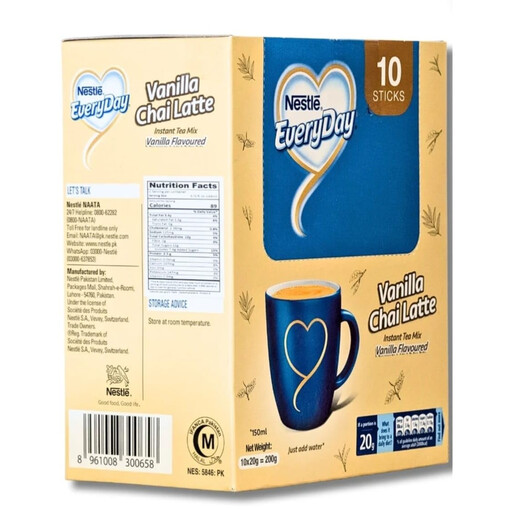 No image available
Ten portioned sachets offer an instant drink prepared with hot water, not a conventional brewed chai blend. It contains milk and soya; check the current pack ingredients for its spice profile and caffeine information if those affect your choice.
Black-tea chai is not caffeine-free: black tea naturally contains caffeine. If caffeine avoidance matters, choose a product explicitly labelled caffeine-free, such as Pukka’s herbal Spiced Vanilla Chai.
Look for a blend with milk-serving or milk-preparation instructions. Teapigs suggests plenty of milk with its Assam chai; Tea India gives instructions for adding milk after brewing or infusing a bag in simmering milk.
Liquorice is present in some chai blends, including Pukka Original Chai and Spiced Vanilla Chai, but not every recipe is the same. The British Heart Foundation warns that liquorice can raise blood pressure, including when consumed as tea, so check the ingredient list if its inclusion is a concern.
Follow the directions on the particular pack. Tesco says to keep its Finest Chai in a cool, dry place and transfer it to an airtight container once opened.
For UK food labelling, a best-before date concerns quality rather than safety. GOV.UK says food is usually safe after that date but may not be of the same quality; follow the pack’s storage instructions when keeping tea in the cupboard.