Organisers running self-service tea breaks
Individually portioned chai and clear brewing directions help when attendees prepare drinks at a busy station. Keep the chosen pack’s ingredient information accessible to the catering team.


For a self-service conference tea station, individually portioned black-tea chai keeps preparation straightforward; for a planned milk-based service, choose a blend whose serving directions suit that method. Check the exact ingredients rather than assuming every chai is caffeine-free or has the same spice profile, and make allergen information available before attendees choose their drink.
Individually portioned chai and clear brewing directions help when attendees prepare drinks at a busy station. Keep the chosen pack’s ingredient information accessible to the catering team.
Choose a blend with directions that suit the planned milk service. Identify the milk offered and include it in the allergen-information process.
Check each blend’s tea base and ingredients. A chai label alone does not establish that a drink is caffeine-free or suitable for someone avoiding a particular ingredient.
Decide how the chai will be served, then check the preparation directions and exact ingredients for the blend you choose.
| Priority | What to check | Your needs |
|---|---|---|
| Tea-break service | Check whether each cup has its own bag or sachet, the stated brew time and the pack count. Twinings gives 2–3 minutes for Classic Chai; teapigs specifies at least three minutes for its chai tea. | I want guests to prepare a cup without measuring loose tea, with enough time to follow the chosen blend’s brewing directions. |
| Serving with milk | Check the manufacturer’s serving directions and whether milk is optional, added at the station or already an ingredient in the product. teapigs describes its black chai as suitable with plenty of milk. | If chai will be served with milk, I need a blend and preparation method that fit that plan, rather than assuming every chai is intended to be made the same way. |
| Tea base and spices | Read the exact ingredient list for black tea, spices and other ingredients such as liquorice. Clipper Indian Chai lists black tea, cinnamon, orange peel, cloves and fennel seed; Pukka Original Chai lists liquorice and black tea. | Some guests may want to avoid caffeine or particular ingredients. I need an accurately named chai and a separately checked alternative where needed. |
| Allergen information | Keep the current product packaging or an accurate ingredient record available, and identify additions separately. The Food Standards Agency says retail and catering food businesses must provide allergen information for prepacked and non-prepacked food and drink. | Before choosing a drink, I want to know how to obtain allergen information for both the chai and anything served with it. |
The listed spices differ: Clipper Indian Chai includes orange peel and fennel seed, while Pukka Original Chai includes liquorice. A generic “chai” sign does not tell guests which blend is being served.
Try the exact blend using the planned serving method, then put its product name on the drinks list.
Twinings Classic Chai, Clipper Indian Chai and teapigs chai tea are black-tea blends. Pukka Original Chai also contains black tea; its ingredients include liquorice.
Check the supplied product’s ingredient list and provide a separately confirmed caffeine-free drink if one is needed.
Milk may be offered beside a tea bag or already be present in a prepared chai product. The Food Standards Agency says catering food businesses must provide allergen information for food and drink, whether prepacked or non-prepacked.
Identify each drink and addition clearly, and ensure guests can obtain accurate allergen information before serving themselves.
These examples illustrate different ingredient profiles and serving directions; check the supplied product version before preparing the conference drinks list.
Classic Chai is a black-tea-and-spice option in 20 individually wrapped envelopes.
teapigs describes its chai tea as a strong, spicy black-tea blend intended to work with plenty of milk.
Original Chai has a distinct ingredient profile including cardamom, liquorice, ginger and cinnamon.
Indian Chai is an organic and Fairtrade black-tea blend sold in a 20-bag pack.
Tesco Finest Chai is listed as a 50-teabag, 125 g pack of black tea with cinnamon, ginger, cloves and cardamom.
These options cover an individually portioned herbal-style chai and a chai-latte-style product. Check each one against the planned serving method and the ingredients you need to communicate.
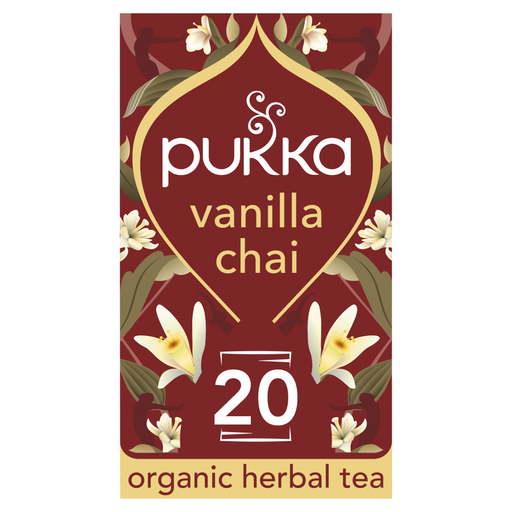 Image unavailable
The 20-sachet format suits a self-service station where drinks are prepared individually. This is Vanilla Chai, a different product from Pukka Original Chai; check the supplied pack’s ingredients, including liquorice, and its brewing directions before setting out the drinks information.
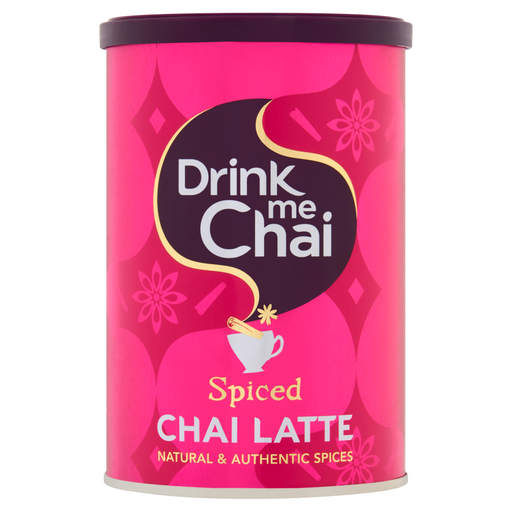 Image unavailable
This chai-latte-style product is intended to be mixed with hot water. Its product information identifies milk and black tea: include milk in the allergen information, and check the pack’s mixing quantity and servings per tin before planning how much to prepare.
Yes. The Food Standards Agency says retail and catering food businesses must provide allergen information for prepacked and non-prepacked food and drink. Keep accurate information for the specific chai available and identify milk or other additions separately so guests can check before choosing.
No. Twinings Classic Chai, Clipper Indian Chai and teapigs chai tea are black-tea blends, and Pukka Original Chai also contains black tea. Check the exact product before making a caffeine-free claim, and offer a separately confirmed alternative if needed.
Yes, when the chosen blend and service plan allow it: Pukka says Original Chai can be served with or without milk, while teapigs describes its chai tea as suitable with plenty of milk. Identify the milk offered and include it in the caterer’s allergen-information process; a prepared chai product may already contain milk.
Chai recipes differ, so guests cannot infer the tea base or spices from the word “chai”. For example, Pukka Original Chai lists liquorice, and NHS pregnancy guidance advises avoiding herbal teas containing liquorice root. Make the chosen product’s current ingredient information available rather than assuming one blend suits everyone.