Guests avoiding caffeine
An explicitly caffeine-free herbal chai suits an evening cup when black-tea caffeine is unwanted. Pukka describes its Spiced Vanilla Chai as caffeine-free; check the label of the particular pack you choose.


For a hotel room with only a kettle and cup, chai tea bags are simpler to prepare than loose leaf. Choose a black-tea chai if you want that tea base and caffeine is acceptable, or an explicitly caffeine-free herbal chai if avoiding caffeine matters. Compare the spice list, and check the pack’s ingredients and allergen information before serving it to someone else.
An explicitly caffeine-free herbal chai suits an evening cup when black-tea caffeine is unwanted. Pukka describes its Spiced Vanilla Chai as caffeine-free; check the label of the particular pack you choose.
Compare recipes rather than assuming every chai tastes alike. Twinings Classic Chai lists ginger, cinnamon, cardamom and cloves, while Clipper Indian Chai lists cinnamon, orange peel, cloves and fennel alongside black tea.
Tea bags work with a kettle and cup. Loose leaf needs measuring and equipment for separating the leaves; Twinings’ loose-leaf Spicy Chai directions call for tea measured by teaspoon.
Start with the tea base and how you will make the drink, then compare flavour and the information on the pack.
| Priority | What to check | Your needs |
|---|---|---|
| Caffeine | Look for black tea in the ingredients, or an explicit caffeine-free statement on a herbal blend. Twinings says black tea naturally contains caffeine. | For a late-night cup, I’d choose a blend explicitly labelled caffeine-free rather than assume that the word “chai” tells me. |
| Spice profile | Compare the named spices. Twinings Classic Chai lists ginger and cardamom; Clipper Indian Chai includes orange peel and fennel. | I’d check whether the blend contains the spices I enjoy, especially when buying a pack for several stays. |
| Preparation | Check whether the product is a tea bag, loose leaf or a drink mix. Loose leaf needs measuring and a way to remove the leaves. | With only a kettle and cup, I want something I can prepare without a strainer or teapot. |
| Milk and serving | Check whether milk is an optional addition or an ingredient in a chai latte mix. Read the preparation directions before packing it. | If milk might not be available in the room, I’d choose a drink I’m content to make as directed with what I have. |
| Ingredients and allergens | Read the current pack’s full ingredient list and any precautionary allergen statement. The UK Food Standards Agency explains that precautionary labelling can indicate an allergen’s unintended presence. | When serving a guest with an allergy or intolerance, I need the sealed pack’s information for that particular product. |
A spice-led name does not tell you whether the blend contains black tea, which naturally contains caffeine.
Check the tea base. If avoiding caffeine matters, look for an explicitly caffeine-free herbal chai.
Spice lists differ: Twinings Classic Chai includes cardamom and ginger, while Clipper Indian Chai includes orange peel and fennel.
Read the ingredients for the flavours you want or wish to avoid before buying a multipack.
Loose-leaf chai needs measuring and a way to separate the leaves from the drink.
Choose tea bags for a kettle-and-cup setup unless an infuser or strainer will be available.
Recipes vary, and precautionary allergen labelling can indicate possible unintended allergen presence.
Keep the original pack and check its current ingredients and allergen information before serving a guest with an allergy or intolerance.
Pukka describes Spiced Vanilla Chai as a caffeine-free herbal blend with cardamom, ginger, cinnamon and vanilla.
Twinings Classic Chai is a black-tea blend with ginger, cinnamon, cardamom and cloves. The brand also lists loose-leaf chai.
Clipper lists Indian Chai as bagged black tea with cinnamon, orange peel, cloves and fennel seed; its listed ingredients are organically grown.
Tesco Groceries lists Finest Chai and Finest Vanilla Chai in 50-bag packs, a format to consider for repeated room or shared-pantry use.
These options cover a bagged herbal chai for a kettle-and-cup setup and a chai latte mix to prepare with hot water. They are different kinds of drink, so check which format you want.
 No image available
A bagged herbal chai to consider when you have only a kettle and cup. Joybuy describes this product as caffeine-free; check the pack’s ingredients and allergen information, and confirm individual wrapping if you need to carry separate portions.
 No image available
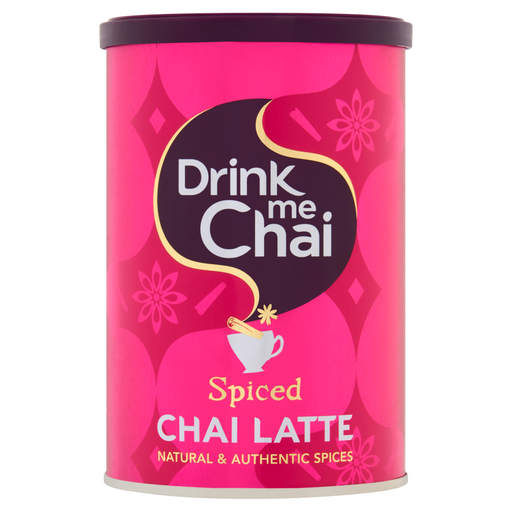
A chai latte mix to consider if you want to prepare a drink with hot water rather than steep a tea bag. Check the pack’s mixing directions and ingredients before serving; the product information identifies milk as an ingredient, so it is not suitable for someone who must avoid milk.
No. Black-tea chai naturally contains caffeine, but herbal chai-style infusions can be caffeine-free. Check the particular pack: Pukka describes Spiced Vanilla Chai as caffeine-free, while Twinings identifies Classic Chai as black tea.
Tea bags avoid the measuring and leaf-removal equipment needed for loose-leaf chai. Twinings gives a three-minute infusion direction for bagged Chai Ultra Spice, whereas its loose-leaf Spicy Chai directions call for tea measured by teaspoon; follow the directions for the blend you buy.
Not for every blend. Pukka says its Original Chai can be made with or without milk, and Twinings says its loose-leaf Spicy Chai can be drunk black or with milk. Check the directions for your chosen product, particularly if it is a chai latte mix rather than tea.
Read the sealed product’s current ingredients and any precautionary allergen statement. The UK Food Standards Agency explains that precautionary allergen labelling can communicate possible unintended presence of a regulated allergen; different chai products should not be assumed to have identical ingredients.