Black-tea chai drinkers
If you want black-tea character alongside the spices, compare the tea content, ingredient list and brewing directions of individual blends. Check the serving guidance if you plan to add milk.


Choose a black-tea chai if you want tea character with your mid-morning spices, particularly in a cup you might drink with milk. If avoiding caffeine matters more, look for a blend explicitly labelled caffeine-free; check its ingredients and brewing directions rather than assuming every chai is made the same way.
The tea base is a useful starting point for an elevenses cup; ingredients and serving preferences help narrow the choice.
If you want black-tea character alongside the spices, compare the tea content, ingredient list and brewing directions of individual blends. Check the serving guidance if you plan to add milk.
Choose a chai explicitly described as caffeine-free rather than relying on a herbal-sounding name. Pukka, for example, distinguishes its black-tea Original Chai from its caffeine-free Spiced Vanilla Chai.
Compare flavourings, stated organic or Fairtrade claims and tea-bag disposal instructions for the exact product. Check local collection rules before putting a bag in food waste or compost.
Start with the tea base, then choose the flavour and preparation that fit how you drink chai at elevenses.
| Priority | What to check | Your needs |
|---|---|---|
| Tea base | Look for black tea in the ingredients or an explicit caffeine-free statement. A stated black-tea percentage describes that blend’s recipe, not the caffeine in a cup. | I want to know whether my mid-morning chai contains black tea, or choose a caffeine-free alternative when I need to avoid it. |
| Flavour and serving | Compare named spices, vanilla and flavourings. Check whether the maker gives directions for drinking the blend plain or with milk; vanilla in a name does not establish its sugar content. | Some days I want a plain spiced cup; for a cup with milk, I want a blend whose ingredients and serving directions suit that choice. |
| Ingredients | Read the full list for ingredients you need to avoid, including liquorice where it appears. Check dietary statements against the exact product, not the brand’s whole chai range. | If an ingredient matters to me, I need to check the particular blend before making it part of my routine. |
| Daily routine | Check pack count, the blend’s infusion directions and any tea-bag disposal wording. Clipper describes its bags as industrially compostable; check whether your local collection accepts them. | I want a pack size that fits how often I make chai and preparation instructions I can follow during a short break. |
A chai label can appear on a black-tea blend or a caffeine-free herbal one. The distinction matters if you want tea character or need to avoid caffeine.
Check the ingredients for black tea, or look for an explicit caffeine-free statement on the exact blend.
Recipes differ in their spices, vanilla and flavourings. A flavour name alone does not tell you how the cup will taste or whether it contains added sugar.
Compare ingredient lists and serving directions, especially if you intend to add milk.
Pukka identifies liquorice in its cited chai blends, including its caffeine-free Spiced Vanilla Chai. A caffeine-free label does not answer questions about other ingredients.
Read the full pack information if you have been advised to avoid liquorice or another herb.
These ranges illustrate different chai ingredients and formats; check the individual blend rather than extending one product’s details across a brand.
Twinings offers several chai directions, including Classic Chai and Vanilla Chai. Its Classic Chai comes in 20 envelopes.
Pukka’s Original Chai contains black tea, while Pukka describes Spiced Vanilla Chai as caffeine-free.
Clipper Organic & Fairtrade Indian Chai is a 20-bag black-tea blend listing cinnamon, orange peel, cloves and fennel.
Tesco Groceries lists Tesco Finest Chai and Tesco Finest Vanilla Chai in 50-tea-bag, 125 g packs.
These options cover a caffeine-free herbal chai in sachets and an instant chai latte mix. The latte mix is a different preparation from a brewed tea bag, so choose the format as well as the flavour.
 No image available
A sachet option for an elevenses cup when avoiding caffeine is the priority. The product description identifies it as caffeine-free and names cinnamon, ginger, cardamom, vanilla and liquorice root; check the pack directions for brewing.
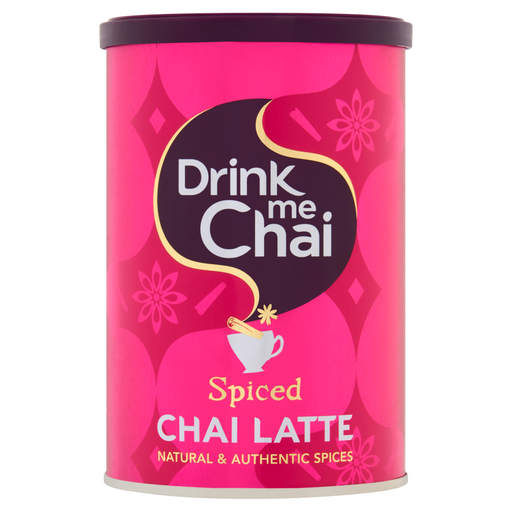 No image available
An instant chai latte mix prepared with hot water rather than a plain tea-bag infusion. Its listed ingredients include instant black tea, milk and sugar; check the pack if milk or caffeine is unsuitable for you.
Choose black-tea chai if you want a conventional tea base; choose a blend explicitly labelled caffeine-free if avoiding caffeine is the priority. Pukka’s UK product information distinguishes its black-tea Original Chai from its caffeine-free Spiced Vanilla Chai.
Yes, if you prefer it that way. Twinings describes chai as typically served with milk, while Pukka says its Original Chai can be drunk with or without milk and honey. Milk is a serving choice, not a requirement for every blend.
Follow the directions for the exact blend. Twinings specifies 2–3 minutes for Classic Chai, whereas Pukka gives a general 5–10-minute infusion range for its herbal blends, depending on the herbs.
Not necessarily: caffeine-free describes one aspect of a blend, not all its ingredients. Pukka identifies liquorice in Spiced Vanilla Chai, so check the full pack if you have been advised to avoid liquorice or another herb.