Who is each type for?
The useful starting point is whether breakfast calls for a black-tea cup, chai spices without caffeine, or a particular combination of spices.
Breakfast tea drinkers who add milk
Look for a black-tea chai with straightforward bag-brewing directions. If you want to prepare the tea in milk rather than add milk afterwards, check for instructions for that method: Sainsbury's gives both water-brewing and milk-simmering directions for its Taste the Difference Chai.
People avoiding caffeine
Choose a chai-style herbal infusion only when the exact variant is described as caffeine-free. Pukka describes its Spiced Vanilla Chai that way; unlike a conventional black-tea chai, it does not have a black-tea base. Check the remaining ingredients too.
Shoppers choosing by spice
Compare ingredient lists rather than treating “chai” as a single flavour. Clipper lists cinnamon, orange peel, cloves and fennel in its Organic Indian Chai; Tesco Finest Chai lists ginger, cinnamon, cardamom, clove, black pepper and anise. Those are distinct starting points for choosing a cup you will want to repeat on weekday mornings.
What matters at breakfast?
Decide on the tea base first, then compare flavour and preparation: a convenient format is less useful if it makes a different drink from the one you expect.
| Priority |
What to check |
Your needs |
| Tea base and milk |
Check whether black tea is listed and whether the pack gives directions for adding milk or brewing in it. A chai-style instant latte mix is not the same format as a steeped tea bag. |
I want a tea-led breakfast cup that I can make with milk, rather than a prepared latte-style drink. |
| Caffeine |
Check the exact variant: black-tea chai contains caffeine, while a herbal blend needs an explicit caffeine-free statement if avoiding caffeine is the deciding factor. |
If I am avoiding caffeine, I need a clearly labelled herbal option and am happy to forgo the black-tea base. |
| Spice and vanilla |
Read the ingredient list for ginger, cinnamon or cassia, cardamom, cloves, pepper and other listed flavours. Check whether a vanilla variant contains black tea rather than assuming vanilla means herbal. |
A ginger-and-cassia blend might appeal more to me than one featuring fennel or orange peel; on another morning, I might prefer vanilla. |
| Morning preparation |
Check the stated brew time and whether the method uses hot water or simmered milk. Tesco gives a four-to-five-minute steep for Finest Chai; Twinings specifies one teaspoon per cup and two to three minutes for its loose-leaf Spicy Chai. |
Before work, I would rather follow a repeatable tea-bag method than measure and strain loose leaves. On a less hurried morning, I may have time to adjust a loose-leaf cup. |
| Format and ingredients |
Check whether the product is tea bags, loose leaf or an instant mix, and read the exact pack ingredients when dietary requirements matter. A product name alone does not establish its spice blend or caffeine status. |
I want to know whether I am buying tea to brew or a mix to stir into hot water, and whether the listed ingredients suit me. |
Brand ranges to compare
These ranges illustrate differences in tea base, ingredients and format; a brand name alone does not tell you which variant will fit breakfast.
Pukka
Pukka's Spiced Vanilla Chai is a herbal route for a breakfast cup without black tea.
- Pukka describes this variant as caffeine-free and lists cardamom, ginger, cinnamon and vanilla in its product description.
- Check the full ingredients: Pukka also identifies liquorice in its chai material, which matters in light of NHS pregnancy guidance.
Twinings
Twinings lists chai tea bags as well as a loose-leaf Spicy Chai, giving shoppers a choice of preparation format.
- Its Spicy Chai lists black tea, rooibos, cinnamon, cardamom, cloves, fennel seed and black peppercorns.
- The loose-leaf directions call for one teaspoon per cup, so it involves measuring and an infuser or strainer rather than simply using a bag.
Clipper
Clipper Organic Indian Chai is a black-tea bag blend with a declared cinnamon, orange peel, clove and fennel ingredient list.
- Clipper identifies the product as organic and Fairtrade and lists 20 bags per pack.
- Its listed orange peel and fennel make checking the ingredients worthwhile if you are seeking a different spice combination.
Teapigs
Teapigs Chai Tea Temples offer an Assam black-tea blend in a bag-style format.
- Teapigs lists cinnamon, ginger, cardamom pods and vanilla alongside Assam tea and describes the blend as suitable with milk.
- It contains caffeine; Teapigs directs drinkers to brew it for at least three minutes.
Tesco
Tesco Finest offers standard and vanilla chai tea bags, both with a black-tea base.
- The standard 50-bag chai lists ginger, cinnamon, cardamom, clove, black pepper and anise; the 50-bag vanilla variant lists vanilla flavour.
- Tesco advises checking the pack because food formulations and ingredient information can change.
Sainsbury's
Sainsbury's Taste the Difference Chai is a 20-bag black-tea option with ginger and cassia among its listed ingredients.
- Sainsbury's gives directions for both brewing in water and simmering the tea in milk.
- Sainsbury's advises reading the pack label because ingredients can change.
Chai-style options on Joybuy
These options cover a herbal vanilla chai and two instant chai latte-style drinks. Choose between them by the kind of cup and preparation you want; they are not interchangeable with a black-tea chai bag brewed for a traditional milky tea.
 No image available
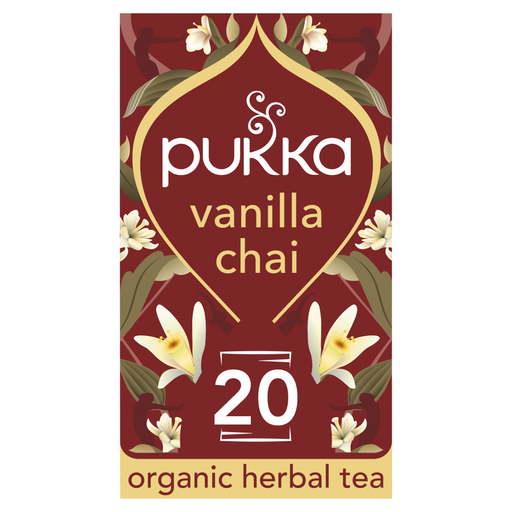
Pukka Vanilla Chai Herbal Tea, 20 sachets, 40g
A tea-bag option when you want a caffeine-free, chai-style herbal cup rather than black tea at breakfast.
Check the ingredients for liquorice if relevant to your choice, and follow the pack directions for brewing.
View on Joybuy
 No image available
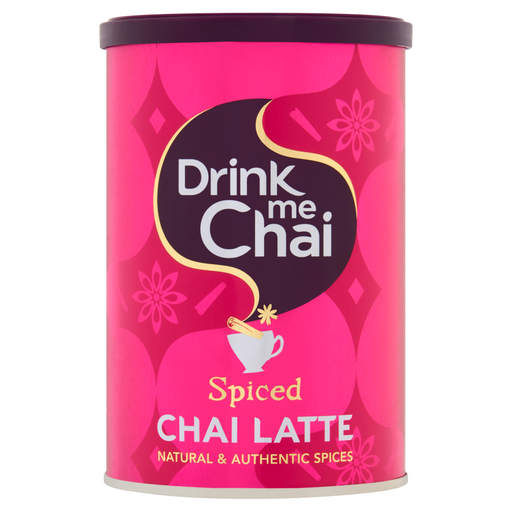
Drink Me Chai Spiced Chai Latte, 250g
This chai latte powder is for a drink mixed with hot water, not a tea-bag infusion.
Check the pack's ingredients, nutrition information and preparation directions if the exact spice mix, milk ingredients or sugars matter to you.
View on Joybuy
 No image available
Nestle Everyday Vanilla Chai Latte Tea 3in1, 10x20g
Ten portioned sachets offer a vanilla chai-style instant drink made by adding hot water, rather than steeping tea leaves.
Read the pack ingredients and nutrition information if milk, soya, sugars or the precise flavour ingredients affect your choice.
View on Joybuy
Common questions
Is chai tea always caffeinated?
No. Black-tea chai contains caffeine, but some chai-style herbal infusions are caffeine-free. Pukka describes its Spiced Vanilla Chai as caffeine-free, whereas Tesco Finest Chai, Sainsbury's Taste the Difference Chai and Teapigs Chai list black tea. Check the exact variant.
Which chai should I choose if I add milk at breakfast?
Start with a black-tea chai whose maker gives milk-serving directions, then choose the spice ingredients you prefer. Sainsbury's gives a five-minute milk-simmering method for its Taste the Difference Chai, while Teapigs describes its Chai Tea Temples as suitable with plenty of milk.
How long should I brew a weekday chai tea bag?
Follow the directions for the particular blend: Tesco specifies four to five minutes for Finest Chai, and Sainsbury's gives three to five minutes when brewing its Taste the Difference Chai in water. A milk-simmered preparation has separate directions, so do not assume the water-brewing method applies.
Should I read the pack if the ingredients are listed online?
Yes. Tesco and Sainsbury's advise checking the product label because ingredients can change. That check is particularly important when an ingredient affects an allergy, dietary requirement or the flavour you are choosing.


