
24/7 Customer Support

Free returns

Same-day & Next-day Delivery

Quality Guaranteed

Unlock Your Welcome Offers: FREE Delivery | Up to 80% OFF | Free 30-day JoyPlus trial
Download the APP
From vibrant café menu boards to creative classroom displays and organised kitchen labels, the right writing tool can make all the difference. If you're looking for the bold, opaque look of chalk without the dust and mess, chalk markers are an excellent solution. However, with terms like liquid chalk pens, wet erase markers and glass pens all used to describe similar products, finding the right one for your needs can be confusing.
As the Joybuy Product Recommendation Officer, my role is to help you navigate the options. This guide offers practical advice to help you select a marker that performs exactly as you need it to, whether you're a business owner, a teacher or a home organiser.
Before you add a set to your basket, consider a few key factors that will determine how well the markers work for your specific project.
The most important factor is the surface you plan to write on. Chalk markers are designed for non-porous surfaces, where the ink sits on top and can be easily wiped away. Think of materials like:
Using these pens on porous surfaces like paper, wood, fabric or traditional slate chalkboards can result in the ink absorbing into the material, causing permanent staining or "ghosting." Most chalkboard pens are wet erase, meaning they require a damp cloth for removal. For outdoor displays, look for semi-permanent formulas that can withstand a light shower once dry. Always test a small, inconspicuous area first if you are unsure about your surface.
The nib of the marker dictates the kind of line you can create. Common types include:
For large-scale signs, a jumbo chisel tip will help you cover more area quickly, while a fine bullet tip is better suited for detailed labels or artwork.
Based on their features and suitability for common applications, here are a few standout options to consider.
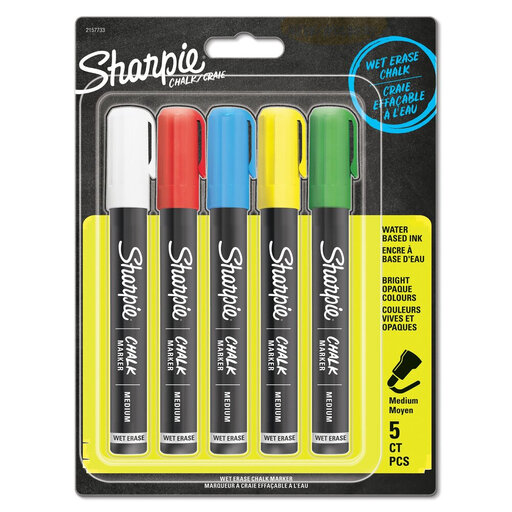
Why It Stands Out: This set from Sharpie is a fantastic all-rounder, known for its bright, vivid ink that creates eye-catching displays. The formula is designed for easy clean-up, wiping away cleanly with just a damp cloth, which is perfect for messages and designs that need frequent updating.
Pros:
Who is it for?: Ideal for teachers creating engaging classroom materials, families organising their home command centre or retailers wanting to post daily specials on a window or light board.
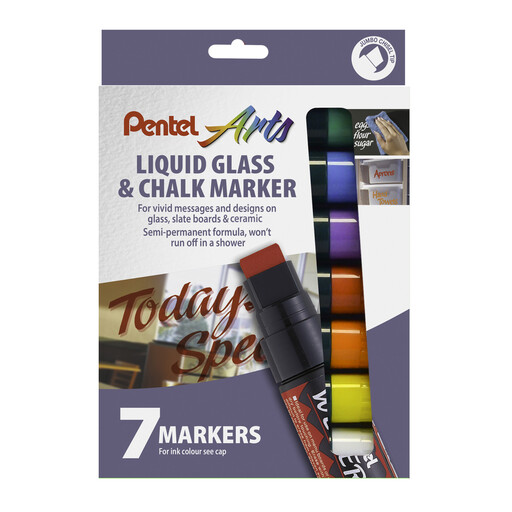
Why It Stands Out: When you need your message to last, especially outdoors, this Pentel marker is a strong contender. Its semi-permanent ink is formulated to resist running in a light shower once dry. The jumbo chisel tip, ranging from 10mm to 15mm, makes it perfect for covering large areas quickly and creating bold, unmissable signage.
Pros:
Who is it for?: Pubs, cafés and restaurants creating A-frame board menus, or event planners designing durable outdoor signage.

Why It Stands Out: This set combines versatility with a nod to sustainability. The standout feature is the reversible nib, which allows you to switch between a bullet point for writing and a chisel tip for bolder strokes. Furthermore, the marker barrels are made from 69% recycled materials, offering a more eco-conscious choice without compromising on quality.
Pros:
Who is it for?: Creative individuals, artists and business owners who need the flexibility to create both detailed drawings and bold text. A great choice for anyone who values versatile and more sustainable products.
While these recommendations cover a range of common uses, your project might require a different colour palette, tip size or ink type. For a wider selection of options, you can browse our full collection.
Explore our complete range of chalkboard marker pens to find the perfect fit for your creative or professional needs.
1. Can you use chalk markers on a regular chalkboard? It depends on the chalkboard's material. Chalk markers are designed for non-porous surfaces. Many modern "chalkboards" are made of painted MDF or other sealed materials and work well. However, on traditional, porous slate, the liquid ink can absorb and cause permanent marks or "ghosting." It is always best to test the marker on a small, hidden area first.
2. How do you get chalk markers to work? Most liquid chalk pens need to be primed before their first use. With the cap on, shake the marker vigorously for about 30 seconds to mix the ink. Then, on a spare piece of non-porous material (like a small plate or piece of glass), press the tip down repeatedly until you see the ink begin to flow and saturate the nib.
3. Are chalk markers the same as wet erase markers? The terms are often used interchangeably, as most chalk markers are a type of wet erase marker. This means they are removed with a damp cloth rather than a dry eraser. The key difference is their appearance; chalk markers use an opaque, pigment-based ink that looks like chalk, making them highly visible on dark surfaces like blackboards or as window markers.