
24/7 Customer Support

Free returns

Same-day & Next-day Delivery

Quality Guaranteed

Unlock Your Welcome Offers: FREE Delivery | Up to 80% OFF | Free 30-day JoyPlus trial
Download the APP
Navigating the world of chargers and power adaptors can feel like untangling a drawer full of old cables. With every new device comes a new power requirement, and the market is flooded with options that promise the world. But how do you separate genuine performance from marketing hype? Many UK consumers find themselves with chargers that are slow, incompatible or worse, a safety hazard.
As the Joybuy Product Recommendation Officer, my role is to help you sidestep these issues. We will look at the common pitfalls that lead to wasted money and frustration, and then break down the essential features you need to check before you buy. This guide will help you find a reliable power solution that fits your needs, whether you're at home, on the road or travelling internationally.
Before choosing a new charger, be aware of these frequent traps that catch out even savvy shoppers:
To make an informed choice, focus on these three practical specifications.
Instead of a one-size-fits-all approach, we have matched some practical power solutions to specific user needs.
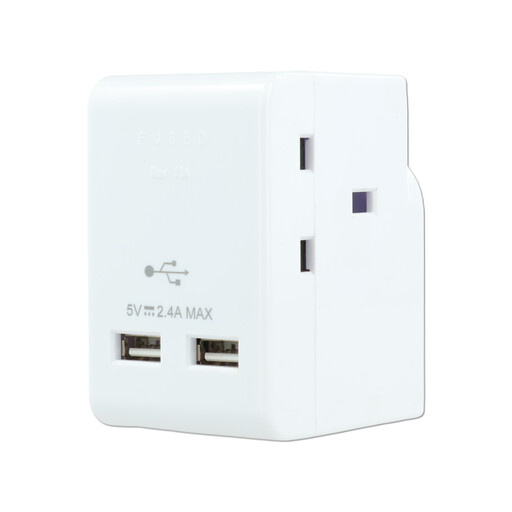
Why This Fits Their Persona: Perfect for anyone in the UK struggling with too few sockets in the kitchen, home office or bedroom. It instantly expands one outlet to power three mains devices and two USB gadgets, helping to manage cable clutter without any rewiring.
This is a properly rated 13A UK adaptor, not a flimsy, uncertified import. It avoids the safety pitfall by being constructed from flame-retardant materials and designed for standard UK loads up to 3250W.
It provides five power sources (3 mains, 2 USB) from a single wall socket. Its compact form factor is a simple and effective way to organise power for multiple devices in one place.
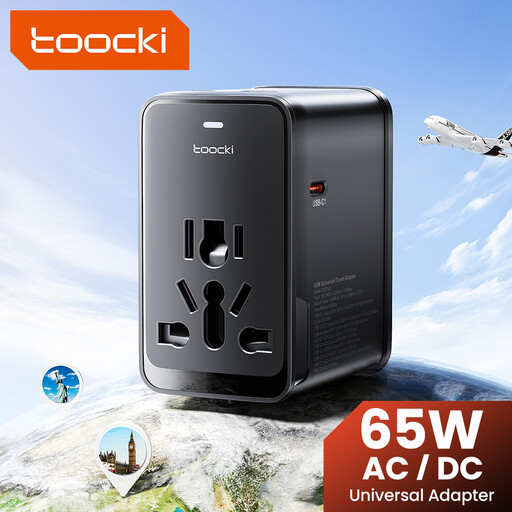
Why This Fits Their Persona: For the UK resident who frequently travels for business or leisure. This single unit replaces a bag of separate adaptors, with retractable prongs for EU, UK, US and AUS sockets, plus multiple USB ports to charge a laptop, phone and other gadgets at once.
It sidesteps the "universal deception" by combining a functional multi-plug design with modern charging technology. The 65W PD output is genuinely fast and powerful enough for laptops, unlike older travel adaptors with weak, slow USB-A ports.
It's an all-in-one solution. The combination of a universal travel adapter with a high-power multi-port USB charger (3x USB-C, 1x USB-A) means you only need to pack one device for all your charging needs abroad.
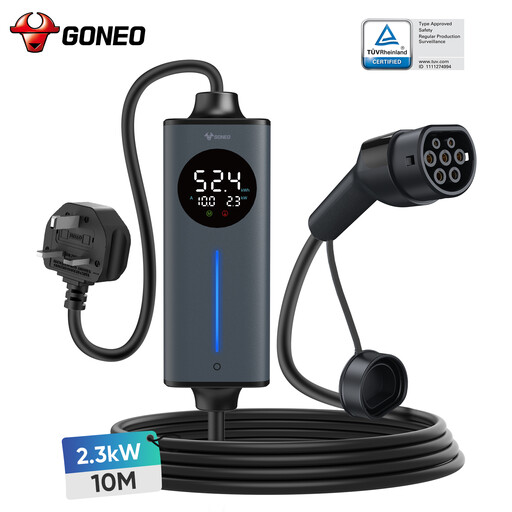
Why This Fits Their Persona: An ideal solution for UK-based EV owners who need a flexible charging option without the cost and commitment of a professionally installed wall box. It plugs into any standard 3-pin household socket, making it perfect for overnight charging at home or when visiting friends and family.
This charger directly counters the safety pitfall. It is equipped with comprehensive protections, including IP66 waterproofing, dual temperature monitoring and leakage protection, ensuring it operates safely from a domestic socket.
It offers plug-and-play convenience. The adjustable current and delayed charging function also allow users to manage energy consumption and take advantage of off-peak electricity tariffs, making it a smart and economical choice.
We have compiled a complete, real-time list of products that fully satisfy these strict selection criteria and UK safety regulations.
How do I know if a fast charger is compatible with my phone? Check your phone's technical specifications for its supported charging protocol (e.g., Power Delivery 'PD') and its maximum charging wattage. To get the fastest speeds, the charger must match or exceed these specifications. For most modern Apple and Android phones, a USB C charger plug that supports the PD protocol is the standard to look for.
Is it safe to leave a multi-port USB charger plugged in all the time? A charger that is certified with the UKCA or CE mark includes safety features like over-current and over-heating protection, making it safe for continuous use. However, all chargers consume a small amount of standby power when left plugged in. For maximum safety and to conserve energy, it is good practice to unplug chargers when they are not actively charging a device for an extended period.
What is the difference between a travel adapter and a power converter? This is a crucial distinction for international travel. A universal travel adapter only changes the physical shape of the plug to fit a foreign socket; it does not change the electrical voltage. A power converter (or transformer) is a heavier device that changes the voltage itself (e.g., from the UK's 230V to the US's 110V). Most modern electronic chargers for phones, laptops and cameras are "dual-voltage" (look for "INPUT: 100-240V" on the label) and only require an adapter. Always check your device's label before plugging it in abroad.