
24/7 Customer Support

Free returns

Same-day & Next-day Delivery

Quality Guaranteed

Unlock Your Welcome Offers: FREE Delivery | Up to 80% OFF | Free 30-day JoyPlus trial
Download the APP
Buying chargers can seem straightforward until a device charges slowly, a battery pack does not fit or one supposedly powerful adaptor cannot support several devices at the same time. UK households, remote workers, gamers, photographers and frequent travellers all have different charging requirements, so choosing by price or wattage alone can lead to unnecessary spending.
This guide explains the main charger types, the specifications worth checking and our top recommendations for different usage profiles.
A charger advertised as 140W may only deliver that amount through one USB-C port. When several devices are connected, the power is divided between ports. For example, a laptop may need 65W or more while a phone and earbuds require additional power.
Check both the single-port output and the total combined output. A multi-port charger with intelligent power allocation is more useful when you regularly charge several devices together.
Rechargeable battery chargers are not automatically compatible with all battery chemistries or sizes. Many household models support NiMH rechargeable batteries, including AA and AAA, but do not accept alkaline, lithium or other non-rechargeable batteries.
Before buying, confirm:
A UK charger should have a suitable UK mains plug or be clearly supplied with the correct connection. Some USB chargers are sold without a charging cable, while a high-output laptop charger may require a cable rated for its power level.
For USB-C products, check support for USB Power Delivery (USB PD) and use a compatible cable. A 140W USB-C charger cannot deliver its stated output through every cable.
For household batteries, look for an AA and AAA battery charger with automatic shut-off, reverse-polarity protection, short-circuit protection and bad-battery detection. These features help prevent incorrect insertion and unsuitable cells from remaining connected indefinitely.
Some chargers use charging indicators to show progress. A three-colour LED system may indicate charging, near completion and charged status, while simpler models use red and green lights.
If your home uses C, D or 9V batteries for torches, toys or safety devices, a universal NiMH battery charger can reduce the need for separate charging units.
Phone chargers commonly require lower output than tablets and laptops. A compact fast USB-C charger around 40W can suit phones, earbuds and smaller tablets. For a laptop charger, confirm the required wattage in the original adaptor specifications. Using a charger with insufficient output may result in slow charging or battery drain during use.
A GaN charger uses gallium nitride components and can offer high power in a relatively compact enclosure. This is useful for travel or a home office where one device needs 100W or more. However, GaN does not remove the need to check output distribution, heat ventilation and cable compatibility.
Check the input range, plug type and product documentation before purchase. A charger marked for 100–240V input can be suitable for travel between compatible mains systems, but the physical plug may still require attention.
For daily use, consider the charger’s dimensions, weight and ventilation requirements. Keep mains and USB chargers away from moisture, uncovered during operation and disconnect damaged products immediately. Do not charge non-rechargeable batteries in a NiMH charger.
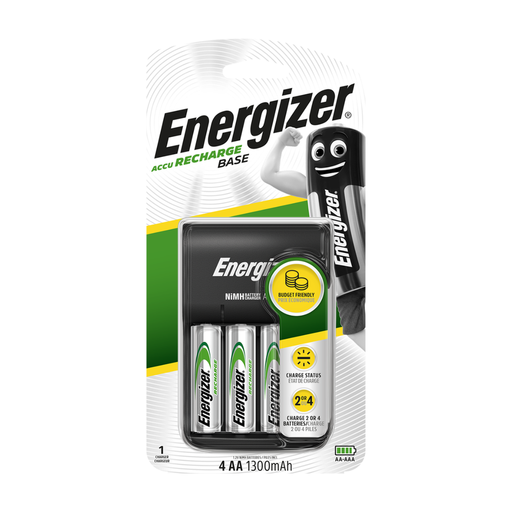
Why This Fits Their Persona: A practical starting point for UK homes, desks and travel bags, with four AA batteries included and charging through a computer, laptop or USB adaptor.
The supported battery types and charging method are clearly defined, helping avoid buying a mains-only charger when USB access is more convenient.
Supports two or four AA or AAA NiMH batteries, includes four 1300mAh AA cells and has LED charging indicators.
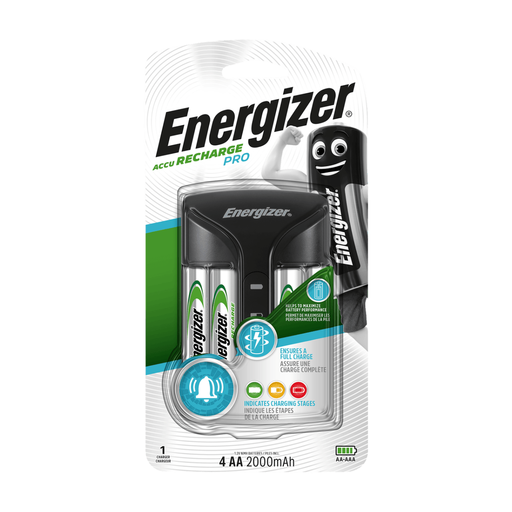
Why This Fits Their Persona: Suitable for users who want a UK wall charger, included batteries and clear charging feedback for controllers, cameras and frequently used household devices.
It identifies the UK plug, AA and AAA compatibility and included battery capacity, rather than relying only on a general fast-charging description.
Charges two or four AA or AAA NiMH batteries and includes four 2000mAh AA batteries with red, yellow and green indicators.
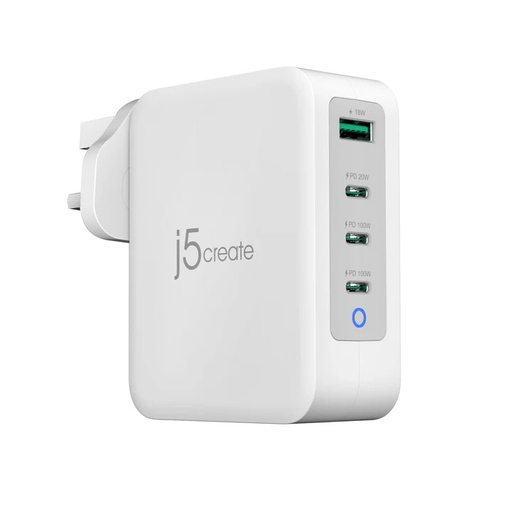
Why This Fits Their Persona: A useful multi-device charger for remote workers, gamers and households powering a laptop, tablet, phone and USB accessories from one UK plug.
Its port-by-port ratings explain the difference between 100W single-port use, 65W plus 65W dual use and lower-power accessory ports.
Provides three USB-C PD ports, one USB-A port, up to 130W combined output and a UK plug in a 295g enclosure.
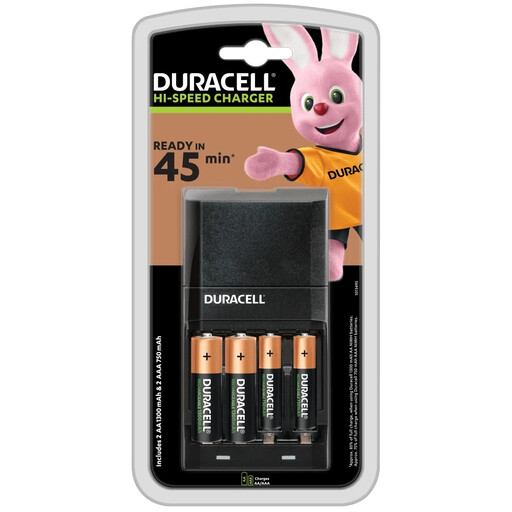
Why This Fits Their Persona: Designed for users who rotate batteries in gaming controllers, cameras, toys and portable equipment and want AA and AAA cells in one bundle.
The stated charging figure applies to reaching approximately 85% capacity for two AA batteries, so it avoids presenting a partial-charge time as a full-charge guarantee.
Charges two or four AA or AAA NiMH batteries and includes two 1300mAh AA and two 750mAh AAA rechargeable batteries.
We have compiled a complete, real-time list of products that fully satisfy these strict selection criteria and UK safety regulations.
A rechargeable battery charger uses mains or USB electricity, while the cells can be reused multiple times. Running cost depends on electricity prices, battery capacity, charging efficiency and how often the batteries are used. For remote controls, toys and gaming accessories used regularly, a rechargeable setup may reduce the need to repeatedly buy disposable cells.
Only follow the charger’s instructions. Automatic shut-off and safety timers can reduce charging risks, but they do not replace sensible use. Charge batteries in a dry, ventilated indoor location, use only compatible NiMH cells and unplug the unit if it becomes unusually hot or shows signs of damage.
Use the wattage specified by the laptop manufacturer. Smaller laptops may work with a 45W or 65W USB-C PD charger, while larger performance models can require 100W, 140W or more. A multi-device charger must also have enough remaining output for phones, tablets and accessories connected at the same time.