
24/7 Customer Support

Free returns

Same-day & Next-day Delivery

Quality Guaranteed

Unlock Your Welcome Offers: FREE Delivery | Up to 80% OFF | Free 30-day JoyPlus trial
Download the APP
It’s a familiar story: your phone’s charging cable starts to fray at the neck, the connection becomes unreliable or it simply stops working altogether. In the rush to find a replacement, it’s easy to grab the first one you see, only to find it charges at a snail's pace or breaks within a few months. The market for charging cables is filled with confusing claims and hidden flaws that can lead to wasted money and frustration.
As the Joybuy Product Recommendation Officer, my role is to help you navigate this landscape. Before you buy another cable, let’s look at the common pitfalls that catch out UK shoppers and how you can identify a quality cable that meets your needs.
Many cables fail not because of a single major flaw, but due to misleading marketing and poor design choices that aren't obvious at first glance.
To ensure you get a reliable and effective cable, focus on these three non-negotiable specifications.
This is the most critical step. Mismatching the connector or power rating will render a cable useless or inefficient.
Always check the wattage (W) rating. A 20W cable is fine for a phone, but it will charge a laptop incredibly slowly, if at all.
Look beyond the surface-level braid. A truly durable charging lead has several key features:
If you only ever charge your device, this may be less of a concern. However, for anyone who syncs photos, videos or files, it's crucial.
Instead of a generic list, we've matched specific cables to the people who will get the most value from them.
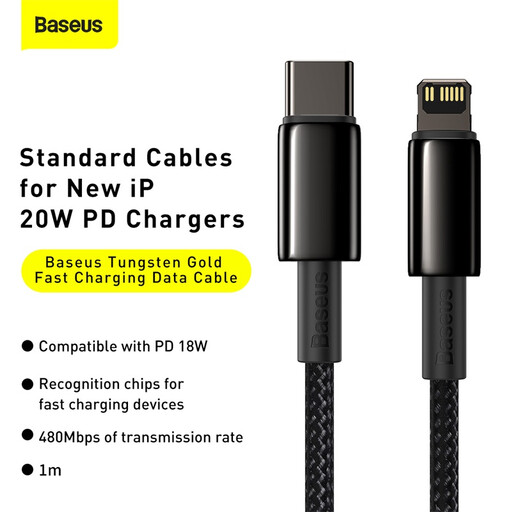
Why This Fits Their Persona: This is an ideal replacement or upgrade for an iPhone or iPad user. It provides the 20W Power Delivery needed for fast charging modern Apple devices and is built to handle the daily wear of commuting, home and office use.
It avoids the "fast charging" ambiguity by clearly specifying 20W PD support. The braided nylon and reinforced connectors directly address the common failure point at the cable neck, countering the "indestructible" myth with practical design.
Features a durable braided nylon exterior and rust-resistant connectors for longevity. It's a purpose-built USB C to Lightning cable for fast charging Apple devices.
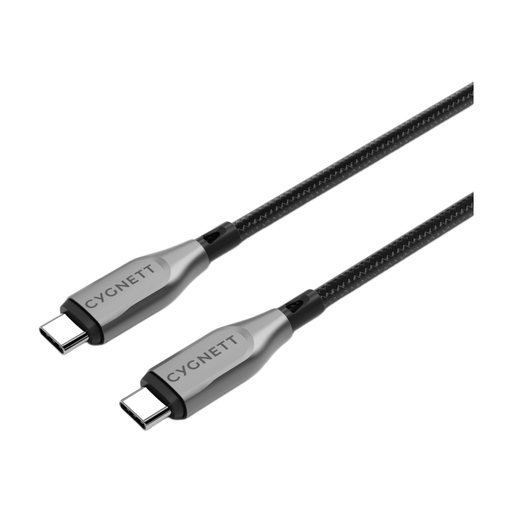
Why This Fits Their Persona: Perfect for someone who needs one cable to do it all—from charging a power-hungry USB-C laptop to transferring large files quickly. This is for the user who values performance and is willing to invest in a single, high-spec solution.
This cable demolishes the "fast charging" and "data bottleneck" traps. It offers a genuine 100W power delivery for laptops and an extremely fast 10Gbps data speed, making it a true all-rounder. Its construction includes DuPont Kevlar fibre for verifiable strength.
Delivers top-tier charging and data transfer speeds in one package. The use of aramid fibre and metallic alloy connectors provides tangible durability, backed by a 5-year warranty.
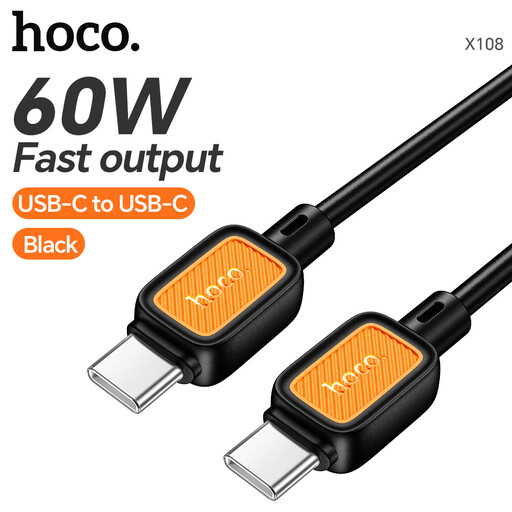
Why This Fits Their Persona: An excellent choice for anyone needing a reliable, no-frills USB-C cable for their Android phone, tablet or even a less power-demanding laptop like a MacBook Air. It offers great performance for its price point.
This cable provides a clear and practical power rating of 60W, avoiding the vague "fast charge" trap. It delivers exactly what it promises, preventing users from overspending on a 100W+ cable they may not need for their devices.
Offers versatile 60W PD charging, sufficient for fast-charging most phones, tablets and some ultrabooks. It's a cost-effective solution without compromising on core charging performance.
We have compiled a complete, real-time list of products that fully satisfy these strict selection criteria and UK safety regulations.
The most reliable way is to check the product specifications for a power rating in watts (W), such as 20W, 60W or 100W. For the system to work, your charging adapter and your device must also support the same fast-charging standard, like USB Power Delivery (PD). A fast charging cable is only one piece of the puzzle.
The connector that plugs into the power source is the key difference. A USB-C to Lightning cable is necessary to fast-charge an iPhone 8 or newer, but it requires a modern USB-C wall charger. A USB-A to Lightning cable uses the older, larger rectangular USB port and typically charges at slower, standard speeds.
There is no fixed lifespan, but a well-made durable charging lead should last for several years of normal use. Features like a braided exterior, flexible silicone material and reinforced connector joints significantly extend a cable's life. To maximise its longevity, always pull the plug from the connector head, not the wire itself.